

























































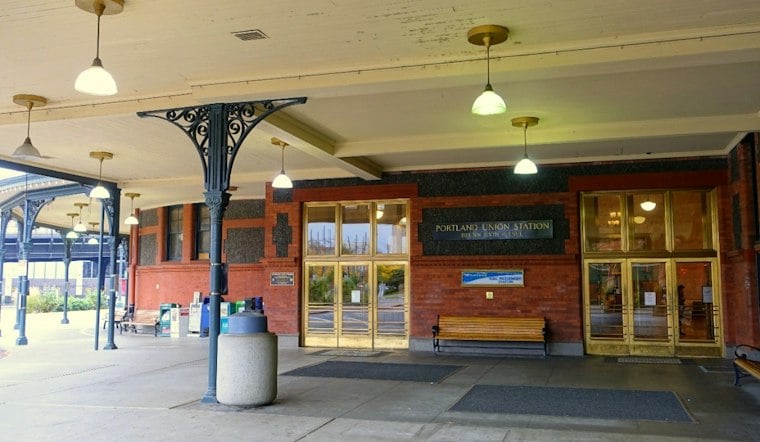
Portland's Union Station has stood at 800 NW 6th Ave. since 1896, but for 51 years its federal landmark status told only half its story. The National Park Service has now officially updated the terminal's National Register of Historic Places nomination to recognize its outsized role in Black Portland's history, approving the change on August 31.
The joint application came from the City of Portland, Prosper Portland, and Oregon Black Pioneers, according to the City of Portland. The station's original 1975 listing recognized only its Queen Anne and Romanesque Revival architecture and its transportation-industry significance, as reported by KOIN.com. That original designation, per Rose City Beat, omitted the labor, migration, and community building of the Black porters, cooks, and Redcaps who kept the terminal running.
A Workforce Built Almost Entirely Around the Rails
The numbers behind that omission are striking. A 1941 study conducted by the Portland Urban League found that 98 percent of working Black Portland residents were employed either at Union Station or by the railroad companies running through it, according to the blog Building on History. Racial discrimination barred Black workers from management or non-service roles for decades, according to local leaders cited by KOIN.com, confining them largely to chair-car porter, cook, waiter, and other service positions.
Those jobs, however limited, still mattered. Railroad wages enabled some Black workers to purchase homes and build greater economic security at a time when few other paths existed. In the 1920s, a local chapter of the Pullman Porters Benefit Association of America, alongside a companion Ladies Auxiliary, organized Black railway workers at Union Station to push for higher wages and better working conditions, per the same account from Rose City Beat, part of a labor campaign that stretched from the 1910s through the 1950s.
From Northwest Portland to Albina
Union Station's Black workforce helped build a thriving community in inner Northwest Portland during the late 19th and early 20th centuries. That district included the Golden West Hotel, which opened at 707 NW Everett St. in 1906 to house Black rail workers turned away from white-owned hotels, according to the Fair Housing Council of Oregon, and it operated until closing during the Great Depression in 1931.
Discriminatory real estate practices eventually constrained where Black Portlanders could live, pushing many families across the Willamette River into Albina, according to KOIN.com. Even after relocating, many families kept their economic ties to the railroad, commuting back to jobs at the station that had first drawn them to the city. Hoodline has covered efforts to restore Albina after the neighborhood was later fractured by mid-century urban renewal.
State and Federal Sign-Off
Before the update reached federal reviewers, Oregon's State Advisory Committee on Historic Preservation unanimously recommended the updated nomination at its June meeting, according to the Oregon Parks and Recreation Department. The amended documentation was researched by historic architecture consultant Kristen Minor along with Executive Director Zachary Stocks and Public Programs Manager Mariah Rocker of Oregon Black Pioneers.
Stocks said Oregon Black Pioneers is proud to have worked on the effort, according to KOIN.com, and the station's Black history will now be included as a significant part of the story of the historic property. The updated listing formally connects Union Station to the African American Resources in Portland, Oregon, from 1851 to 1973 Multiple Property Document, a preservation framework the National Park Service approved in July 2020 after three years of municipal research aimed at addressing the fact that fewer than 5 percent of National Register sites nationwide recognize Black history, per Oregon.gov. That same framework already covers the Billy Webb Elks Lodge, which Hoodline reported was racing toward its 100th birthday after a fire.
What Comes Next for the Terminal
Union Station is owned by Portland's urban renewal agency, Prosper Portland, and operated under lease by Amtrak, serving more than 586,000 passenger arrivals and departures each year, according to the City of Portland. The building also houses commercial office space and Wilf's Restaurant on its ground level.
Prosper Portland is now working with the Oregon Department of Transportation, Amtrak, and the Federal Railroad Administration to secure funding for a renovation estimated to cost $250 million or more, according to Rose City Beat. The historic terminal needs seismic upgrades, mechanical improvements, and accessibility modernization, and the new federal designation means those investments will now be weighed against preserving both the physical building and its legacy as a cornerstone of Black labor history.
Union Station is one of several Portland sites named to the National Register in recent years, according to Portland Bureau of Planning and Sustainability figures cited by KOIN.com. Also recently added was the longtime residence of author Ursula K. Le Guin at 3321 NW Thurman St., where she lived for nearly 60 years before her death in 2018 at age 88.




