

























































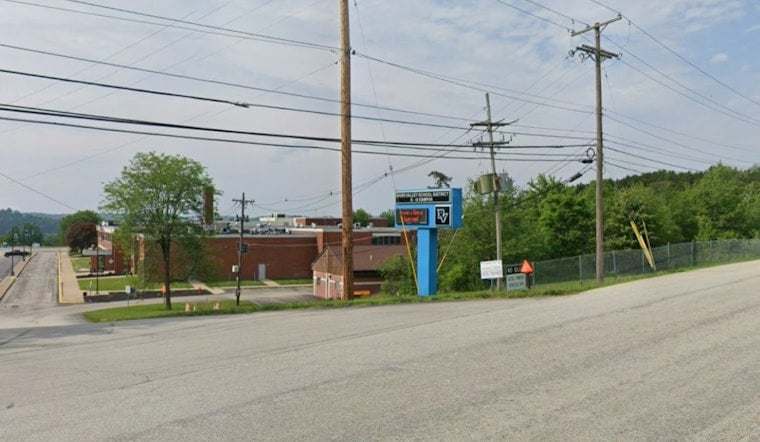
Students across the River Valley School District in Blairsville, Pennsylvania shifted to remote learning this week after mold was discovered in multiple school buildings, and at least one parent says his kids were left sitting in a contaminated classroom for nearly a full week before anyone ordered tests. Jeffrey Hodge, who has six children, four of whom attend schools in the district, says he wants more than the district has offered so far — starting with an apology.
According to WTAE, mold was first discovered at Saltsburg Elementary School on August 17, more than a week before classes began as scheduled on August 25. Hodge told the station that students attended a building with a known mold problem for almost a full week before testing was ordered, and that parents have repeatedly walked away from school board meetings with excuses rather than explanations. “I just want them to say we messed up,” Hodge said, according to WTAE, asking for a simple acknowledgment that the district handled the situation incorrectly.
River Valley Acting Superintendent Regina Geesey confirmed on August 25 that the mold discovered at Saltsburg Elementary was non-toxic white mold, according to Cat Country 106.3, and that finding came just before the district shifted to remote instruction districtwide. Saltsburg students and teachers were temporarily relocated to the River Valley STEAM Academy campus on September 1 after early morning air quality testing raised fresh concerns, and parents were allowed to pick up their children without attendance penalties during that relocation, per a report from WCCS AM1160. The district informed families that classes would move fully remote starting September 2.
What the District Says Went Wrong
District official Rick Harper said the excessive moisture buildup traced back to the district's split heating and air conditioning system being overwhelmed by severe summer humidity over the preceding month, the same WCCS AM1160 report states. River Valley has described the mold situation as an emergency, and custodial staff have already cleaned the affected areas while the district contacted a sanitation and supply company after the mold was first discovered, per WTAE's reporting.
At a special meeting on September 2, the River Valley Board of School Directors voted to approve mold testing service agreements covering every district campus, bringing in Environmental Moisture Assessment and Mold Testing Services for testing and Mold Pro for remediation, the same WCCS AM1160 account notes. The board has already approved mold treatment for Blairsville Elementary, the middle-high school, and Saltsburg Elementary, and the district's school board president has said testing will extend to the remaining buildings as well. The district is spending tens of thousands of dollars on the testing effort, according to WTAE, and plans to hire a second company for an independent opinion before students return.
Health Concerns and a Return Date
The Environmental Protection Agency advises parents to watch their children for signs of mold exposure, which can include allergic reactions such as sneezing and skin rashes, as well as respiratory symptoms like wheezing and coughing, per WTAE. River Valley students are expected to return to their school buildings on September 18, giving the district roughly two weeks to complete testing and remediation across its campuses.
Part of a Wider Regional Problem
River Valley is not alone. The district was created through a 2021 rebranding and consolidation of the former Blairsville-Saltsburg School District, and it now covers roughly 142 square miles across Indiana and Westmoreland counties, according to background compiled on Wikipedia — a sprawling footprint that has made uniform building maintenance a persistent challenge. Nearby, the Homer-Center School District in Indiana County also delayed opening its elementary school in late August after custodial staff found elevated Aspergillus mold spores tied to heavy summer humidity and a chiller power failure, as reported by CBS Pittsburgh — a story Hoodline covered as it delays opening over mold. In Westmoreland County, the Ligonier Valley School District closed all four of its school buildings in late August for remediation and air quality testing after mold turned up in elementary classrooms, according to WDAD Radio. According to the National Center for Education Statistics, River Valley SD is listed at 102 School Lane, Blairsville, PA 15717.
A statewide report released in August 2025 by Women for a Healthy Environment found that nearly half of surveyed Pennsylvania school districts that tested for mold between 2018 and 2022 detected it in at least one building, but fewer than half of those districts actually completed remediation, according to WHYY. Part of the problem is regulatory: Pennsylvania state health and education rules do not set mandatory indoor mold spore thresholds for public school classrooms, leaving testing standards and cleanup decisions to individual school boards and voluntary EPA guidance, as Hoodline has previously reported. The commonwealth does offer some financial help: Act 33 of 2023 created the Public School Environmental Repairs Program, making up to $75 million in competitive state grants available through the Department of Education for districts remediating mold, lead, and asbestos. According to the Commonwealth of Pennsylvania, eligible school entities may request grant funding to remediate or abate environmental hazards in school buildings serving any combination of grades. Whether River Valley will pursue that funding to upgrade its aging HVAC systems remains an open question, as does whether the second-opinion air testing the district has promised will confirm the buildings are safe before the September 18 target date.



