

























































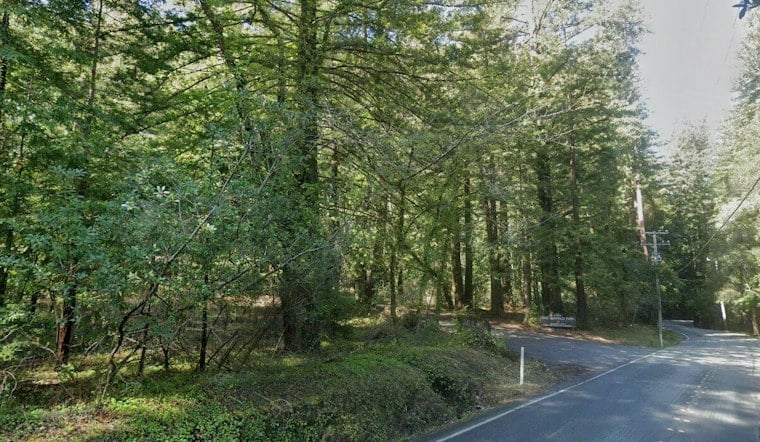
A hiker fell from a trail inside Sam McDonald Park on Sunday, setting off a remote rescue that required firefighters to hike in on foot, carry the patient to a landing zone, and coordinate a helicopter airlift out of the rugged Santa Cruz Mountains terrain. The hiker needed medical assistance and was eventually flown out for treatment after ground crews reached the scene.
According to NBC Bay Area, the response drew in ground crews, local mutual aid partners, and Stanford Life Flight, with the CAL FIRE CZU San Mateo-Santa Cruz Unit reporting on the remote rescue. The fall happened along Pescadero Creek Road in a remote stretch of the park, according to SFGATE, which reported that firefighters from CAL FIRE's Glenwood Fire Center in La Honda had to hike in and physically transport the patient to an established landing zone for emergency air evacuation.
Ground Crews Carry Patient Through Steep Terrain
Reaching the injured hiker was only the first challenge. Sam McDonald Park spans 867 acres between La Honda and Loma Mar, with elevations ranging from roughly 400 feet along Alpine Creek to more than 1,300 feet atop Towne Ridge, per the county of San Mateo. That kind of vertical relief makes a physical carry out of the backcountry an arduous task even for trained crews.
The Glenwood Fire Center's hand crew was established in 2024 and moved into its current La Honda facility in late October 2025, making it the first specialized firefighter hand-crew facility serving both San Mateo and Santa Cruz counties, staffing around 80 personnel trained to navigate rugged coastal terrain that standard fire engines can't reach, according to Lookout Santa Cruz. The station was created following the 2020 CZU Lightning Complex fire specifically to expand ground-crew capabilities in the mountains, the outlet reported.
Helicopter Crews Managed the Air Operation
Once ground crews established a landing zone, air support took over. CAL FIRE SCU Alma Helitack was dispatched alongside local mutual aid agencies to assist ground crews with air operations during the rescue, according to a CAL FIRE CZU San Mateo-Santa Cruz post on Facebook. Helitack units specialize in rapid helicopter deployment and landing zone logistics in terrain too difficult for standard vehicle access.
Stanford Life Flight ultimately handled the patient transport. The program upgraded its fleet in April 2025 with an Airbus H145 D3 helicopter, the only one of its model operating in California, featuring digital autopilot controls and low-cloud flying capabilities built for rapid emergency scene response, according to the Stanford Medicine News Center. Stanford Life Flight targets a liftoff time of seven minutes or less from the hospital's helipad and covers a 300-mile service radius, with roughly 20 percent of its calls responding directly to on-scene 911 trauma emergencies rather than hospital transfers, per STANFORD Magazine.
Six Named Assisting Agencies, One Coordinated Response
Assisting agencies named in the response included CAL FIRE/San Mateo County Fire, AMR, La Honda Fire Brigade, the San Mateo County Sheriff's Office, San Mateo County Parks, and Loma Mar Fire Department, according to NBC Bay Area's reporting. Officials framed the rescue as an example of how remote operations require agencies to train, communicate, and operate together long before an emergency happens, with the state's mutual aid system helping bring the right resources together when and where they're needed.
This isn't the first time the region's patchwork of fire, sheriff, and volunteer crews has had to mobilize for a hiker in trouble. In April 2024, responders carried out a similar rescue in nearby Butano State Park, extracting a fallen hiker from the wilderness after a roughly two-mile vehicle route followed by 1.5 miles on foot, using ATVs, hand clearing, and a California Highway Patrol helicopter hoist, as Hoodline reported at the time. San Mateo County also leans on a volunteer Search and Rescue team under the Sheriff's Office, with more than 60 trained members logging over 16,000 service hours annually across the county's coastal cliffs and forest preserves, according to San Mateo County Search and Rescue.
A Park With a Deeper History
Sam McDonald Park itself carries significant local history. The land was acquired beginning in 1919 by Emanuel “Sam” McDonald, who worked at Stanford, according to SF Funcheap. In February 2026, the San Mateo County Board of Supervisors approved nominating a 430-acre portion of the park to the National Register of Historic Places in his honor.
The park is also part of a much larger wilderness network. It sits within the Pescadero-Memorial Park Complex, which includes Sam McDonald, Pescadero Creek, and Memorial county parks. Officials have not released the hiker's identity, the cause of the fall, or the full extent of injuries beyond confirming the patient was transported by air for treatment.





