

























































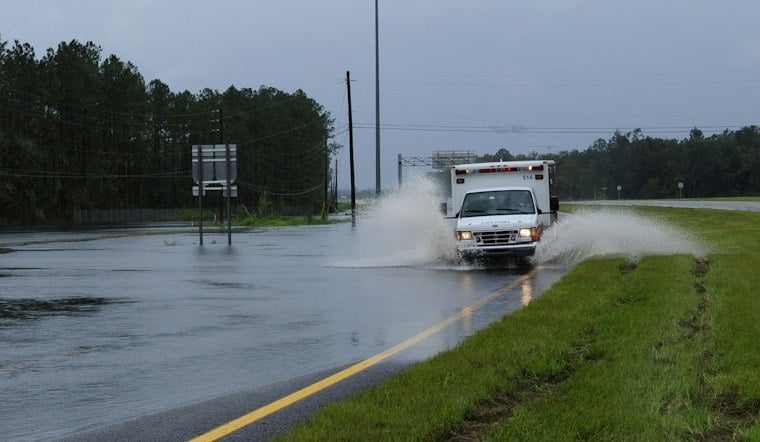
Sanford city commissioners voted Monday to raise the cost of an ambulance ride, setting a new base transport fee of $1,000 plus $15 per mile — a sharp jump from the $650 to $800 rates the city has charged since 2018. The city says the added revenue will help cover the cost of fire services.
The vote, first reported by WESH, marks Sanford's first update to its ambulance transport fee schedule in eight years. The update replaces the city's previous rate structure.
But the timing is hard to separate from a much bigger fight playing out across Seminole County. County officials have warned that Florida's Amendment 3, on the November ballot, may reduce funding for critical emergency services, potentially leading to fewer animal shelters and the loss of a backup 911 center, per county officials cited by WESH.
What Amendment 3 Would Actually Change
Amendment 3 would expand Florida's primary non-school homestead property tax exemption from $50,000 to $150,000 in 2027, and then to $250,000 in 2028, with future increases tied to inflation. Those mechanics, detailed by the City of Oviedo, stem from a measure the Florida Legislature placed on the ballot under House Joint Resolution 1. Like all constitutional amendments in the state, it needs a 60% supermajority to pass and would take effect January 1, 2027, with Floridians deciding the measure on November 3.
The stakes for Seminole County are steep. County staff project the amendment would trigger a $119 million permanent annual reduction in revenue — a 21% loss in property-tax-funded income, according to the Sanford Herald. The projected loss has prompted discussion of possible cuts across county departments.
Fire and Sheriff's Officials Sound the Alarm
A 23% reduction in the fire fund has been described, while fire-station freezes and the elimination of 175 firefighter positions over five years have also been raised as potential outcomes. Public safety departments represent the largest share of property-tax-funded spending in the county, which is why fire and rescue officials have been among the most vocal.
Sheriff Dennis Lemma has gone further, calling the potential revenue losses “the biggest threat to public safety I have ever seen.” He estimated a $41 million cut could cost the county up to 300 deputy positions, per the same Sanford Herald account. Property-tax revenue funds public safety broadly.
The warnings extend beyond fire and law enforcement. Seminole County's Emergency Management department, which runs on a $10 million budget covering 72 full-time employees, could see stray hold times at animal shelters cut from five days to three under a 20% reduction — a change officials say could jeopardize the county's no-kill status, according to FOX 35 Orlando. Animal Services and E-911 communications share that same emergency management budget.
A Statewide Pattern of Fiscal Anxiety
Seminole County has become something of a regional hub for pushback on the amendment. Statewide law enforcement and emergency response leaders gathered in Lake Mary this month to launch a unified campaign urging voters to reject Amendment 3, arguing the measure lacks any mechanism to replace lost revenue for local emergency services, Hoodline previously reported.
State economic analyses project Amendment 3 would cut Florida local property tax revenues by nearly $12 billion on a recurring basis, pushing municipalities statewide toward raising non-property fees or trimming services — a dynamic the Florida Policy Project has evaluated in detail. Sanford's ambulance fee increase is a local decision unfolding ahead of a possible tax restructuring.
Seminole County Public Schools already offers a preview of what property-tax pressure can look like locally. The district eliminated 315 positions to address the 2026–27 shortfall; a one-time state appropriation later reduced the immediate deficit to $600,000. The shortfall was driven partly by state caps that reduced local school property tax rates by 45% over 14 years — a squeeze that also led the district to raise building thermostats to save $1.5 million annually, as detailed in previous Hoodline coverage.
For now, Sanford's higher ambulance fees stand as a concrete, near-term example of the kind of adjustments local governments are already making. Whether the county's fire stations, sheriff's deputies, and animal shelters face the deeper cuts officials have warned about will depend on how Florida voters decide Amendment 3 on November 3.



