

























































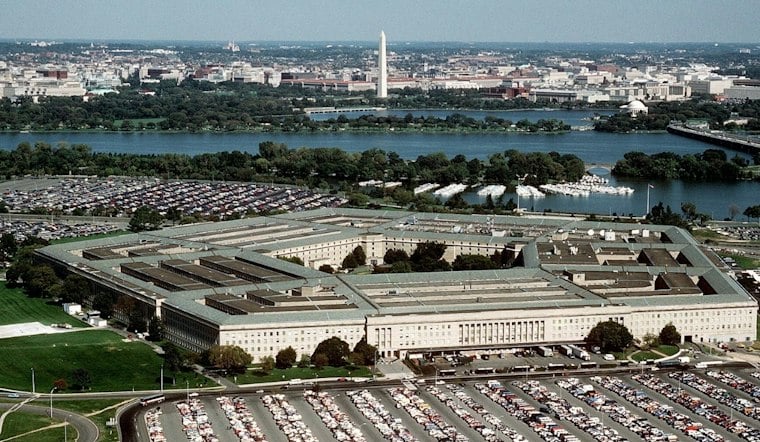
Senators from both parties walked out of a classified Pentagon briefing on Thursday frustrated and, in some cases, angry, after Defense Undersecretary Elbridge Colby failed to deliver the update on the National Defense Strategy that lawmakers say they were legally owed. The closed-door session, held inside the Capitol Visitor Center, was supposed to answer pressing questions about the Iran war, a growing U.S. munitions shortage and the possibility of National Guard troops showing up at polling places this fall. Instead, several senators said they left with more uncertainty than when they walked in.
According to WTOP News, Colby, who serves as the Pentagon's top policy adviser, briefed the Senate Armed Services Committee in a classified setting but gave answers that many lawmakers considered unsatisfactory. Sen. Jacky Rosen said Colby was not forthcoming and did not address lawmakers' concerns, while Sen. Kevin Cramer described the entire session as a dodge and punt, adding that Colby failed to provide a statement at what was supposed to be a congressionally mandated update. Sen. Mike Rounds put it plainly, saying the briefing was not what lawmakers expected and that they were owed a report they did not receive.
A Legally Required Update That Didn't Deliver
The briefing wasn't optional. Under provisions in the annual National Defense Authorization Act, the Pentagon was bound by a statutory deadline of September 15, 2026, to deliver a classified briefing and strategy implementation report to the Senate Armed Services Committee, according to the Associated Press. The panel ultimately convened the session two days later, on September 17, as an executive gathering in Room SVC-217 at the Office of Senate Security, chaired by Sen. Roger Wicker, who declined to answer questions about what was discussed behind closed doors.
The document at the center of the dispute is the 2026 National Defense Strategy, a 34-page report officially issued by the Department of War in January and described as comprehensive guidance for the U.S. military. Per SOF News, the strategy lays out four core lines of effort: defending the homeland and Western Hemisphere, deterring China in the Indo-Pacific, pushing allies toward greater burden-sharing, and supercharging the domestic defense industrial base. The strategy also reinforces President Donald Trump's America First approach of favoring nonintervention overseas while questioning long-standing strategic relationships with European allies.
Iran, Munitions and an Uneasy Reaction
Sen. Mark Kelly said he left the briefing with more questions than when he entered, having pressed Colby on the administration's strategy for the Iran war and the decision-making behind a current U.S. munitions deficit. The concern isn't abstract — defense industrial analysts and military contractors estimate that production facilities will need approximately three years to fully replenish depleted stockpiles of advanced precision munitions following recent foreign conflict drawdowns, a timeline reported by the Associated Press.
Not every lawmaker in the room came away critical. Sen. Jim Banks called the briefing constructive and substantive, telling reporters it answered all of his questions — a notably different read on the same session that left colleagues like Rosen, Cramer and Rounds frustrated. The split reaction underscores how divided senators are on whether the Pentagon met even the basic threshold of transparency required under the law.
National Guard and Polling Place Questions Linger
Perhaps the most politically charged exchange centered on the possibility of National Guard deployment for voter security during the 2026 midterm elections. Colby acknowledged that discussions about deploying the Guard were taking place, saying he had heard about talks concerning voter security on Election Day but was not leading them himself. Sen. Elissa Slotkin pressed both Defense Secretary Pete Hegseth and Joint Chiefs Chairman Gen. Dan Caine to confirm they would not send troops to polling places.
That question carries real legal weight. Under 18 U.S.C. § 592, a federal statute dating to the post-Civil War era, it is a federal felony punishable by up to five years in prison for any civil or military official to station troops or armed men at a polling location during an election, unless explicitly necessary to repel armed foreign enemies, according to Lawfare. In an August letter to Slotkin, Caine formally stated that the military has no plans to send federal military personnel or federalized National Guard members to polling places during the 2026 elections, a written assurance the Pentagon has now put on the record.
The anxiety on Capitol Hill didn't emerge in a vacuum. Senate Minority Leader Chuck Schumer and senior Democratic lawmakers ran closed-door tabletop exercises in July and August with election lawyers and democracy groups, wargaming potential election disruption scenarios that included hypothetical federal personnel deployments near polling sites, according to The Guardian. That backdrop helps explain why Caine's written assurance did little to fully settle nerves in Thursday's briefing.
Global Force Shifts Underway
The frustration in the briefing room comes as the Pentagon carries out major realignments abroad tied to the same strategy document. Following a White House summit between Trump and Iraqi Prime Minister Ali al-Zaidi in July, the Pentagon confirmed that all remaining U.S. combat troops are scheduled to complete a full withdrawal from Iraq by September 30, ending a 23-year military footprint there, per Legis1. In Europe, Colby briefed NATO Secretary General Mark Rutte during an August 27 meeting in Brussels on a U.S. force posture review that includes a planned reduction of 5,000 troops from the continent as European allies increase their own defense spending, according to NATO's own account of the meeting.
Colby's background gives the strategy document a personal throughline. He was confirmed as Under Secretary of Defense for Policy by a 54-45 Senate vote in April 2025, and previously served as Deputy Assistant Secretary of Defense for Strategy and Force Development from 2017 to 2018, where he helped author the 2018 National Defense Strategy. That history is part of why lawmakers expected a substantive update this time around — and why Thursday's session, for many of them, fell short.




