

























































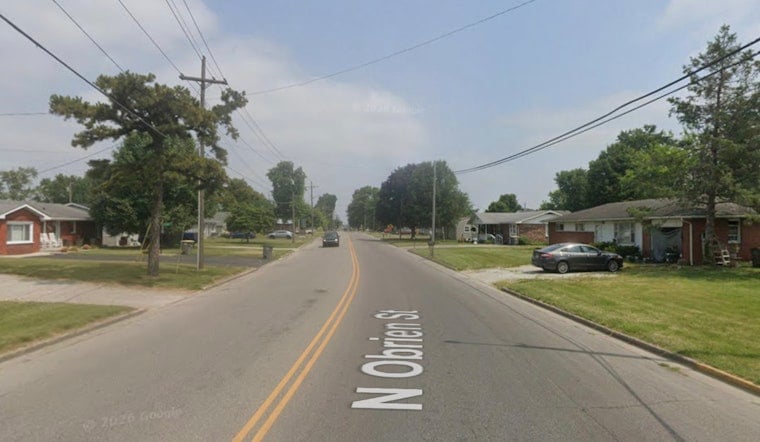
A 37-year-old Seymour man died Saturday evening after being struck by a vehicle on North O'Brien Street, according to the Seymour Police Department. Officers responded to the 1000 block of the street just after 7 p.m. and found Emanuel Nava-Martinez unresponsive before beginning life-saving measures.
According to the incident release posted by the Seymour Police Department, the Seymour Fire Department and Jackson County EMS arrived at the scene and transported Nava-Martinez to Schneck Medical Center, where he was pronounced deceased. Police identified the driver as 56-year-old Curtis Starr of Columbus, Indiana, who is cooperating with investigators and consented to a blood draw. As reported by WTHR, the collision occurred at approximately 7:09 p.m., and Nava-Martinez was a longtime Seymour resident.
The blood draw is standard procedure under Indiana law rather than an indication of suspected impairment. Indiana Code 9-30-7-3, according to Justia Law, requires officers to offer a chemical test to any driver involved in a crash resulting in death or serious bodily injury, regardless of whether probable cause of intoxication has been established. The collision remains under investigation, and no charges have been announced.
Specialized Units Reconstruct the Scene
The Seymour Police Department's Serious or Fatal Crash Investigation Team responded to the scene alongside the department's Investigations Division to document the incident, the department said. The Republic reported that these specialized units were tasked with reconstructing the crash and collecting forensic evidence along North O'Brien Street, work that typically includes documenting roadway markings and physical evidence in fatal cases.
Several open questions remain unresolved, including the results of Starr's blood draw, whether speed or lighting conditions played a role in the evening collision, and whether Nava-Martinez was within a designated crosswalk at the time he was struck. Formal charges, if any, are expected to hinge on the investigation team's findings.
A Corridor Already Flagged as High-Risk
The stretch of North O'Brien Street where the crash occurred has drawn scrutiny before. The City of Seymour's 2025 Transportation Safety Action Plan identifies the segment between East 4th Street and East 16th Street as a two-lane minor arterial carrying an average of 5,288 vehicles daily, with sparse sidewalk infrastructure along a corridor that connects residential areas and school routes.
That same city plan found that between 2019 and 2023, Seymour and its surrounding buffer area logged 5,089 total traffic crashes, and that pedestrians involved in collisions were nearly five times more likely than vehicle occupants to suffer fatal or incapacitating injuries. County-level data compiled by the Indiana University Public Policy Institute showed Jackson County recorded 1,699 total traffic collisions and 9 fatalities in 2023, including 12 pedestrian-involved incidents that produced one death and 11 non-fatal injuries.
Those local figures sit within a broader statewide pattern. A report from the Stracci Law Group found Indiana recorded 852 traffic fatalities in federal fiscal year 2024, with state highways and local streets accounting for more than 60% of all lethal collisions statewide, even as overall fatalities fell slightly by 4.8% that year. State-level efforts to address the toll include regional “Road to Zero” workshops, a partnership between the Indiana Criminal Justice Institute and advocacy group Health by Design that the Indianapolis Business Journal reported focuses on infrastructure fixes and traffic calming to protect pedestrians and other non-motorists.
Nava-Martinez was born on April 7, 1989, and had lived in Seymour before his death, according to obituary notices published on Legacy. Arrangements were entrusted to Christensen Family Funeral Home in Seymour. Schneck Medical Center, where he was taken, is an 84-bed county-owned facility established in 1911 that provides emergency and specialized inpatient care for Jackson County and surrounding rural communities, according to the Indiana Department of Health.





