

























































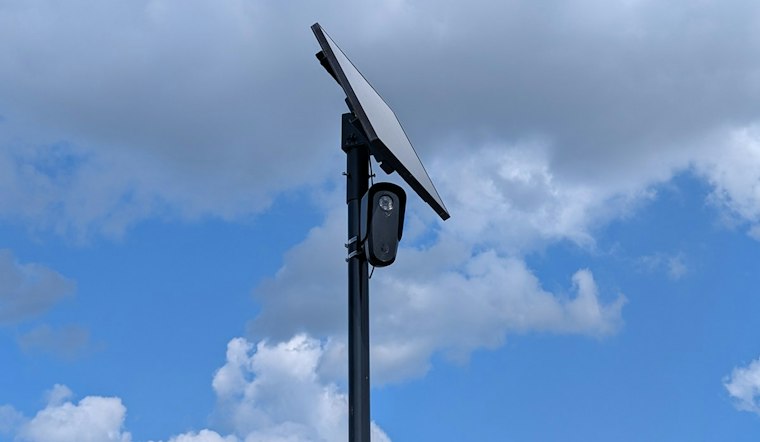
Skokie officials have ordered a comprehensive review of the village's automated license plate reader system, including its effectiveness and alternative public-safety approaches. The move follows residents' questions at a Sept. 8 board meeting and comes as similar cameras have become a flashpoint across the Chicago area, including in nearby Naperville, where officers have been accused of using the technology for personal reasons.
According to the Chicago Tribune, Skokie operates 27 stationary ALPR cameras mounted along high-traffic main roads in the village, 20 of which were manufactured by Flock Safety. The cameras photograph license plates and other motorist identifiers, logging plate numbers, time of day, date and location, with the system purging that data after 30 days. Skokie Police Chief Jesse Barnes and Deputy Police Chief John Oakley discussed the village's use of the cameras at the board meeting, where the review was announced.
The scrutiny arrives amid a wave of misuse cases rattling confidence in the technology nationwide. A former Naperville police officer, Oscar Maldonado, searched Flock for non-police purposes hundreds of times between June 18 and Sept. 15, 2025, including tracking a resident's license plate roughly 150 times over three months, according to NaperToday. Naperville police shared evidence with the Will County Sheriff's Office, which referred the case to county prosecutors in early March, though prosecutors would not confirm or deny an investigation, the outlet reported.
Naperville Rewrites Its Rules, Chicago-Area Cases Mount
Naperville's updated ALPR policy, effective Sept. 8, now explicitly bans officers from accessing the system for personal reasons involving family members, friends or acquaintances, per the same NaperToday report. The city says all access is logged and tied to individual authorized users, with routine data purged after 30 days unless it's connected to an active investigation. The report also notes that the ABC7 I-Team identified 14 cases across the Chicago area of officers accused of misusing Flock cameras, with at least five referred to prosecutors.
What Naperville's Records and Policy Show
For the searches from June 18 to Sept. 15, 2025, an internal Naperville report found a preponderance of evidence of official misconduct, according to the Daily Herald. That was an administrative finding, not a criminal conviction; Maldonado's attorney disputed that the conduct amounted to a crime. The Daily Herald also reported that Naperville police updated their internal ALPR policy earlier this month to add an auditing section. That department policy change is distinct from Skokie's announced comprehensive review.
At the Sept. 8 meeting, residents raised concerns about the camera system. The Chicago Tribune reported that Julian Van Ostrand expressed concern about living under pervasive surveillance, while Kimberly Polka questioned who receives residents' data and can know when she travels. Lissa Levy raised concerns about protections against hacking.
How Skokie Says the System Works
Chief Barnes said law enforcement data has specific security requirements, the Tribune reported, and described a system with narrower reach than some critics fear. Skokie's ALPR data is not accessible on a federal database, and officers cannot observe real-time vehicle movements — they can only observe points in time when a vehicle passed a Flock camera. The village allows access to license plate data only when it's tied to a qualifying investigation, and Skokie's cameras do not have facial recognition capabilities, consistent with Flock Safety's own description that its cameras do not use facial-recognition technology.
Skokie shares camera data with in-state law enforcement agencies, and authorized personnel can access the ALPR system, which alerts officers when a hot-list license plate — one tied to a stolen car, wanted driver or vehicle involved in an Amber Alert — is read. Illinois State Police and the Illinois Secretary of State maintain the law enforcement data system, LEADS, that enables agencies to share stolen-vehicle files, criminal histories and existing warrants, and both agencies must approve anyone granted access. State police could restrict Skokie officers' access to LEADS if the village improperly used or disseminated Flock data, a suspension that would mean an individual officer or the entire department loses access, according to the Tribune's reporting.
Police have credited the cameras with locating a missing person, finding a stolen vehicle and tracking a violent armed offender, the Tribune reported, and Flock cameras aided in identifying vehicles used in both of Skokie's recorded homicides in 2026. More broadly, police use ALPR data to search for missing people, find stolen vehicles and reconstruct crime timelines.
A Transparency Portal and a Contract Under Watch
Skokie police are developing an online transparency portal that would provide legally releasable information about Flock camera footage, potentially showing the number of vehicles on the hot list and a camera's monthly plate-read count. Other Illinois communities have taken their own steps: Mokena now requires officers to enter both a reason and a case number for every camera search and won't accept vague explanations like suspected criminal activity, according to the Chronicle. Lake County's sheriff's office switched to monthly reviews of officers' camera use and cut image retention from 30 days to 14.
Some municipalities have gone further. Oak Park's Board of Trustees voted on Aug. 5, 2025, to shut off and cancel its Flock Safety contract and deactivate its eight cameras, according to J.W. Cole Law. Neighboring Evanston banned ALPR cameras entirely, and the Tribune reported that Flock Safety shared information about Evanston city vehicles with federal immigration agencies in 2025. Skokie is one of more than 350 Illinois municipalities using ALPR technology, and its contract with Flock Safety runs through December 2028.
Nationally, more than 50 agencies or jurisdictions have canceled, suspended or rejected a Flock contract or deactivated their cameras since the beginning of the year, per Associated Press reporting carried by WCIA. In response, Flock announced it is shortening its standard data-retention window from 30 days to seven, while allowing longer preservation for evidence tied to a case number, and said all law enforcement customers will have to implement an audit tool intended to flag abnormal search behavior. Six Savannah Police Department employees, including four officers, were fired in Georgia after accusations they used Flock to search for friends and family and let an outside officer use the city's cameras, the wire service reported.
Not everyone is convinced the fixes go far enough. The ACLU of Georgia has said the effectiveness of Flock's audit tool has never been independently evaluated, even as the company touts that every search requires a documented reason and is logged for review. Skokie's review is expected to examine the technology's effectiveness and alternative public-safety approaches, with officials planning to assess the Flock Safety contract once the review concludes in March.



