

























































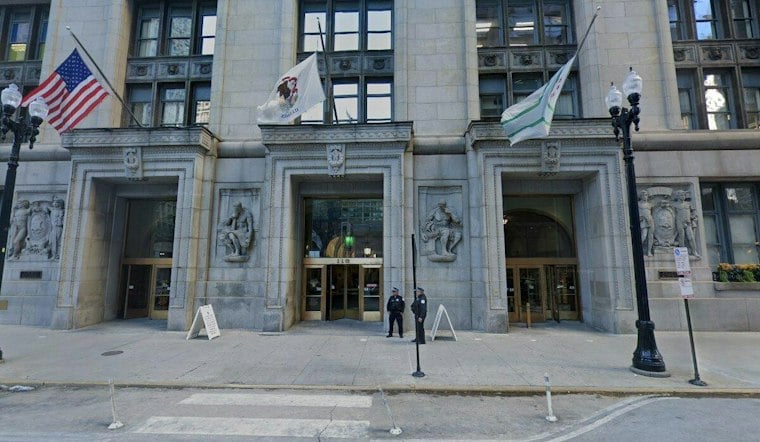
Every one of Chicago's 50 alderpeople is lined up to accept an inflation-tied pay raise in 2027, a first after years of a handful of holdouts turning down the extra money. Mayor Brandon Johnson, meanwhile, is again skipping his own increase and will hold at his current annual salary of $221,052.
The raise, pegged at about 2.3 percent, comes from budget documents tied to Johnson's 2027 spending plan, according to Block Club Chicago. Alderpeople can choose each year whether to accept the bump, which is tied to the Consumer Price Index and applies to the mayor, city treasurer and city clerk as well as City Council members. This year, for the first time in recent cycles tracked by the outlet, nobody is turning it down.
That's a shift from the past two budget cycles. Forty-eight of 50 alderpeople accepted the raise in 2025, when officials were in line for a bump of more than 4 percent tied to inflation, the outlet reported. Forty-eight also took the roughly 2.4 percent increase set for 2026, with Ald. Byron Sigcho-Lopez and Ald. Rossana Rodriguez-Sanchez the lone holdouts that year, per the same outlet's reporting.
Why Salaries Differ So Widely Across the Council
Because some members have accepted raises in some years and declined them in others, aldermanic pay varies considerably from ward to ward. Twenty-nine alderpeople are set to earn the top City Council salary of $159,264 in 2027, after receiving roughly $3,570 in additional pay, Block Club Chicago reports. At the other end, Ald. Gilbert Villegas of the 36th Ward will earn $128,892, including about $2,800 in added pay — the smallest raise on the council.
City Clerk Anna Valencia and City Treasurer Melissa Conyears-Ervin would each earn $179,592 under the proposed budget, the outlet notes, with mayor's office officials also in line to earn more next year under the same recommendations.
An Alderperson's Case for Needing the Raise
Ald. Maria Hadden of the 49th Ward, who usually accepts the annual raise but declined it in 2023, said she's taking the 2027 increase because she needs it. Hadden told the outlet that several job-related expenses have never been covered and have only grown during her seven years in office — including out-of-pocket costs like food at community events and taxes she pays on city-reimbursed services such as her ward office phone lines.
Ald. Andre Vasquez of the 40th Ward offered a different rationale, pointing to the long hours the job demands. Vasquez said he's accepting next year's raise because of the time he puts in responding to constituent emails, and he described neighbors watching him personally direct traffic at a gridlocked Lincoln Square intersection as the kind of above-and-beyond work the job requires. Vasquez has also pushed, so far unsuccessfully, to bar alderpeople from holding outside jobs.
A Mayor Who's Skipped the Raise Twice Running
Johnson's decision to forgo the 2027 increase continues a pattern; his office noted the same move in 2026, when his salary also held at $221,052. Chicago mayors went without a raise from 2006 until Johnson accepted his first mayoral pay increase in 2024. The inflation-linked system for the mayor, clerk and treasurer traces back to a measure pushed by former Mayor Lori Lightfoot, which capped annual raises at 5 percent.
Aldermanic pay has followed its own inflation formula since 2006, when the City Council approved tying raises to the inflation rate, according to the Chicago Sun-Times. That formula has produced some much larger jumps than the one coming in 2027 — in 2023, alderpeople saw a 9.62 percent increase that pushed the top aldermanic salary to $142,772, though 15 council members declined it that year, Ald. Hadden among them.
The Budget Fight Still to Come
Johnson introduced his budget recommendations to the City Council last week, unveiling a 2027 spending plan aimed at closing an almost $900 million gap. The proposal would reinstate a corporate head tax and add a 15-cent tax on delivered packages, among other fee and tax increases, though passage of the corporate head tax is reportedly in doubt. Some alderpeople have already pushed back against parts of the plan.
Whatever the outcome of those fights, the City Council must approve a balanced budget before the end of 2026 — meaning the raises, the new taxes and the rest of Johnson's proposal still have to clear a full council vote before they become final.





