

























































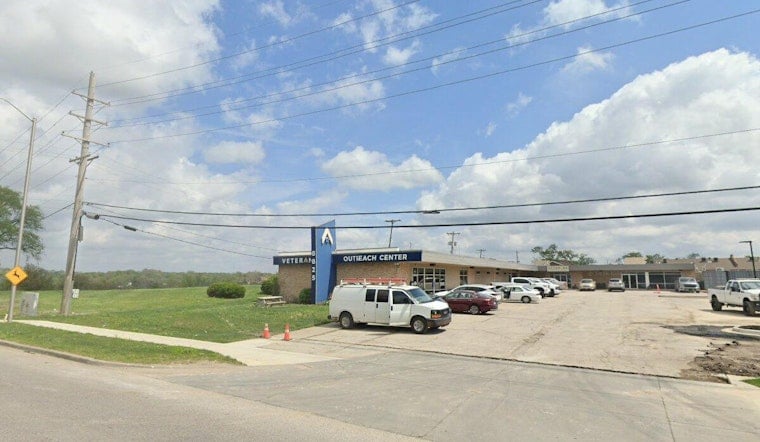
A $2 million Welcome Center opened Wednesday in South Kansas City, giving veterans a single front door to housing help, benefits navigation, case management, and other support services. The ribbon-cutting at 8825 Troost Avenue marked the completion of phase two at Veterans Community Project's Kansas City campus, transforming what began as a tiny home village into a full-scale navigation hub for veterans in need.
The event, detailed by Eventbrite, describes the new facility as a centralized hub meant to streamline how veterans access housing, benefits, case management, and other support resources. As KCTV reported Wednesday, the Welcome Center represents the completion of phase two on the campus, a milestone organizers describe as first-of-its-kind for veteran services in the region.
The Welcome Center sits just across from VCP's flagship residential campus at 89th Street and Troost Avenue, home to a village of 49 fully furnished tiny homes ranging from 240 to 320 square feet, according to VOMO. Each unit connects to municipal utilities and sits alongside a central Village Center that anchors daily life for residents working toward stable housing.
A Model Born From Gaps in Federal Care
Veterans Community Project was co-founded in Kansas City in 2016 by combat veterans Bryan Meyer, Chris Stout, Brandonn Mixon, and Vincent Morales, who set out to fill service gaps left by federal VA programs. The organization intentionally operates without federal funding so it can serve any veteran regardless of discharge status, a distinction that matters because traditional VA housing programs often disqualify veterans with less-than-honorable discharges.
Ground construction on the original tiny home village began in December 2017 after early infrastructure hurdles were solved by a $50,000 grant from the Veterans United Foundation to connect the property to city sewer lines, according to the American Association of Physicians of Chinese Kansas City. The project's early development preceded construction.
Dental Care Fills a Persistent Coverage Gap
The Kansas City campus also includes an on-site dental clinic, addressing a care gap that reaches far beyond Troost Avenue. Over 7 million VA-eligible veterans nationwide lack access to VA dental benefits, since standard VA healthcare eligibility generally excludes routine dental services unless a veteran carries a 100% service-connected disability rating, per reporting cited by VOMO.
Across its housing programs, VCP maintains an 85% success rate helping unhoused veterans transition into permanent housing, with residents staying an average of 11 to 14 months before moving on, according to The American Legion. Graduates move into permanent housing after their stays in the tiny homes.
From Kansas City Blueprint To National Network
What started as a single Kansas City campus has since expanded into a national model. VCP's tiny home village concept now has active or developing sites in six U.S. cities, including St. Louis, Missouri; Longmont, Colorado; Sioux Falls, South Dakota; Glendale, Arizona; Milwaukee, Wisconsin; and Kansas City, Missouri, according to the Good News Network. Hoodline reported September 1, 2026, that Glendale's own 50-home veterans village is rising but won't open until 2027, citing the Kansas City campus as the template for that project's private funding model and case-management approach.
The Kansas City hub's expansion arrives amid a broader, if uneven, national conversation about veteran homelessness.
Local Counts And Complementary Investment
Regional homelessness data for Jackson County, Missouri, and Wyandotte County, Kansas, offers local context for the Kansas City area.
The Welcome Center's debut follows other recent local investment in veteran housing. Hoodline reported in August that developers announced an adaptive reuse project to convert the historic Grand on Beacon Hill into affordable homes. Together, the projects point to a growing patchwork of housing options for Kansas City veterans, even as gaps in federal benefits and affordable housing supply persist.





