

























































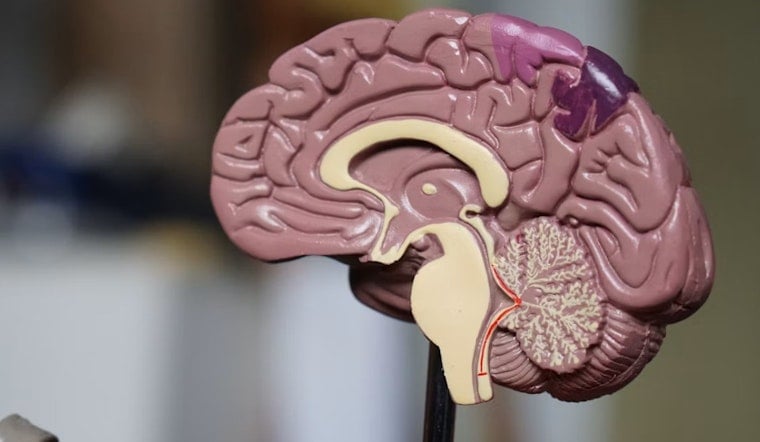
A high school student's class project has forced the U.S. Coast Guard to confront a hazard it never formally tracked: the cumulative brain damage suffered by surfmen, the elite boat operators who drive rescue craft into breaking waves during storms. Kayleigh Bonner researched brain injuries among Coast Guard surfmen for an Advanced Placement class, sending a questionnaire of about three dozen questions to surfmen and receiving 77 responses from retired and active-duty crew members. What she found echoed the final months of her own father's life.
A Father's Decline After 21 Years on Rescue Boats
Kayleigh's father, Brett Bonner, served as a Coast Guard surfman for 21 years, working from a station beneath the Golden Gate Bridge near San Francisco before he was later reassigned to the Coast Guard's surf school at the mouth of the Columbia River in Washington. He retired from surf-boat work in 2022 and survived a boat rollover in rough Pacific surf during his career, according to reporting from The New York Times. In the years before his death, Bonner experienced headaches, sleep problems, nightmares, mood changes, and light and noise sensitivity, and the Coast Guard diagnosed him with PTSD. Only after cognitive testing was he diagnosed with a traumatic brain injury.
Bonner died by suicide during a winter morning in 2025. In the months beforehand, he experienced severe cognitive decline and erratic behavior, according to the newsletter Loose Cannon, culminating in an episode in which he set Coast Guard documents on fire on the living room floor of the North Carolina mountain property where he lived on 60 acres. He had saved hundreds of lives during his career on rescue boats, the newsletter notes.
The Physics of a Rescue Boat Slamming Into a Wave
The forces behind these injuries are not abstract. Boat-wave impacts can reach the force of a car crash, and wave impacts can accumulate over roughly 10,000 hits during a career, per the reporting. A 22-year Coast Guard rescue boat veteran told the Pennsylvania Council of Chief Executive Officers coalition that a breaking 20-foot wave hitting a rescue craft delivers force comparable to a car crash, meaning surfmen in heavy training conditions can absorb the equivalent of up to 20 car accidents in a single day.
Biomechanical research published in 2025 and 2026 found that high-speed military craft traveling up to 40 knots expose crew members to repetitive wave impacts exceeding 20 Gs, producing chronic brain trauma and structural brain damage similar to CTE, according to research indexed on PMC. The parallel extends to elite Navy Special Warfare boat crews, who experience similar physical shocks from rough-water operations. Career surfmen have reported memory, cognitive, sleep and mood problems, but were rarely diagnosed with head injuries by the Coast Guard, which historically maintained no medical surveillance program tracking repetitive wave impact hazards on boat crews.
A Commandant's Response, and an Agency Playing Catch-Up
Following the July 30 publication of the Times investigation into surfmen brain injuries, Coast Guard Commandant Admiral Kevin Lunday issued a statement vowing decisive action to recognize, treat and protect crews from wave-induced traumatic brain injuries, calling brain health an operational necessity and readiness issue, according to an open letter published by TreatNOW. The reporting found that Coast Guard rescue-boat crews showed signs of brain injuries from rough seas, and the Coast Guard has said it could prevent future injuries by changing boat design, training design and career length, per the same account.
The Department of Defense has already spent billions of dollars studying, understanding and preventing brain injuries, according to Times reporter Dave Philipps, who has covered the military for roughly 20 years. Traumatic brain injuries can also result from shock waves generated by troops' own weapons, a hazard the Department of War formally addressed in August 2024 by issuing interim exposure safety limits for blast overpressure and requiring blast tracking across military training environments, according to guidance published by U.S. Special Operations Command. Under the Department of Defense's Warfighter Brain Health Initiative, all new recruits now undergo mandatory baseline cognitive testing, with service members in high-risk combat specialties receiving mandatory re-evaluations every five years, per the Air Force's official site. The Navy's VXS-1 Laboratory has separately incorporated a High-Speed Craft Functional Shock testing standard into military engineering specifications to evaluate wave-slam impact loads on boat systems, but that standard measured equipment stress rather than the toll on the humans operating the craft.
A National Pattern Beyond One Family
The gap surfmen face fits a broader, documented pattern among veterans. Hoodline has previously reported that more than 110,000 U.S. military veterans live with Parkinson's disease, making veterans roughly 11% of all U.S. Parkinson's patients despite representing only 6% of the national population, in an Ocala veteran's Parkinson's story. Risk factors cited for veterans include chemical exposures, traumatic brain injuries, and cumulative physical trauma.
Federal spending on the VA's Veterans Community Care Program rose to $36 billion in fiscal year 2025, up from $8 billion in 2014, driven partly by expanded enrollments following the 2022 PACT Act, with more than 200,000 new veterans enrolling in just the first seven months of 2026. And an estimated 17 to 22 military veterans die by suicide each day in the United States, with traumatic brain injuries and PTSD identified as key contributing risk factors — a crisis complicated when unrecognized brain injuries are misdiagnosed as psychological conditions rather than physical ones, as Bonner's case illustrates.
Coast Guard surfmen train along the Pacific coast and in Washington state, a pipeline that has produced generations of the service's most decorated rescue specialists. What remains unresolved is how quickly the Coast Guard and the VA can implement routine diagnostic screening, retroactively recognize service-connected brain injuries that were previously misdiagnosed as PTSD, and redesign boat hulls, seating and career-length limits to prevent future cases. Kayleigh Bonner's questionnaire and the subsequent Times investigation have pushed the issue into public view, but the institutional response is still in its earliest stages.




