

























































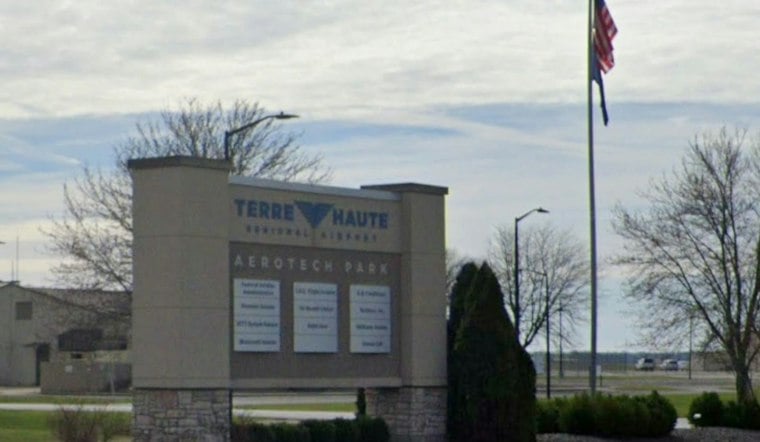
When Col. Chris Colbert got the order to find a wingman and prepare for launch on the morning of September 11, 2001, he had no idea he would spend part of that afternoon flying alongside Air Force One. Colbert, then operations officer of the 113th Fighter Squadron based at Terre Haute, selected fellow pilot Tom Sims as his wingman, and the two took off in F-16 fighter jets carrying only 20mm cannon training rounds — the only munitions available that morning.
According to WISH-TV, Colbert and Sims reached supersonic speeds and arrived over Chicago within eight minutes of launch, moving into action as they watched United Airlines Flight 175 hit the South Tower. The squadron had returned from air combat training in Nevada just two days earlier. Colbert has said the military that day responded to a situation it had never practiced.
A Midwest Base Built for the Moment
The 113th Fighter Squadron, the flying unit of the 181st Fighter Wing, stored live munitions at the Terre Haute civilian airport — a detail that mattered enormously that morning. As WIBC 93.1 FM reported, Terre Haute's Hulman Field housed the sole Air National Guard munitions storage facility in the Midwest, meaning Colbert's unit was uniquely positioned to load live training rounds and launch armed jets while many other regional Guard units either had to source ammunition from distant depots or scramble unarmed.
That capability came against a backdrop of thin national defenses. On the morning of the attacks, NORAD had only 14 fighter jets on active alert across seven bases in the continental United States, according to DSIAC — a force that had shrunk from 26 alert bases during post-Cold War drawdowns, leaving domestic air defense heavily reliant on scrambling non-alert Guard units like the 113th.
Patrolling Chicago, Then Redirected to Escort the President
Colbert and Sims patrolled Chicago airspace for hours after their initial launch. Tom Sims, who was also an American Airlines pilot, brought experience identifying civilian aircraft that proved valuable as the fighters worked to sort friendly airliners from potential threats in crowded skies.
The pair was eventually redirected from Chicago and given a new assignment: escort President George W. Bush, who had been in Florida when he learned of the attacks. Air Force One, using the classified call sign Angel or Angel Flight, was working its way back toward Washington after a chain of security stops. Per the National Commission on Terrorist Attacks Upon the United States, Bush's plane left Sarasota at 9:55 a.m., then made stops at Barksdale Air Force Base in Louisiana and Offutt Air Force Base in Nebraska before departing Nebraska at 4:36 p.m. to head back to the capital.
Colbert and Sims escorted the president for about 20 minutes, flying over the north side of Indianapolis and continuing across Indiana and into Ohio, where another group of fighters took over the escort in the eastern part of the state. An airborne warning and control plane using the call sign Chalice helped coordinate the handoff, and the two pilots refueled from a tanker aircraft during the mission.
From Combat Deployments to an Intelligence Mission
Operation Noble Eagle, the homeland air defense campaign established in the days after the attacks, went on to become NORAD's permanent domestic mission. Under that framework, military aircraft have flown more than 61,000 combat air patrol sorties and diverted fighters over 2,350 times to investigate suspicious domestic flights, according to the North American Aerospace Defense Command.
Colbert himself went on to fly combat missions over Afghanistan and Iraq and flew additional defensive missions after 9/11 before retiring in 2019. Between 2001 and the end of its flying mission, the 181st Fighter Wing deployed personnel and equipment to 19 countries in support of seven concurrent overseas operations, including Operation Enduring Freedom and Operation Iraqi Freedom.
The 2005 federal Base Realignment and Closure process ended the 181st Fighter Wing's flying mission, and its F-16s left Hulman Field for good in September 2007, reassigned to the New Jersey Air National Guard. In 2008, the unit was redesignated the 181st Intelligence Wing, shifting Terre Haute's base to non-flying intelligence, surveillance, and air support work — a transition detailed on Wikipedia. The base's aviation identity endures in other ways, too — last month, Hulman Field's air show sold out its Saturday crowd and brought in the Thunderbirds for a Sunday finale, a nod to the community's long ties to military flight even without a permanently assigned fighter squadron.
A Call to Remember
Reflecting on how the country responded that day, Colbert has said September 11 demonstrated national unity, and he has noted that today's fighter fleet is smaller than it was in 2001 but that current aircraft are more capable. He has asked Americans to remember the families of those who died on September 11.





