

























































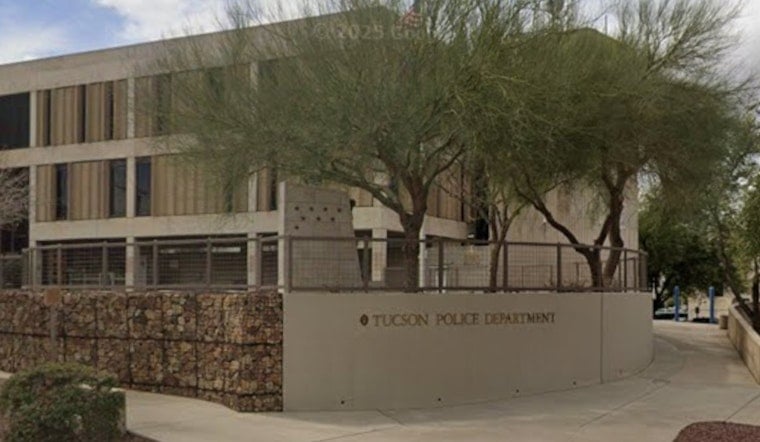
Tucson police have compiled a list of 50 people frequently cited for trespassing, loitering, solicitation and standing in street medians, and starting this past July, officers, city court workers and health and wellness staff have begun contacting two people from that list every week. The goal is to steer them away from repeat offenses using a strategy first built to stop gang murders in 1990s Boston, not manage encampments and addiction on the streets of a modern Southwestern city.
The pilot, which is expected to run about six months, is Tucson’s attempt to adapt what’s known as focused deterrence — sometimes called the “Boston Miracle” approach — to quality-of-life misdemeanors, according to reporting by KNSI, which credited the story to Geoff Hing of the Marshall Project. Tucson Police Chief Monica Prieto has said future consequences for people who don’t change course could include encouraging city court not to dismiss charges or ordering substance-use treatment. The list currently covers downtown Tucson and areas north and west of downtown, and the pilot could expand to other parts of the city, per the same account.
How Boston’s Model Is Supposed to Work
Focused deterrence identifies a group of people most associated with a specific type of crime and combines the certainty of criminal justice consequences with offers of support to change behavior. In the original Boston program, launched in 1996 to curb youth gang violence, police arrested people driving intergang conflict, flooded areas experiencing that violence, and made unexpected home visits alongside probation officers who met directly with gang members, while social service workers offered services and jobs. The National League of Cities has tied that program to a 63% reduction in monthly youth homicides and a 32% drop in shots-fired calls for service in Boston between 1996 and 2000.
Ben Struhl, executive director of the Crime and Justice Policy Lab at the University of Pennsylvania, told the Marshall Project that the fundamentals of focused deterrence could theoretically apply to a broad range of problems, per the KNSI report. But he also cautioned that there is little evidence supporting its use for quality-of-life misdemeanors specifically, and he said a city cannot claim to provide services without actually following through. Cities using the strategy, he said, should focus on problems the community defines as most urgent, provide certainty that services will be available, and pursue reduced crime, reduced exposure to the justice system, and improved city-resident relationships.
Why Homelessness Complicates the Formula
The tension at the center of Tucson’s pilot is that quality-of-life misdemeanors are often difficult to avoid for people living on the streets, and focused deterrence may struggle to shape the decisions of someone with opioid use disorder who is mainly focused on avoiding painful withdrawal. Unlike gang violence, which involves discrete, identifiable actors, homelessness-related offenses are driven heavily by addiction, mental illness and a lack of shelter — factors the Boston model wasn’t originally designed to address, according to the same reporting.
Tucson’s team is nonetheless offering substance-use treatment, mental health treatment and shelter to people on its list, while warning them of possible harsher consequences after future arrests. Caroline Isaacs, executive director of Just Communities Arizona, questioned the city’s reliance on policing given identified gaps in services for unhoused people, arguing that housing and free no-barrier drug treatment on demand are themselves safety measures.
Political Pressure Behind the Pilot
Tucson’s enforcement push isn’t happening in a vacuum. Arizona voters approved a ballot measure in November 2024 allowing property owners to request tax refunds for costs tied to a jurisdiction’s nonenforcement of offenses including illegal camping, drug use and public defecation, an effort championed by the Goldwater Institute along with similar laws pushed in Georgia and Oklahoma by the Cicero Institute, according to Ballotpedia. In practice, the measure has had limited financial bite so far: through July 2025, the Arizona Department of Revenue had received just 18 tax refund claims statewide seeking more than $128,000, and none resulted in payouts because of administrative rejections and tax-structure limits in cities like Tucson, according to the Arizona Agenda.
The legal landscape shifted further after the U.S. Supreme Court ruled in City of Grants Pass v. Johnson in June 2024 that municipal bans on outdoor camping and sleeping in public spaces don’t violate the Eighth Amendment’s prohibition on cruel and unusual punishment, even without available shelter beds, according to Purdue Global Law School. In the year following that ruling, state and local governments nationwide enacted more than 260 new laws criminalizing homelessness-related conduct, per the National Homelessness Law Center. Tennessee’s camping ban goes as far as making public camping a felony, per the KNSI report.
Tucson Also Suing the Federal Government Over Funding
Even as it rolls out police-led intervention, Tucson is simultaneously fighting the federal government over funding rules that could undercut the very housing and treatment resources its pilot depends on. Tucson and other cities and nonprofits sued to halt HUD funding changes for fiscal year 2025 after the agency shifted federal funding formulas for local homelessness responses, incentivizing enforcement while requiring transitional housing funding to mandate participation in treatment, services or work. President Trump signed an executive order in July 2025 directing federal agencies to prioritize grants for jurisdictions enforcing laws against open drug use, camping and loitering, per the same reporting.
A federal judge ruled in August 2026 that HUD failed to follow required public notice-and-comment procedures when it tried to shift funding away from Housing First models, according to Smart Cities Dive, which reported the agency had attempted to redirect $4 billion in Continuum of Care grants. Tucson joined Boston, Cambridge and housing advocacy groups as co-plaintiffs in the broader legal fight, and local service providers have warned that federal cuts to permanent housing could displace thousands of unhoused residents, per AZ Luminaria. U.S. homelessness rose substantially since the mid-2010s before decreasing from 2024 to 2025, per the Marshall Project’s reporting.
A Shelved Ordinance and Cautionary Tales From Other Cities
Tucson officials shelved a separate proposed ordinance in January 2026 that would have created a drug-related loitering offense, requiring police to warn people to leave public places under specified drug-related conditions and allowing arrest after subsequent encounters. That measure, introduced by Nikki Lee, would have imposed a mandatory five days in jail after a second arrest, but Lee said enforcement would have burdened city court, according to the KNSI account.
Other cities’ experiments with targeted lists offer warnings for Tucson. Chicago’s Strategic Subject List identified people the department said were likely shooters or victims of gun violence, generating risk scores for nearly 400,000 residents largely based on arrest records, according to the City of Chicago Office of Inspector General. Critics said the list was too expansive, it may have violated state civil rights laws through overrepresentation of young Black and Latino men, and the department was not fully forthcoming about how it used the names in enforcement. Chicago spun down the list in November 2019 after RAND Corporation and Inspector General evaluations found it failed to reduce gun violence while increasing arrest rates for listed individuals.
In Florida, the Pasco County Sheriff’s Office agreed to pay $105,000 and permanently end its predictive Intelligence-Led Policing program in 2024 to settle a federal civil rights lawsuit alleging deputies systematically harassed people and their family members named on an algorithmically generated list of likely lawbreakers with petty code citations and arrests. A former Pasco County deputy said the initiative was intended to make targeted people’s lives miserable until they moved away or sued, according to the KNSI report, which noted the lawsuit followed a Tampa Bay Times investigation into the program.
Other Cities Testing Similar Approaches
Tucson isn’t alone in trying to bend focused deterrence toward street-level enforcement. Austin has launched a program assigning four police officers to connect frequently arrested people with partner-organization services, with each officer handling roughly 25 people who have frequent arrests, emergency room visits and behavioral health incidents. Baltimore, which failed to reduce gun violence with earlier strategies including focused deterrence, has more recently seen its group violence reduction strategy help push homicides and shootings to their lowest levels in years, per the same reporting. Focused deterrence has also spread to cities including Oakland, though several cities have ended their own focused deterrence programs after public outcry or civil rights lawsuits.
Legal challenges to homelessness-focused enforcement are mounting elsewhere too. The American Civil Liberties Union sued in 2026 over the constitutionality of a New Hampshire loitering law that it alleges is overly vague and grants police broad authority to stop and search unhoused people. Focused deterrence programs have often received federal funding, according to the Marshall Project’s reporting, which was reviewed and distributed by Stacker.
Tucson’s experiment arrives alongside other Arizona municipalities wrestling with the same pressures. Hoodline previously reported that Tempe’s summer homeless count held steady at 280 despite federal aid cuts, part of a broader statewide pattern of enforcement pressure, funding uncertainty and municipal outreach efforts playing out from Tucson to Phoenix.





