

























































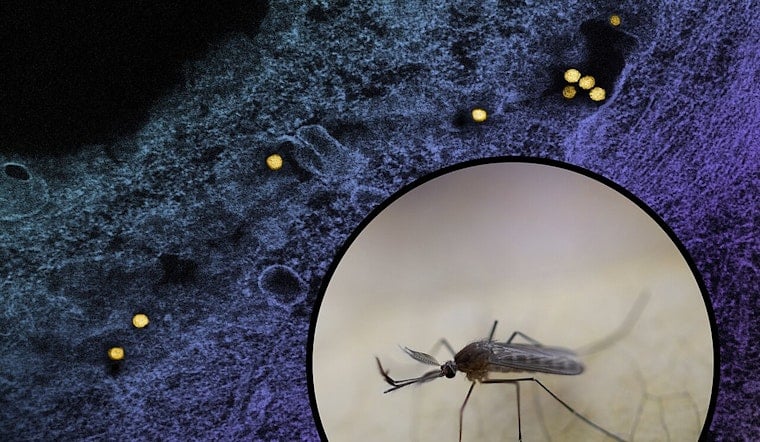
Two Aurora residents have been hospitalized with severe cases of West Nile virus, marking Kane County's first confirmed human infections of the 2026 mosquito season. Both patients developed the neuroinvasive form of the disease, a serious complication that can cause meningitis, brain swelling, nerve damage, seizures, paralysis, and lasting cognitive and motor problems.
The Kane County Health Department has not released further updates on the patients' health statuses, according to Shaw Local. Michael Isaacson said West Nile virus is present in the community and that mosquito bite prevention remains important for the rest of mosquito season. Isaacson also noted that most people infected with the virus never develop symptoms, though it can still cause serious illness in some cases.
A Small Fraction of Cases Turn Severe
Health officials say around one in five people infected with West Nile virus develop mild flu-like symptoms, including fever, headache, and body and joint aches, the same report notes. Less than 1 percent of infections progress to severe illness, and that risk is highest among elderly people and those with weakened immune systems. There is no specific treatment or vaccine for the virus.
Kane County logged five confirmed human cases in 2025 and four in 2024, according to the same account, making this year's two hospitalizations notable so early in the surveillance record. Statewide, Illinois reported 150 confirmed human cases and 10 deaths in 2025. The county health department is conducting mosquito surveillance and partnering with local agencies to monitor and reduce West Nile virus risk.
A Wider Late-Summer Surge Across Illinois
The Kane County hospitalizations arrive amid a broader wave of mosquito-borne illness moving through northeastern Illinois. On September 1, health officials confirmed Chicago's first two human West Nile cases of the year along with the state's first West Nile-related death of the 2026 season, according to WTTW News. The Chicago Department of Public Health has said the summer of 2026 brought the city's rainiest conditions in years, creating abundant standing water that accelerated mosquito breeding across the region.
Just days earlier, the Illinois Department of Public Health confirmed the state's first human case of the season in a Piatt County resident on August 26, along with three additional probable cases in northern Illinois. State health officials also reported that West Nile activity had turned up in mosquito pools, birds, or livestock across 50 of Illinois' 102 counties by late August. Cook County reported its first four human cases of the season on August 28, in a county that logged 44 cases and four deaths in 2025.
The Mosquito Behind Most Illinois Infections
State health data attributes roughly 70 percent of West Nile-positive mosquito samples in Illinois to Culex pipiens, the northern house mosquito, which breeds in organic-rich stagnant water and rarely travels more than a mile from where it hatches. Mosquitoes become infected after feeding on birds carrying the virus, then transmit it to people and other animals through subsequent bites. American crow populations in Illinois were hit hard by the virus in the early 2000s, when roughly half of all crows in the state died from the disease, according to WBEZ Chicago.
Ahead of the human hospitalizations, Kane County municipalities including St. Charles, Geneva, and Batavia carried out multiple rounds of citywide mosquito spraying in July and August after positive trap detections, contracting with vector control company Clarke to treat the areas. Illinois' worst West Nile outbreak in U.S. history came in 2002, when the state recorded 884 human cases and 64 deaths across nearly all of its counties, a crisis that prompted the statewide mosquito surveillance infrastructure still in use today.
Nationwide Numbers and What Residents Can Do
Nationally, the Centers for Disease Control and Prevention had recorded 407 total human West Nile cases across 40 states as of September 1, with 285 classified as neuroinvasive. Because roughly 80 percent of West Nile infections produce no symptoms and mild cases rarely get tested, reported human case counts likely understate the virus's true spread through communities.
Health officials recommend several precautions to reduce the risk of West Nile virus transmission: eliminating standing water around homes to cut down on mosquito breeding sites, keeping grass and weeds trimmed to reduce resting areas, repairing tears or holes in window screens and screen doors, wearing long sleeves, using insect repellent, and avoiding outdoor activity during dawn and dusk when mosquitoes are most active. Limiting mosquito bites remains the most effective way to reduce the risk of infection as the season winds down.





