

























































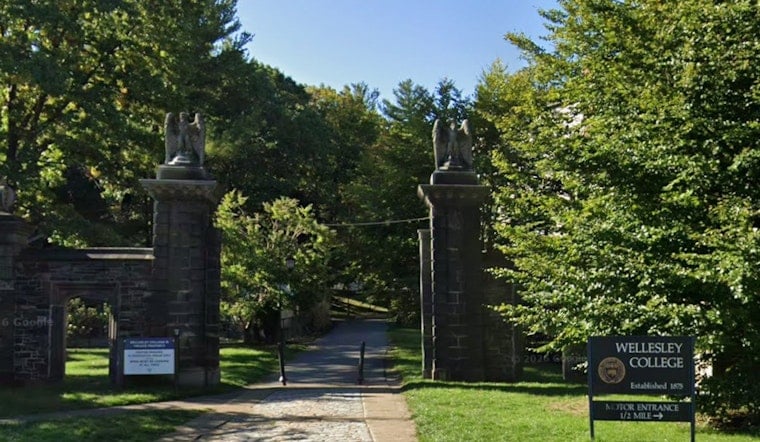
Wellesley College announced it will offer free tuition to students from families earning $200,000 or less starting in fall 2027, a move that pushes the elite women's college into the same income bracket as Harvard, MIT and Boston University. The new initiative, called the Wellesley Tuition Promise, will apply to new first-year, transfer and returning students, and it arrives less than a year after the college set a lower $150,000 income cap for free tuition beginning this fall.
College President Paula Johnson said Wellesley's leadership chose the $200,000 threshold to economically assist as many families as possible, according to The Boston Globe. Johnson said the college was founded a little over 150 years ago to educate young women from varied socioeconomic backgrounds, and that the tuition program is meant to expand on that founding mission, per the same report. The jump from a $150,000 cap announced in January to $200,000 just months later marks a rapid escalation, as The Wellesley News reported at the time of the earlier announcement.
What the Promise Actually Covers
Tuition at Wellesley currently runs $72,570 for the 2026-27 school year before financial aid, and the new promise covers tuition only — not room, board, or other fees, the Globe reports. In the pilot year, eligible students will pay between $0 and $26,000 for boarding, meals and other costs, depending on need shown in their financial aid applications, Wellesley Dean of Admission and Financial Aid Peaches Valdes said. Those additional costs matter because Wellesley's total price of attendance, including housing, meals, books and transportation, can reach up to $103,037. According to the U.S. Department of Education’s College Scorecard, Wellesley’s average annual cost is $25,496 after average grants and scholarships are deducted. For comparison, the U.S. Department of Education’s College Scorecard lists Babson College’s average annual cost as $40,514 after average grants and scholarships are deducted.
Eligible students will need to apply annually for additional aid to cover most of those remaining costs beyond tuition, according to the Globe's reporting. The Wellesley Tuition Promise is limited to domestic students, though international students — who make up roughly 13 percent of Wellesley's roughly 2,400-student body — will continue receiving need-based financial aid, with the college committed to meeting 100 percent of their demonstrated need. Valdes said Wellesley remains committed to meeting the needs of students from all countries even though the headline pledge does not extend to them.
Wellesley Joins a Crowded Field of $200,000 Pledges
Wellesley is the first women's college in the nation to make the free-tuition pledge at the $200,000 threshold, but it is following a well-worn path among Massachusetts and Northeast institutions. Harvard, MIT and Boston University already offer free tuition to students whose total family income is $200,000 or less. Yale was also included among schools with similar policies, according to Forbes, which places Wellesley's move within a broader regional trend among top-tier private schools.
Wellesley is one of a small but growing number of private Massachusetts colleges now covering tuition for students from six-figure-income families, a shift the Globe frames against mounting criticism of rising higher-education costs and the higher cost of living squeezing American families. Fellow Seven Sisters school Smith College got there first with a lower bar, introducing what it called The Next 150 Pledge in October 2025 to make tuition free for families earning up to $150,000 starting this fall — and unlike Wellesley's plan, Smith's guarantee applies to both domestic and international undergraduates. Outside Massachusetts, Rice University is also among institutions with free-tuition programs, and Davidson set a $175,000 threshold for students enrolling in fall 2027, according to Hoodline's earlier coverage of those moves.
Why Sticker Prices Keep Climbing Even as Aid Expands
The headline-grabbing promises come as Wellesley's own published costs have climbed steeply. The Wellesley News reported a total estimated cost of attendance of $100,541 for 2025-26. Boston University's estimated tuition alone tops $60,000 for the 2026-27 year before aid is factored in.
Wellesley economics professor Phillip Levine, a higher-education economist, has argued that upfront free-tuition promises function primarily as clear communications mechanisms — tools that boost applications from middle-income students without necessarily changing the net financial aid calculations colleges already perform, per Levine's comments reported by The Wellesley News. Wellesley already provides substantial aid through need-based grants and institutional scholarships that students never have to repay.
That generosity is supported by Wellesley's endowment. Federal tax changes in 2025 raised the university endowment tax to 8% for wealthy schools but exempted colleges enrolling under 3,000 students — a carve-out that freed up funds smaller institutions like Wellesley and Smith have redirected toward expanded student aid, as reported by The Washington Post.
The push to erase tuition sticker shock isn't limited to private colleges. Massachusetts itself launched the state-funded MassEducate program in July 2024, providing tuition-free and fee-free public community college to state residents without a bachelor's degree regardless of household income, according to the Massachusetts Office of Student Financial Assistance.


