

























































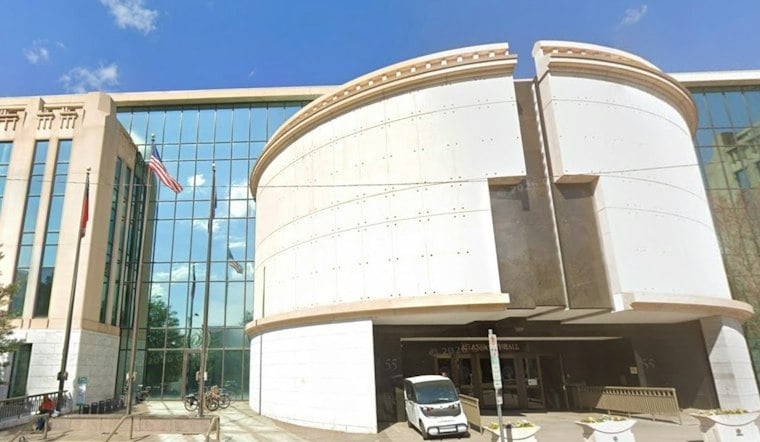
Atlanta's City Council voted Monday to endorse a boycott of Starbucks, siding with unionized baristas in a stalled contract fight and barring city funds from being spent on the coffee giant until a deal is reached. The vote on Resolution 26-R-4188 makes Atlanta the latest major city to throw its political weight behind Starbucks Workers United, but it didn't pass without friction among council members themselves.
According to 11Alive, the resolution was introduced by District 2 Councilmember Kelsea Bond and passed the full council on October 19, two weeks after it was first introduced at the October 5 meeting. The measure prohibits the city from using public funds to purchase Starbucks products for official meetings, conferences, and municipal events, and it formally encourages Atlanta residents to abstain from patronizing the chain until a contract is signed. As 11Alive reported, the council pledged to stop using city funds for Starbucks until the union and company reach a fair bargaining deal.
The vote wasn't unanimous in spirit, even if it passed. Councilmember Alex Wan cautioned that targeting a private employer through city policy set a dangerous precedent, while Bond countered that failing to act permitted corporate exploitation of local workers, per the station's report. It's a tension that mirrors the broader debate over how far municipal government should go in taking sides on private-sector labor disputes.
What the Resolution Actually Does
Despite the sweeping language around a boycott, the resolution operates narrowly as a municipal spending restriction paired with a public recommendation, not a ban on commerce within city limits, the same account notes. City agencies simply won't buy Starbucks products for official functions going forward, while residents and nearby municipalities are being asked, not required, to stay away from the chain.
At the center of the fight are roughly 250 Starbucks employees in Georgia who are unionized under Workers United, an affiliate of the Service Employees International Union. Per 11Alive, the union's core demands include a minimum wage floor of $17 per hour, a staffing floor of three workers per shift, and enough scheduled hours for baristas to qualify for health benefits.
Atlanta Joins a Growing List of Cities
Atlanta is now the third major U.S. municipality to endorse the Starbucks boycott this autumn, following resolutions from the St. Louis Board of Aldermen in late September and the Philadelphia City Council on October 1, according to The Philadelphia Inquirer. Hoodline previously covered Philly's unanimous vote. These municipal boycotts are largely symbolic political declarations meant to pressure corporate executives rather than legally binding commercial bans, the Inquirer's reporting notes.
The organizing effort in Atlanta has deep roots. Baristas at the Howell Mill Road location in Buckhead became the first Starbucks workers in metro Atlanta to unionize back in June 2022, voting 10-1 in favor, according to the Atlanta Journal-Constitution. The city council later backed those workers with its October 2026 resolution.
A National Campaign Against a Low-Union State
Starbucks Workers United officially launched its nationwide consumer and organizational boycott on August 25, representing roughly 12,000 baristas across more than 700 unionized stores, as reported by Truthout. The union has pointed to more than 550 unresolved unfair labor practice charges against the company as a driving force behind the campaign. The AFL-CIO, which represents over 12 million unionized workers nationwide, formally added Starbucks to its own boycott list in late August to amplify those contract demands, according to the Daily Tar Heel.
Georgia holds one of the lowest union representation rates in the country. The state's union membership rate is 5.1%, while 6.1% of workers are represented by unions. That low rate adds to the challenges organizers face in building leverage at the bargaining table.
Corporate Restructuring
The union pressure campaign is unfolding as Starbucks works through its own financial turbulence. On September 10, 2026, the company announced a roughly $1 billion investment plan to renovate up to 9,000 company-operated North American cafes as part of its turnaround strategy. Starbucks also announced plans to close 250 cafes nationwide, even as corporate representatives said Starbucks remained committed to providing partners a bridge to a better future, 11Alive reported. Hoodline previously reported on the closures.





