

























































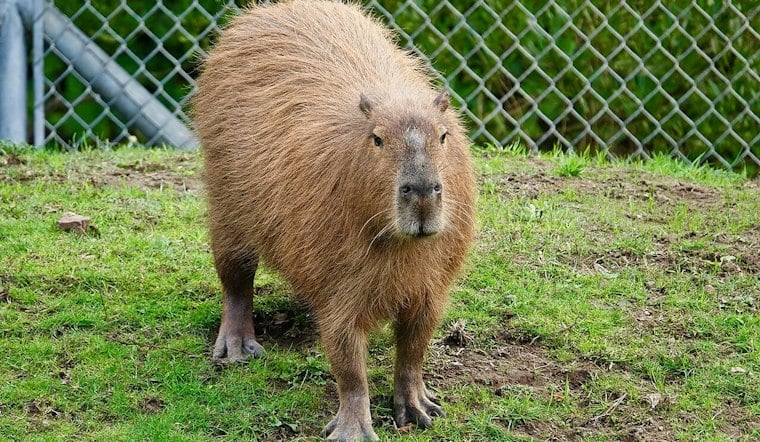
San Francisco Zoo has capybaras again. Two young siblings, each weighing between 33 and 44 pounds, arrived from the Sacramento Zoo and moved into the Puente al Sur habitat earlier this month, ending a nearly decade-long absence of the world's largest rodents at the Fleishhacker Zoo grounds that dates back to around 2016.
The pair's arrival marks the first time capybaras have been housed at the zoo in nearly 10 years, according to Local News Matters, a milestone for a species that has historically been a major visitor favorite. The four-month-old siblings were transferred under the Association of Zoos & Aquariums' Capybara Species Survival Plan, a coordinated breeding and management program designed to maintain genetically diverse populations across accredited facilities, according to San Francisco Zoo & Gardens. The zoo had waited several months for an available pair through that program.
The four-month-old siblings' arrival marked the return of the world's largest rodents to the zoo.
A Splash-First Introduction to the Exhibit
When the capybaras entered the Puente al Sur enclosure on October 8, the female immediately swam laps in the exhibit's outdoor pond, a display of the species' semi-aquatic nature, SFGATE reported. Capybaras have webbed feet and can remain underwater for up to five minutes, a trait suited to their natural habitat along riverbanks, marshes, and flooded grasslands throughout South America, according to the World Animal Rescue Network.
At their current size, the siblings still have plenty of growing to do. Fully grown capybaras can measure over four feet long and stand up to two feet tall, reaching adult weights of 110 to 150 pounds or more, far beyond the 33 to 44 pounds the young pair tipped the scales at upon arrival. Wild capybaras are categorized as Least Concern by the IUCN Red List, though the same source notes that wild populations still face regional hunting pressures and habitat destruction across South American river basins.
Settling Into a Shared South American Habitat
The capybaras now share Puente al Sur, which translates to Bridge to the South, with a giant anteater, a Baird's tapir, a Southern pudu, and Western Santa Cruz giant tortoises. Keepers plan to eventually introduce the siblings directly to the habitat's resident male Baird's tapir, named Pacha, though the animals are currently undergoing a staged acclimation process before any full public integration with their new neighbors.
In November 2023, the zoo welcomed a two-year-old Baird's tapir from New Orleans as a species ambassador. The habitat brings several species together.
San Francisco Zoo gave members an exclusive preview of the new arrivals on October 12, ahead of opening the exhibit to general public viewing later that week, according to the zoo's Instagram account. The capybaras underwent a private acclimation period before their full public debut.
Arrivals Come Amid Financial Oversight
The capybaras' arrival lands against a backdrop of financial scrutiny at the zoo. In April, the city approved a $6.5 million bridge loan for the institution, with quarterly financial reporting and a five-year strategic plan linked to accreditation goals; visible progress was due by 2027, Hoodline previously reported in its piece on the $6.5 million zoo lifeline. City officials tied the funding to operational transparency and animal care requirements.
Municipal veteran Cassandra Costello was appointed permanent CEO and Executive Director of the zoo in February, according to SF Zoo Watch. Costello previously held senior roles in San Francisco municipal government, and her tenure now oversees a facility balancing new animal arrivals against the benchmarks tied to its city funding.





