

























































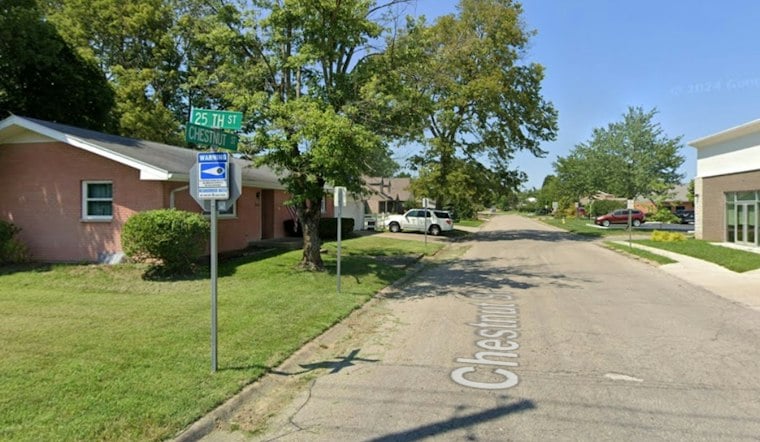
An 18-year-old Columbus, Indiana woman with autism was found safe Monday, just hours after police put out an urgent public plea to locate her. Lucianna “Lucy” Doades had last been seen early that morning near the 2500 block of Chestnut Street, wearing a yellow Hufflepuff shirt and blue shorts and carrying a lavender Jansport backpack.
The Columbus Police Department first asked the public for help finding Doades, describing her as Hispanic and noting her autism diagnosis, before confirming later the same day that she had been located safely, according to a Columbus Police Department post on Facebook. The department did not publicly detail where or how she was found, how far she had traveled from Chestnut Street, or whether any community tips helped locate her.
Familiar Landmarks Guided the Search
In its original notice, police said Doades had been known to frequent Donner Park, First Christian Church, The Commons, and the Irwin Gardens area — all prominent public landmarks clustered in downtown Columbus. Those sites, according to Visit Columbus Indiana, represent some of the city's best-known municipal parks and architectural destinations. Donner Park itself spans a major city block and includes a shelter house, pickleball courts, and the Donner Park Aquatic Center, which features a 50-meter pool, per the same tourism site.
Research cited by the National Center for Missing & Exploited Children helps explain why searchers focus on such specific places: elopement among autistic individuals is often goal-directed, frequently triggered by sensory overload, loud noises, or a pull toward locations of special personal interest, according to MissingKids.org. Identifying those familiar spots allows officers to narrow down probable destinations quickly rather than searching blindly.
Why Water Checks Come First
Speed matters in these cases. Statistics from the National Center for Missing & Exploited Children show that accidental drowning accounts for the majority of wandering fatalities among missing autistic individuals, with most victims found within a half-mile radius of where they disappeared, according to the organization's analysis. That is why safety experts urge law enforcement to check nearby water sources first when an autistic person goes missing, a protocol that made Donner Park's aquatic center and pool a logical early stop for searchers.
Wandering, sometimes called elopement, is not rare. Federal health data cited by the CDC indicates that roughly 49 percent of children and youth with Autism Spectrum Disorder attempt to wander or elope from safe environments at least once after age four, the agency notes, with the behavior capable of occurring regardless of how closely a person is supervised.
Indiana's Legal Framework for Vulnerable Adults
Doades's case falls under a specific Indiana statute. Under Indiana Code IC 12-7-2-131.3, a missing adult aged 18 or older who cannot return home without assistance because of an intellectual disability or mental incapacity qualifies as a Missing Endangered Adult, according to the Indiana State Government. The state expanded its Silver Alert legislation in 2018 specifically to cover missing individuals with special needs and developmental disabilities.
Indiana's alert options for missing adults include Silver Alert or general missing-endangered-person networks to notify the public.
At the federal level, change has been moving in a similar direction. In August 2026, the U.S. Department of Health and Human Services, the Department of Justice, and FEMA introduced the National Autism Missing and Endangered Person Alert Initiative, aimed at streamlining local and federal emergency responses whenever an autistic individual goes missing, according to HHS.gov. The initiative works through existing Missing and Endangered Person channels within FEMA's Integrated Public Alert and Warning System.
Local Dispatch Kept Lines Open
Behind the scenes, the Columbus Police Department's missing-person response ran through the 24-hour Bartholomew County 911 dispatch center, which coordinates both high-priority calls and non-emergency police inquiries for the region, per Indiana 211. Officers asked anyone with information on Doades's location to call police at 812-376-2600 as the search unfolded Monday morning.
By Monday afternoon, officers confirmed Doades had been found safe, closing out a search that unfolded over just a few hours. The department's update offered relief to a community that had spent the morning watching for an 18-year-old in a Hufflepuff shirt near some of downtown Columbus's most familiar gathering spots.





