

























































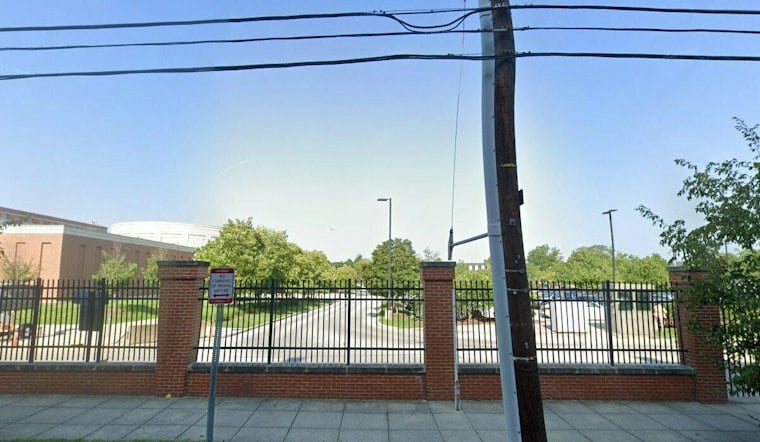
A Syracuse, New York-based company that tracks drones using passive radio-frequency sensors has opened a 9,000-square-foot office in Washington, D.C. The office brings Hidden Level closer to policymakers, government leaders, defense partners, customers, and law enforcement. Hidden Level says the move follows years of quietly watching the skies over the nation's capital, including detecting unauthorized drone activity near Fort McNair.
The new office spans roughly 9,000 square feet and is meant to serve as a permanent regional hub, according to Hidden Level. The company has operated an airspace monitoring network in the National Capital Region since 2021, and per citybiz, its customer base for that regional service has doubled over the past six months, though the company has not disclosed the actual number of customers.
Founder and CEO Jeff Cole said the company has spent years building out its National Capital Region network and is now seeing more customers tap into its data, according to citybiz's reporting. Cole said the Washington office will improve access to customers, partners, and policymakers involved in airspace security, and that Hidden Level plans to expand its monitoring network both domestically and internationally.
Why the Skies Over the Capital Are So Tightly Watched
Washington's airspace is among the most restricted in the country. The region sits inside a 30-mile Special Flight Rules Area and a stricter 15-mile Flight Restricted Zone centered on Reagan National Airport, where the Federal Aviation Administration prohibits drone flights without specific TSA and FAA waivers. Despite those restrictions, federal security officials have reported multiple unauthorized drone incursions over sensitive locations in the capital, including documented sightings over Fort McNair, a detail Hoodline reported on this month in connection with broader federal drone restrictions along the US-Mexico border.
Hidden Level's network collects real-time information about unmanned aircraft activity and has detected unauthorized UAS activity near high-value sites like Fort McNair, the company says. Its technology relies on passive sensing to detect and identify radio frequency emissions tied to aircraft and other sources, rather than broadcasting signals of its own. Unlike active radar systems that emit radio pulses that can be jammed or tracked by adversaries, passive sensors monitor existing electromagnetic activity without revealing their own location, according to DFJ Growth. By combining data from multiple monitoring locations, distributed sensor networks can give security organizations broader geographic coverage and better situational awareness in places where drone activity is hard to track with conventional surveillance alone.
Federal Contracts and a Lobbying Push Paved the Way
The D.C. expansion comes alongside new federal business. Hidden Level was added to a second $100 million Other Transaction Authority contract issued by the Department of War's Office of the Under Secretary of War for Research and Engineering, though the company has not disclosed the value of any individual award or deployment tied to that contract. The OTA vehicle gives eligible government customers another procurement pathway to acquire and deploy Hidden Level's sensing hardware and software, distinct from conventional federal contracting. Hidden Level's sensor technology has already been placed on contract to support operations for the U.S. Army, Air Force, Africa Command, Central Command, Indo-Pacific Command, and Northern Command, as well as NASA, according to Washington Technology.
That reach followed a major funding round. Hidden Level raised $65 million in a Series C round led by DFJ Growth in February 2025, with participation from Booz Allen Ventures and Washington Harbour Partners, pushing its valuation to $450 million and its total capital raised over a 12-month span to $100 million, the outlet reported. The company has also built out its Washington relationships through lobbying, hiring Lisa Ellman's firm in June 2022; Ellman and former U.S. Senator Norm Coleman were among its 2025 lobbyists.
Manufacturing Stays in Syracuse as DC Handles Policy
While its new D.C. office handles government relations, Hidden Level's corporate headquarters and advanced manufacturing facilities remain in Syracuse. The company expanded its Syracuse presence in May 2026 by building a state-of-the-art anechoic chamber to scale radio frequency hardware design and testing across its four local facilities. Hidden Level has also pushed into civilian venue security closer to home, entering a multi-year partnership with Syracuse University Athletics as its official Airspace Safety Partner.
The company says it has deployed its technology for defense, homeland security, and critical infrastructure applications, with its airspace monitoring service combining deployed sensing infrastructure with software that delivers airspace and spectrum information to customers. Hidden Level says it plans to continue expanding its distributed sensing infrastructure both domestically and internationally.
A Broader Federal Crackdown on Rogue Drones
Hidden Level's expansion lands amid a wider federal push against unauthorized drone flights. In June 2025, the White House established the Federal Task Force to Restore American Airspace Sovereignty, alongside congressional proposals imposing civil fines of up to $100,000 for certain unauthorized counter-UAS actions, as Hoodline detailed in its earlier coverage of the administration's coast-to-coast enforcement effort. Similar counter-drone procurement has played out elsewhere, including Texas DPS funding for World Cup-related drone-mitigation technology, underscoring how contested the counter-UAS market has become as more agencies look for ways to see what is flying over sensitive ground.





