

























































Four days after her husband Lord Relentless Ha died in their Mission District apartment, Hannah Green paid the monthly rent like she always had. About a week later, a letter arrived informing her that the tenancy itself no longer existed. Green had lived in the apartment at 23rd and Capp streets for 16 years, but she was never the leaseholder, and under California law, that distinction now threatens to cost her the home she shared with her husband for a decade and a half.
Ha died on August 28, 2026, at age 64, according to The San Francisco Standard. He had lived in the same apartment since 1987, and Green moved in after the two met in San Francisco in 2011; they married five years later. On September 4, Makras Real Estate sent a letter addressed to the estate of Lord R. Ha, advising that the tenancy had been terminated. The letter did not mention any right Green might have to remain, and as of the Standard's reporting, no further letter had arrived since.
A Legal Gap Built Into California Rent Control
The mechanism behind the notice traces back to the Costa-Hawkins Rental Housing Act, which took effect statewide and ends rent-control protection once the person named on the lease is gone, per the Standard's report. Mark Chernev, a landlord attorney at Zacks, Freedman & Chernev, told the outlet that a tenant's death automatically terminates the tenancy as a matter of law, and that he encounters similar situations a few times a year. Landlords must still cite specific causes to evict a remaining occupant, Chernev said, but they may raise rent to market rate while eviction controls apply.
Green's rent had been $2,450 a month; her landlord could seek to raise it to three times that amount, the report states. Rahman Popal, a tenant attorney who advised Green, said her landlord may raise her rent but cannot force her out solely because she was not on the lease — though he noted a subsequent occupant does not carry the same rights as a tenant, and the law does not require a landlord to recognize that tenancy. Green and Ha had tried several times to add her to the lease, the Standard reports; she was instead offered occupant status without full tenant rights, despite covering most of the rent as the household's main breadwinner.
Owners Dispute Whether to Recognize the Tenancy
The building is owned by Daggett H. Howard Jr. and Sara G. Howard, according to the Standard's report; neither the Howards nor Makras Real Estate responded to the outlet's requests for comment. Makras Real Estate was founded by Victor Makras, who was convicted of federal bank fraud in 2022 in a case tied to a City Hall corruption probe — a prior Hoodline report noted the same conviction in a separate dispute. Popal said a surviving spouse may still challenge a rent increase at the Rent Board by arguing the landlord had effectively recognized them as a tenant, and he added that parties in similar disputes tend to settle somewhere between the old rent and market rate.
Green told the Standard that the letter felt like an attempt to convince her to leave, and that leaving the apartment would feel like leaving Ha behind. The letter left her facing an uncertain future in the apartment. Green arrived in San Francisco in 2009, studied psychology at the California Institute of Integral Studies, and now sees therapy clients virtually from home after closing her office during the pandemic.
A Recent Court Ruling, but No Guarantee It Applies Here
A Recent Court Ruling, but No Guarantee It Applies Here Whether Green can keep the rent-controlled lease remains unresolved. A Los Angeles County appeals panel offered one possible opening in April 2026, ruling in a case involving Vilma Reyes that she became a tenant in her own right, as detailed by FindLaw.
Why landlord groups may contest the precedent's reach. The ruling's broader implications remain uncertain. In Santa Monica, city attorneys warned in July 2026 that a proposed ballot measure extending similar protections to non-leaseholder household members more broadly faced severe challenges under Costa-Hawkins, according to the Santa Monica Daily Press, and the council stripped the provision from the measure.
Why State Lawmakers, Not Just Landlords, Hold the Key
Tenant advocates have tried without success to change the rules governing rent resets after a leaseholder dies. California voters have rejected statewide attempts to give cities more control over vacancy rent increases three times since 2018 — most recently Proposition 33, opposed by 62% of voters in November 2024, following earlier losses for Proposition 10 in 2018 and Proposition 21 in 2020, according to CalMatters.
For occupants like Green, the question of tenant status can determine whether rent-control protections apply.
A Familiar Pattern of Buyouts and Vacated Apartments
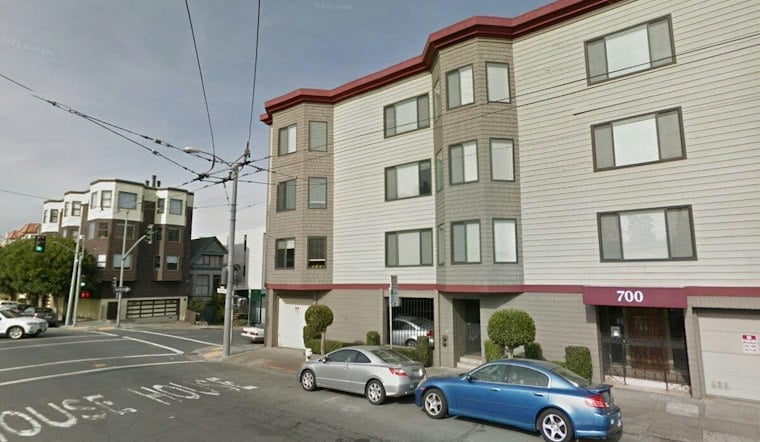
The uncertainty has pushed other families toward negotiated exits rather than prolonged fights. Ebere Emenike, who was born in 1994 and lived in her family's third-floor apartment at 700 Presidio Ave since birth, faced a similar notice to vacate two weeks after her mother, Adrienne Owens, died in November 2022 at age 62. Building management returned Emenike's rent check because it did not come from a current tenant, and the owner later notified her that rent would rise from $1,362.70 to $3,195 monthly. Her case illustrates the uncertainty facing family members who are not named on a lease.
San Francisco's own rent rules underscore the gulf between ordinary protections and what happens at a leaseholder's death. For the cycle running through February 2027, the Rent Board capped allowable annual increases for existing rent-controlled tenancies at just 1.6%, a limit detailed in a prior Hoodline report on the city's housing data. Mission District rents, meanwhile, have climbed roughly 18% over the past year, according to the Standard's reporting — a pressure that makes the threat of an uncapped reset especially acute for renters like Green.





