

























































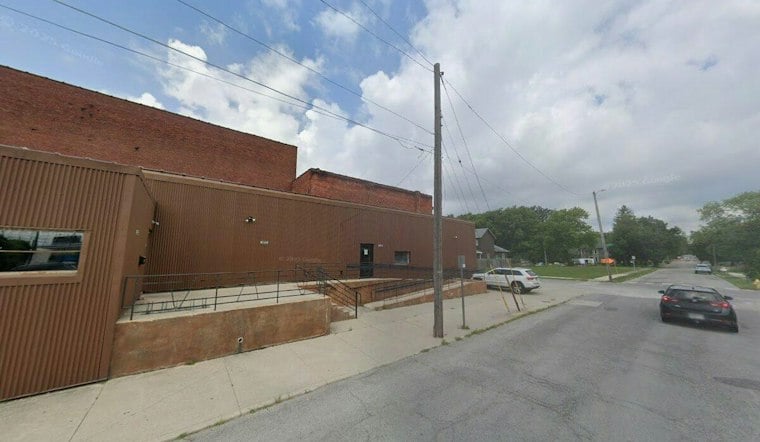
Muncie's first-ever Midwest Twin Fest finally kicks off Friday, running from 4 p.m. to 11 p.m. on Oct. 16 and 3 p.m. to 11 p.m. on Oct. 17, staged between Elm Street Brewing Company and 7 Rock Brew. The two-day music festival was originally supposed to happen in August, but record flooding across Muncie forced organizers to postpone, turning what was meant to be a summer debut into an autumn comeback.
The festival, known as Cornstock and Cornflower in its twin-event format, was supposed to unfold weeks earlier before disaster struck. As Ball State Daily News reports, Cornstock was postponed after record flooding ravaged the Muncie community in mid-August, with a flood warning beginning Wednesday, Aug. 12, 2026. The newspaper notes the flooding claimed the lives of three individuals in total. Separately, the White River in Muncie crested at 18.64 feet on Aug. 13, exceeding major flood stage by more than three feet and triggering widespread evacuations and water rescues, according to Cardinal Media. The same outlet reported that the City of Muncie officially declared a local disaster emergency that day as floodwaters covered key roadways and south-side neighborhoods across Delaware County.
Ashley Gray, executive director of Midwest Twin Fests and organizer of the inaugural two-part Cornstock and Cornflower music festival, said the decision to postpone was not complex, per the Daily News. Continuing the festival during the flood displacement, Gray said, would have been inappropriate. In the meantime, she supplemented Cornstock with a makeshift jam fest in partnership with Elm Street Brewing Company, located at 519 N. Elm St. in Muncie, and had already bought $500 worth of event shirts bearing the postponed date.
A Twin Bill Born From Doc's Music Hall
Cornstock is set to feature male musicians and bands, while Cornflower is billed as an all-women music event — a format that traces back to Gray's earlier work in Muncie. The report notes Gray co-founded the city's annual Maybelle Music Fest in 2020 alongside musician Heather Collins, creating an all-female performance showcase, according to Towne Post Network, before launching the broader Midwest Twin Fests initiative.
Gray's roots in Muncie's music scene run deep. She began performing at venues like Doc's Music Hall in 2002 before relocating to the Philadelphia region in December 2011 to work as a solo musical artist, per the Ball State Daily News. She now has a successful career as a female musician in Philadelphia, and it was at Doc's that she met Cheryl Crowder and Mike Martin, two collaborators who remain central to the festival's revival effort.
Doc's Music Hall was a cultural hub for Muncie's live music scene in the early 2000s, serving as downtown's primary independent venue from 1992 until its closing in 2012 — an era later documented in the 2014 music film “Giving Up the Ghosts,” according to JustWatch. The venue's founder, Dr. John “Doc” Peterson, died in July 2026 after receiving the Lifetime Achievement Award at the 2025 Mayor's Arts Awards for his decades of fostering Muncie's local music community, per Indiana Public Radio. For a festival built on reviving that era, his recent passing adds a layer of weight to the effort.
Rebuilding a Scene Lost to Recession and Industrial Decline
Crowder, who serves as Muncie Downtown Development's event director, described Gray as a force with drive, ambition and a get-it-done attitude, the Daily News reports. She also said Gray maintains a love for her Muncie community despite living on the East Coast. Martin, who owns the Muncie Common Market, offered a blunter assessment of the city's relationship with its past, saying Muncie is caught in a cycle of nostalgia about its history and about General Motors returning.
That nostalgia has a concrete origin point. General Motors permanently shuttered its Chevrolet manual transmission plant in Muncie on March 31, 2006, ending 71 years of automotive manufacturing at the site and eliminating roughly 3,000 historic industrial jobs. Midwest Twin Fests aims to reinforce Muncie's live music scene to its level before the 2008 recession, a period when venues like Doc's anchored downtown nightlife before the broader economic downturn hollowed it out.
The city has since found other uses for its industrial scars. In January 2022, Muncie approved a plan to redevelop 53 acres of the vacant former Chevrolet plant brownfield into a $17 million municipal solar farm designed to produce 24 million kWh of energy annually, according to WFYI. Martin's own venture, the Common Market at 900 W. Eighth St. in the Thomas Park/Avondale neighborhood, reflects a similar grassroots instinct — turning underused space into a community-driven market, venue and neighborhood art hub.
A Free Festival Inside Muncie's New Refreshment Zone
The rescheduled Midwest Twin Fest is configured as a free, all-ages event utilizing donation stations within the McKinley Designated Outdoor Refreshment Area footprint, according to a festival listing on Facebook. That DORA designation allows attendees to carry alcoholic drinks between participating establishments within the zone, giving the two-day run between Elm Street Brewing Company and 7 Rock Brew a built-in, legally sanctioned flow between venues.
Two months after floodwaters forced organizers to scrap their original August dates, the festival's arrival this month marks less a simple rescheduling than a test of whether Muncie's independent music scene can rebuild the kind of grassroots momentum it lost when Doc's Music Hall closed. For Gray, Crowder and Martin, the twin bill of Cornstock and Cornflower represents an attempt to prove that momentum still exists.





