

























































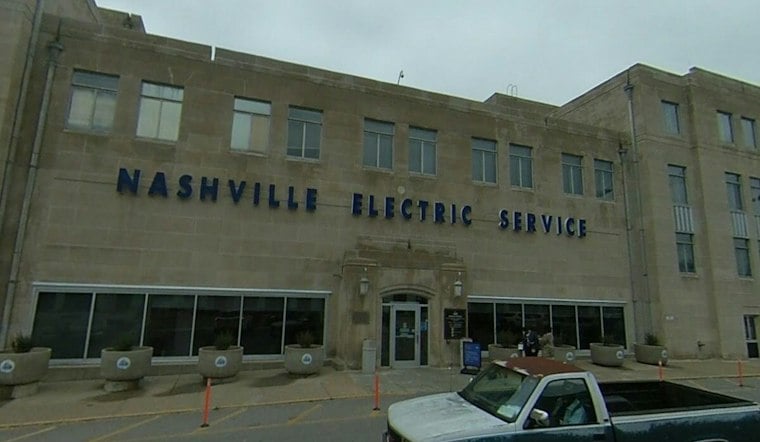
Nashville Electric Service customers will get new protection from winter and summer power shutoffs under policy changes the utility approved, blocking disconnections on days when the forecast climbs above 95 degrees, drops below 32 degrees, or when crews cannot reconnect service the following day. NES has not said when the changes will actually take effect.
The utility addressed its disconnection policy during a board meeting on Wednesday, according to WSMV. Under the new limits, there will be no disconnection if the forecast is above 95 degrees on that day, no disconnection if the forecast high is below 32 degrees on that day, and no disconnection if NES is not available to reconnect the next day, the station reported. NES said its goal is to keep unpaid balances within reach and not disconnect more people.
The move comes after a 2025 policy change that NES says had a much bigger impact than expected. That earlier rule had NES looking at the weather for the 24 hours after a disconnection rather than the conditions on the day of the cutoff itself, a shift the utility made to avoid disconnections ahead of forecast extreme heat or cold. The unintended consequence, per the same account, was that there were very few days NES could actually disconnect anyone, and the utility said this made unpaid balances grow and made it harder for customers to catch up.
Why the Math Didn't Work in 2025
NES's framing suggests the previous approach was too restrictive to function as intended, inadvertently freezing collections activity for long stretches. The station's report does not specify how many fewer disconnections took place or how large the unpaid-balance growth became, only that the utility viewed the effect as unexpectedly large. NES now says weather has the largest impact on customer power bills, a point the utility raised in discussing why temperature thresholds matter for both sides of the ledger.
Beyond the new disconnection limits, NES is developing proactive communication meant to flag disconnection patterns and reach customers before bills spiral into cutoff territory. The utility also plans to research ZIP codes where disconnections are most common and expand outreach in those areas, according to the WSMV report.
NES Has Paused Disconnections Before During Heat Waves
This is not the first time NES has frozen shutoffs over weather. The utility previously announced it was suspending disconnections for nonpayment for an entire week amid predicted extreme heat, according to NES Power News. In another instance, the utility said it would cease disconnections from June 29 through July 4 because of forecast extreme heat, with normal disconnections resuming July 5, per a separate NES announcement, which also noted that cooling costs can account for roughly 40% to 50% of a customer's total bill during warmer months.
The stakes behind these policy debates are significant in scale. Nashville Electric Service served about 460,000 customers in 2023, according to Inside Climate News, though NES has separately said it distributes energy to 430,000 customers in Middle Tennessee — the two figures come from different sources and the discrepancy is unresolved. Inside Climate News also found that 141,164 metro Nashville households in Davidson County received disconnection notices from NES in 2023, part of a statewide total of 140,851 Tennessee households that experienced an actual utility disconnection that year across four utilities examined in public records. That same analysis found the four companies disconnected service more often in summer than in winter.
How Nashville's Rules Compare Elsewhere
Tennessee has no statewide weather-based disconnection law, leaving individual utilities like NES to set their own thresholds. Inside Climate News reported that among the four Tennessee utilities it reviewed, only Memphis Light, Gas and Water issues an annual moratorium on disconnections during cold snaps.
Other states have gone further with formal statutes. California's major utilities are barred from disconnecting residential service over unpaid bills when temperatures are forecast to reach 90 degrees within a three-day look-ahead window, according to USA Today, and the state's utilities plan to use a ZIP-code-level tool called CalHeatScore, which rates heat risk from zero to four, as a threshold for suspending shutoffs once fully implemented. In Maryland, shut-offs are reportedly prohibited on any day when the 6 a.m. forecast calls for 32 degrees or below, or 95 degrees or above, within the next 72 hours, per the Maryland Office of People's Counsel. Virginia law similarly bars electric utilities from disconnecting residential customers when the forecasted low is at or below 32 degrees within 24 hours of a scheduled disconnection, according to the Virginia law library's code section on disconnection suspensions.
What NES's Own Policy Manual Says
NES's November 2025 customer relations policy manual states that residential disconnections for nonpayment will not take place when the National Weather Service forecast is above 95 degrees, when the heat index is above 102 degrees, or when temperatures are below 32 degrees during the following 24 hours — and that the utility uses the forecast for Nashville's ZIP code 37217 in making those calls, according to the policy document posted by Nashville Electric Service. The manual also states that service may still be cut off once a valid notice has been sent and has expired, subject to those weather restrictions.
NES has not disclosed a start date for the newly approved changes, and it remains unclear how the updated rules will interact with every provision already outlined in that November 2025 manual.





