

























































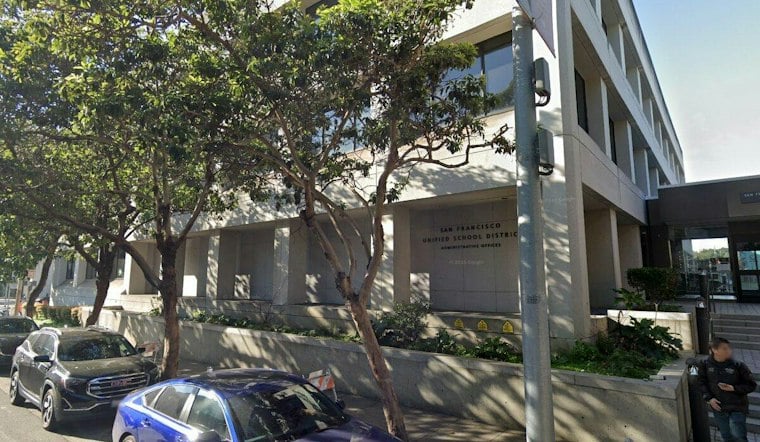
A loosely organized coalition of San Francisco parents and teachers calling itself KTAP has emerged as the most aggressive voice pushing SFUSD to scrap its 15-year-old school lottery, with an October board decision now just weeks away. The group has no director, no board, no website, and no endorsements in the November school board race — but it has a clear first priority: replacing the enrollment system that has frustrated families since 2011.
According to The San Francisco Standard, SFUSD is set to decide in October among three options to replace its current lottery system. Segregation was evident by 2018, and the school board passed a resolution to update student assignment in 2020. KTAP is pushing hardest for a proposal that would guarantee students enrollment in a neighborhood school, while still requiring families to apply separately for citywide programs such as magnet or language-immersion schools.
KTAP surveyed parents about the lottery and commissioned a June poll of 600 San Francisco voters, per the same account. That poll found 35% favored a neighborhood zone system and another 35% favored expanded magnet schools, while 17% wanted a simplified version of the current system and just 2% wanted to keep things as they are.
A Coalition Without a Website
KTAP's founders include tech executive John Jersin, whose children are in preschool; Sarah Montoya, who has two children in SFUSD schools; and Lowell High School teachers Trevor McNeil and Brian Johnson. The group is in the process of becoming a nonprofit and plans to hold a town hall in October with SFUSD board commissioners Jaime Huling, Parag Gupta, and Alida Fisher, according to the same report.
Jersin ran for the school board in 2024 and lost to incumbent Matt Alexander by fewer than 300 votes, the outlet reports — a near-miss Hoodline previously detailed as a 287-vote margin out of more than 244,000 cast. He told the Standard that KTAP aims to be “a constructive force” with concrete ideas for improving the school system, and the group says it plans to advocate for more parent involvement, greater teacher engagement, and less political combat.
Rival Camps, Competing Models
Rebecca Kee, who became SF Parents' executive director in August after succeeding founding leader Meredith Dodson, has voiced support for KTAP's effort to involve more parents in improving SFUSD — even as the two groups back different assignment models. SF Parents favors a system that would guarantee neighborhood-school placement while still allowing families to apply to any school with open seats, per a letter the group issued supporting that approach without significantly limiting choice based on residence.
A zone-based model is among four policy directions under consideration, though it would not guarantee placement at a school within a family's zone. That framework echoes an earlier attempt: the SFUSD Board of Education voted 6-1 in December 2020 to adopt Board Policy 5101.2, a zone-based elementary assignment system, though implementation stalled for years while the 2011 choice system stayed in place, according to SFUSD. Former commissioner Allison Collins cast the lone dissenting vote at the time, arguing that algorithmic fixes failed to address anti-Blackness and deeper resource disparities, as reported by KALW.
What the Numbers Show
Research from a Stanford University team led by Assistant Professor Irene Lo, which began working with SFUSD on assignment modeling in 2019, has examined criteria for redesigning enrollment and zone-policy options, according to Stanford Impact Labs. These policy choices sit at the center of the debate between KTAP's push for predictability and rival models built around broader choice.
A Timeline Years in the Making
SFUSD staff will spend the fall and winter developing the details of whichever assignment policy direction the board sets in October, per SFUSD's published timeline. The board is scheduled to review a draft policy in February and a near-final proposal in March before voting in April 2027 on whether to adopt, revise, or revoke it.
If adopted, SFUSD plans to have a new assignment system ready for the 2027-28 school year, with families applying under the new rules for the 2028-29 school year. The stakes extend beyond enrollment mechanics: Superintendent Su has deferred potential school closures or mergers until at least 2029-2030, making the lottery overhaul the district's immediate focus, as Hoodline has previously reported — a sequencing that means how San Francisco redraws its enrollment map now will shape which campuses face consolidation later.



