

























































Portage's economic development team packed its bags for Texas this fall, touring Roanoke and Grand Prairie for ideas on how to pull off two of the city's biggest ambitions at once: a new downtown and a family-friendly attraction on the city's north side. The trip wasn't just sightseeing — it comes as Portage moves forward with a $15 million bond package covering everything from a new bridge over Burns Waterway to the demolition of the long-vacant Garyton School.
Portage Planning and Development Director Tom Cherry told the Redevelopment Commission that the team visited Roanoke to tour its downtown and Grand Prairie to see a major public-private partnership, according to the Chicago Tribune. Portage is weighing whether to put a family-friendly attraction on its north side, and Grand Prairie already has a similar development anchored by the Epic Waters indoor waterpark, with restaurants and other destinations nearby.
The Grand Prairie comparison isn't just about the waterpark itself. Epic Waters is a signature attraction within EpicCentral, a 172-acre recreation and entertainment development with nearby dining, hotels and other destinations. The waterpark offers more than 80,000 square feet of indoor attractions, and the example shows how an attraction can sit within a broader district.
Epic Waters sits within a larger, city-owned destination: according to Grand Prairie’s Epic Waters materials, it is a signature attraction in EpicCentral, a 172-acre recreation and entertainment development. That broader footprint helps explain why the Texas example is about more than a pool or waterslides; the project is planned as a district where an anchor attraction can sit alongside other recreation and visitor uses.
A Downtown That Started With One Road
Roanoke offered a different kind of lesson. The Texas town's downtown redevelopment and Oak Street work provide a point of comparison for Portage. Portage officials had actually met the Roanoke team before the formal visit, spending an hour together at a Las Vegas convention where Roanoke sponsored a booth.
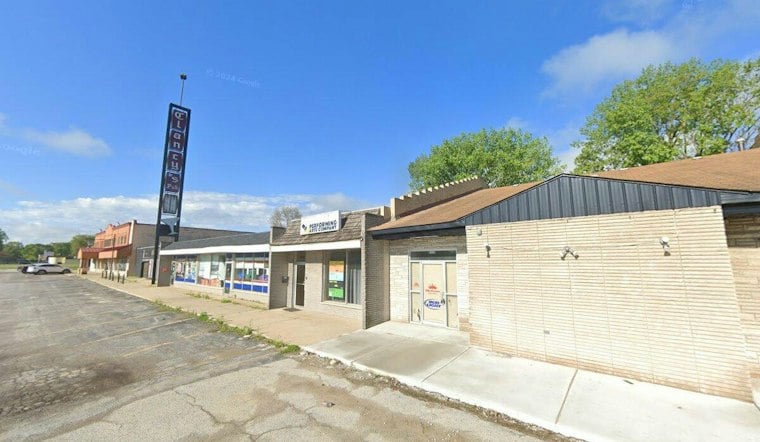
Roanoke's downtown redevelopment is a point of comparison for Portage. Portage is now preparing to build the first street of its own new downtown in front of Portage Mall, with plans to encourage further development on Redevelopment Commission-owned land just east of the mall.
Roanoke’s downtown transformation was a long-range planning effort, not simply a new street project. The city began a redevelopment plan in 2004, followed by zoning and design rules for the district; the historic Rock Building was renovated in 2007, according to Roanoke. The Oak Street work also paired street redesign with rules intended to make infill development easier, a combination that offers Portage a more specific model than copying a finished streetscape, as reported by Dallas Innovates.
Bond Package Funds Bridge, Mall, Trails and Demolition
None of this happens without infrastructure, and that's where the $15 million bond comes in. The Redevelopment Commission approved seeking bids to extend Burns Parkway and build a bridge over Burns Waterway, the Tribune reports. The bond also sets aside $400,000 to demolish the former Garyton School, $2 million for downtown mall improvements, and $250,000 for Kayak Point access to Salt Creek.
A separate $1.25 million chunk of the bond covers a roundabout at Samuelson Road and Central Avenue along with a new Duneland Prairie Trail trailhead there. The commission also approved starting the utility relocation process for the roundabout, a step expected to take about a year before construction can move forward.
Alongside the bond work, the Redevelopment Commission has opened a 30-day public comment period for the Sweetwater and Timberstone residential tax-increment financing districts. The move adds another layer to a broader development push that now spans new residential financing tools, a reimagined downtown corridor, and a still-undefined family attraction modeled in part on what Portage's team saw play out in Texas.
Portage’s TIF districts are another tool for shaping growth, but they work differently from a direct construction bond. The city defines tax-increment financing as using property-tax revenue generated by increased assessed values in a designated area to help pay for redevelopment or economic-development costs, including infrastructure. That means the districts’ performance depends in part on whether development increases the taxable value of property over time. Portage’s explanation of TIF outlines how the increment can support infrastructure and other redevelopment costs.





