

























































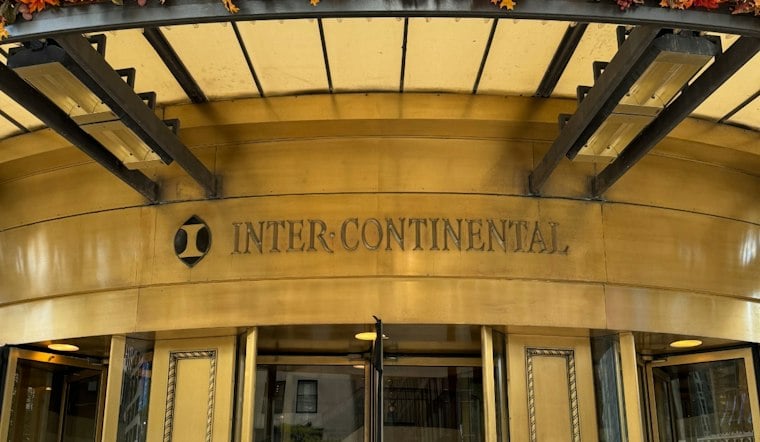
Josh Zamir, head of Capstone Equities, is pushing to buy the 792-key InterContinental Chicago at 505 North Michigan Avenue for slightly more than $150 million, a price that would land at roughly $200,000 per key, according to investor materials cited in the deal's promotional pitch. That figure marks a steep drop from where the Magnificent Mile hotel once stood on paper, and it comes as the building's prospective seller, Dajia, continues working through the long tail of one of the more dramatic corporate collapses in recent Chinese financial history.
A Bid Well Below Past Valuations
According to The Real Deal, Zamir is reportedly targeting the hotel with a $150 million bid, and Dajia appears open to parting with it at a discount. The hotel was reportedly valued at around $508 million, or about $640,000 per key, around the time Anbang Insurance was dismantled — meaning Zamir's current pitch would represent a fraction of that figure. Capstone has brought on Lodging Capital Partners as a general partner on the deal, and that firm's principals previously served as executives at Strategic Hotel Capital, a predecessor to Strategic Hotels, the very entity that once owned the property before it passed to Anbang.
Per the same investor materials, Capstone expects to secure a senior loan of around $130 million to help finance the purchase, with all-in costs projected to reach roughly $170 million once the deal closes. The math underscores just how far the asking price has fallen from where the hotel sat when it was last swept up in a sprawling international portfolio deal.
The Hotel's Tangled Ownership History
The InterContinental Chicago's current ownership traces back to Anbang Insurance's 2016 acquisition of a 15-property portfolio from Blackstone that included Strategic Hotels & Resorts. Sources differ on what Anbang actually paid: one account pegs the assets later sold to Mirae at about $5.5 billion, according to HOTELS Magazine, while a separate report from REBusinessOnline put the Strategic Hotels purchase at approximately $6.5 billion. Either way, the deal was part of a buying spree that drew scrutiny from Chinese authorities amid concerns about Anbang's financing and liabilities.
That reckoning arrived in 2018, when Chinese regulators seized control of Anbang Insurance and ultimately dismantled it, citing risky expansion that threatened the company's solvency along with unlawful practices. Anbang's founder, Wu Xiaohui, had already been detained in 2017 following convictions for fundraising fraud and embezzlement, and he was sentenced to 18 years in prison in 2018. In the aftermath, the Chinese government formed Dajia to wind down Anbang's sprawling holdings, including its U.S. hotel portfolio.
A Portfolio Sale That Fell Apart
Dajia tried to offload that portfolio, including the InterContinental hotels in both Chicago and Miami, to South Korean conglomerate Mirae for $5.8 billion. The broader portfolio had drawn plenty of interest at the time — Bank of America was hired to run the sale process, and Anbang had reportedly fielded offers as high as $5.8 billion, per Bisnow. But the Dajia-Mirae deal did not close, reportedly derailed by the pandemic. Since then, Dajia has sold three of the portfolio's properties to various investors and issued commercial mortgage-backed securities debt against several others, while still working to offload what remains, including the InterContinental Chicago.
Chicago's Hotel Market: Strong Fundamentals, Thin Deal Flow
The potential sale lands in a Chicago hotel market that looks unusually split between strong operating performance and weak investment activity. Revenue per available room in the city grew 12.7% year over year through the first three quarters of 2026, making it one of the strongest performers among the top 25 markets tracked by CoStar, Bisnow reports. Supply growth has stayed modest too, with fewer than 1,000 new rooms slated for delivery citywide, representing about a 1.6% increase.
Yet deal volume tells a different story. Chicago has logged just $423 million in hotel sales over the trailing 12 months, well below its 10-year average of $677 million, with only 44 transactions so far in 2026 compared with 73 across all of 2025. A CoStar analyst attributed the slowdown largely to high borrowing costs and a wide bid-ask spread between buyers and sellers, the same dynamic that may be shaping how aggressively Dajia is willing to negotiate on a property like the InterContinental.
CoStar is forecasting 8.1% RevPAR growth for Chicago through the end of 2026, outpacing the national rate, though it expects that momentum to cool in 2027 with a projected 0.4% decline amid tougher comparisons. Other major markets are seeing a similar pullback in investment: New York City’s recent hotel transaction volume was significantly higher than $2 billion. Los Angeles saw $624 million in investment, also below its historical norm, according to Bisnow.




