

























































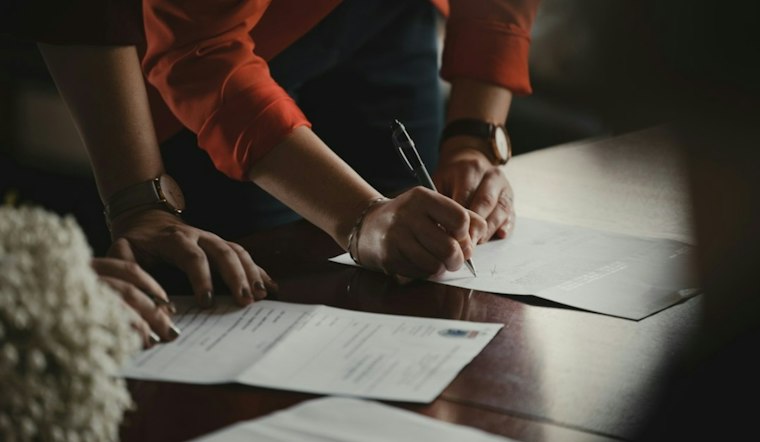
Terry Baldwin spent 22 years in the Marine Corps and survived combat, but nothing prepared him for the moment he realized the $60,000 he had just wired to buy his mother a house was gone for good. The retired sergeant was targeted in 2018 by scammers who hacked into his email and impersonated his real estate agent, tricking him into sending the money straight into criminals' hands.
Baldwin's ordeal, reported by KUTV, is now driving new legislation in Utah aimed at closing the gap that let scammers intercept his money in the first place. According to the station's reporting, the fraudsters created an email address closely resembling his agent's and monitored the pending sale until they could send fake wiring instructions. “It was horrible,” Baldwin said of the experience, per the same account.
How the Scam Unfolded
The email appeared legitimate enough that Baldwin didn't hesitate before wiring the funds, only to learn afterward that the account belonged to criminals rather than the title company handling his mother's purchase. Police and the FBI investigated the fraud, but the money was never recovered. Baldwin ultimately still bought his mother the house, this time paying with a cashier's check instead of a wire.
Baldwin's experience is far from isolated. Utah homebuyers lost more than $25 million to email fraud in 2025 alone, according to the FBI, with 298 Utahns losing a combined $25.5 million to email scams that year — losses that include real estate wire fraud specifically, the bureau's data shows.
A Lawmaker's Fix Two Years in the Making
Utah State Representative Jake Sawyer, who represents House District 9 in Weber County, is working on legislation aimed at preventing real estate wire fraud before it happens. “Once it's gone, it's gone. There's no way to get that money back,” Sawyer said, underscoring why he wants a mandatory second layer of verification built into every Utah closing.
Sawyer's proposal would require banks, credit unions and title companies to take additional steps to verify transfer information before a homebuyer's money moves. Under his plan, financial institutions would send borrowers a verification code confirming the sender's identity, the transfer amount and the receiving account before any wire is released, adding another layer of protection between homebuyers and email scammers. Sawyer said the bill is currently being drafted and will be ready for the 2027 legislative session.
This isn't Sawyer's first attempt at tackling the problem. During the 2026 session, he introduced House Bill 395, the Utah Real Estate Cybercrime Prevention Act, which would have mandated a certified, closed real estate communication network and classified non-use as unprofessional conduct. That bill was dropped before the session ended, and Sawyer has since shifted toward the narrower two-factor verification approach for 2027. His focus on the issue traces back to his own career; before joining the Utah House of Representatives, he served as a Senior Lending Manager in the mortgage industry and chaired the Weber County Republican Party, according to his legislative biography.
A National Problem With Utah-Sized Stakes
Cybercriminals stole more than $275 million through real estate fraud nationwide across 12,368 victim complaints in 2025, according to the FBI Internet Crime Complaint Center's annual report, as detailed by RISMedia. The underlying tactic, known as Business Email Compromise, generated over $3.04 billion in total cybercrime losses across 24,768 complaints nationwide last year, HousingWire reported, exploiting the flurry of multi-party digital communications that pile up near closing deadlines.
Wire fraud is a risk for homebuyers during the closing process, when funds are being transferred.
The stakes are high for Utah homebuyers. A home purchase can involve a substantial wire transfer, making fraud devastating for families.
Email Fraud Can Put Homebuyers at Risk
Baldwin's case illustrates how scammers can exploit email during a pending home sale, sending fake wire instructions that direct money to criminals.
Utah has also focused on residential construction fraud through a specialized task force.
Federal regulators echo the same warning nationwide. The FTC and the Consumer Financial Protection Bureau caution that funds sent to a fraudulent wire account are almost impossible to recover once processed, and they advise buyers to independently verify wire details by phone using known contacts rather than trusting an email.
For Baldwin, that lesson came the hard way. His advice to other homebuyers now facing similar closings is simple: never trust wiring instructions delivered only by email. “Actually pick up the phone and call them up and verify that. Or go down and talk to them,” he said.





