

























































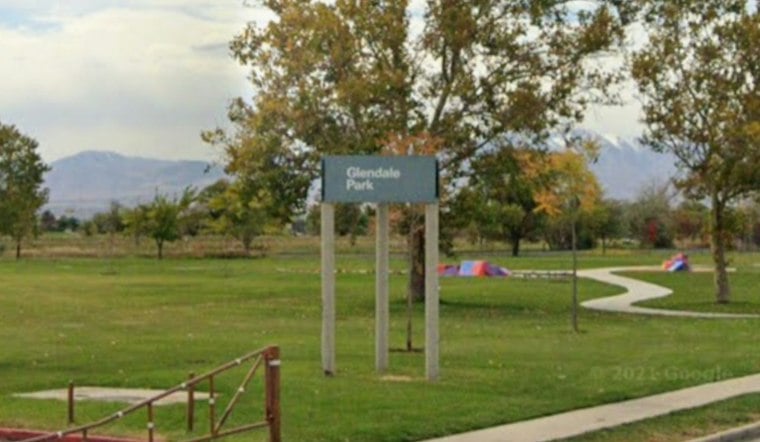
Salt Lake City Mayor Erin Mendenhall promised west-side residents a new swimming pool at Glendale Regional Park in January 2024. Now that pool is gone from the park's next construction phase, even though it remains listed on the city's website as of Thursday.
A Promise That Didn't Make It Into the Blueprints
The park sits on the 17-acre site of the old Raging Waters waterpark, according to The Salt Lake Tribune. City spokesperson Jana Cunningham confirmed to the Tribune that the pool is currently not included in designs for the park's next construction phase, a reversal that has drawn sharp criticism from residents like Matt Finnigan, who told the paper the city keeps making west-side promises without following through. Salt Lake City began planning the park and demolishing the abandoned waterpark facilities back in 2021, and west-side residents have continued urging the city to build another place to swim and cool off.
The city's own history with the site explains why the stakes feel so high. The property once housed Raging Waters, later rebranded Seven Peaks, a waterpark built in 1979 that featured the world's third wave pool before it closed permanently in 2018 after falling into disrepair, with repair estimates topping $20 million, according to the city's own account of the site's history. Demolition crews began clearing the derelict facility in October 2021, crushing concrete on-site for reuse as road base and salvaging fiberglass water slide sections for repurposing into park shade structures, per the city's record of the project.
Splash Pad In, Pool Out
Instead of a full pool, Glendale Regional Park will open a splash pad in 2029 that incorporates parts of Raging Waters' old slides, per the Tribune's reporting. The city's Public Lands Department plans to start Phase 2 construction in Spring 2027 with a targeted full opening in Spring 2029, and project records show the splash pad is meant to reuse those preserved fiberglass slide sections as shade and play elements. Mendenhall has said the Glendale park should be resilient, water-wise and sustainable for decades, according to the Tribune.
Why drop the pool at all? Salt Lake City stopped pursuing it because of fiscal and operational challenges, the Tribune reports, rooted in a jurisdictional quirk: the city's Public Lands Department does not operate aquatic facilities of any kind. Salt Lake City explored a partnership with Salt Lake County to operate the proposed pool, but the county determined that taking on a new aquatic facility was not feasible at that time. Salt Lake County Parks and Recreation already operates every municipal pool in the city, including the indoor pools at the Sorenson Unity Center and Northwest Recreation Center and the outdoor pools at Liberty Park and the Salt Lake City Sports Complex — because, as county records confirm, Salt Lake County Parks and Recreation runs all municipal aquatics in the city under an interlocal agreement, since Salt Lake City itself operates no recreation centers.
The Glendale pool does not appear in the county's new 10-year recreation plan, per the Tribune. Still, the park is designed to accommodate a pool in the future if construction and operation become easier down the line, the paper notes.
West-Side Swimmers Feel the Gap
For families on the west side, the loss of the pool lands hardest among groups like Race Swami, a nonprofit swim team whose swimmers come mostly from western neighborhoods and are roughly 80 percent Latino. Race Swami offers swimming lessons to both children and adults, filling a gap that east-side neighborhoods don't face in the same way. Meredith Jacobsen, who moved to the west side seven years ago, holds a membership to the Liberty Park aquatic facility — a reminder that pool access already tilts east.
The $27 million earmarked for Glendale Regional Park traces back to a broader public mandate: in November 2022, 71 percent of Salt Lake City voters approved an $85 million Parks, Trails and Open Space General Obligation Bond, part of a funding structure Hoodline has detailed in its Liberty Park coverage. That bond helped carry out the city's Reimagine Nature: SLC Public Lands Master Plan, adopted in June 2022 as the city's first comprehensive public lands plan in 30 years, built on feedback from 12,000 residents and aimed at expanding green space equity in underserved neighborhoods.
Phase 1 of Glendale Regional Park already opened to the public in November 2025, delivering an all-abilities playground, a full basketball court, pickleball courts, looped walking paths, shade canopies and native wetland stormwater features. The park has also earned SITES Gold precertification from Green Business Certification Inc., recognizing sustainable design elements such as Jordan River corridor restoration and drought-resilient landscaping. In May 2026, city Public Lands staff submitted a $1 million Utah Outdoor Recreation Grant application to help fund Phase 2 construction, seeking to pair state dollars with $1.7 million in city bond matching funds to complete a planned skate park and pump track.
For now, the promise of a west-side pool remains unresolved, caught between a mayor's pledge, a county that says it cannot take on the cost, and a community still waiting for a place to cool off closer to home.





