

























































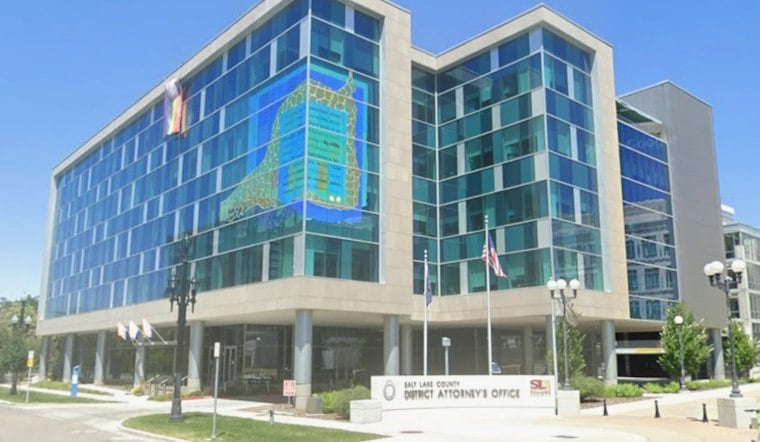
Salt Lake County District Attorney Sim Gill used a mental health symposium Thursday to pitch a new civil commitment court that would give the justice system a way to intervene with people suffering severe mental illness who refuse voluntary treatment — before they end up behind bars. Gill framed the current system bluntly, saying the criminal justice system has become the default mental health provider for people in crisis.
The proposal came during the third annual Criminal Justice and Mental Health Symposium in Salt Lake City, hosted by the Salt Lake County District Attorney's Office and sponsored by the Utah Shattering Silence Coalition and the Utah Coalition for Severe Mental Illness, according to KSL. The gathering aims to keep an open, ongoing conversation going about alternatives to incarcerating people with severe mental illness while still protecting the public, per the same report. Gill said he wants to see Utah build what he called a meaningful civil commitment court — one that could engage people who decline voluntary hospitalization or mental health programs rather than waiting for them to land in jail.
A Gap Between Jail and Voluntary Care
Gill said only a small percentage of people with mental illness who commit heinous crimes actually belong in the criminal justice system — yet the system currently absorbs people who aren't legally competent to stand trial or functionally capable of navigating it, the DA said, per the station's report. He compared a psychotic break landing someone in jail to a heart attack landing someone in a hospital, arguing that supervised, accountable civil oversight — not incarceration — is the more fitting medical response.
Under his proposal, people who decline voluntary treatment could instead be involuntarily committed to the Utah State Hospital or the Huntsman Mental Health Institute at the University of Utah, though the article notes involuntary commitments typically last just 72 hours. Gill pointed to Utah's existing mental health and drug courts as proof that therapeutic court models can work, according to KSL. Gill has spent more than a decade building those kinds of programs: he has served as Salt Lake County District Attorney since November 2010 and previously helped create the county's Mental Health Court, Veterans Court and Misdemeanor Drug Court, according to the Salt Lake County District Attorney's Office.
Advocates Push for Treating Illness, Not Crime
Debra Widmer, head of the Utah Shattering Silence Coalition, said serious mental illness should be treated as a medical issue rather than a criminal justice matter, adding that people do not choose psychosis and that treatment and recovery are possible, per the symposium's reporting. Sherri Wittwer, director of the Utah Coalition for Severe Mental Illness, echoed that framing, saying mental illnesses are medical conditions that must be treated accordingly. Wittwer called for true alternatives to incarceration and civil processes that actually implement the statutes already on the books, warning that leaving people on the street and relying on local jails as healthcare providers is neither effective nor cost-effective.
Utah already has a legal framework for some of what Gill describes. Utah Code § 26B-5-351 allows civil courts to order Assisted Outpatient Treatment for adults with severe mental illness who have a history of treatment non-compliance and repeated hospitalizations or arrests, according to the Utah Legislature. Salt Lake County also runs a voluntary civil model known as the H.O.M.E. Court, launched in October 2024 under Utah House Bill 421, which connects housing-unstable adults with severe mental illness to intensive community treatment through June 2029, per the Utah Judicial Council. That pilot was authorized to serve up to 300 people in the county needing intensive case management.
Where Would the Beds Come From?
Gill's vision for a civil commitment court runs straight into a capacity problem that state officials have been documenting all year. Utah has just 8.4 mental health hospital beds per 100,000 people, far short of the 40 to 60 beds per 100,000 that studies suggest is the ideal ratio for civil commitment systems, according to KSL's reporting on the symposium. A separate Treatment Advocacy Center analysis put Utah's staffed adult state hospital beds even lower — 7.3 per 100,000 residents in 2023, ranking the state 42nd nationally — and found that 24% of existing state hospital beds were occupied by patients clinically ready for discharge but lacking step-down housing, per the Treatment Advocacy Center.
The bottleneck is already visible at the state's only public psychiatric hospital. Administrators at the 378-bed Utah State Hospital in Provo testified during an August legislative interim hearing that court-referred forensic psychiatric beds are completely saturated, and they projected the state will need at least 30 new adult beds starting in 2028 just to keep pace with population growth, according to KSL.com. Compounding the problem, an April 2026 performance audit from the Utah Office of the Legislative Auditor General found the state lacks a centralized system to track behavioral health bed capacity and demand across the continuum of care, a gap auditors said leads to financial inefficiencies and keeps psychiatric patients stuck waiting in emergency rooms.
State Action Already Underway
Governor Spencer Cox signed an executive order on September 21 establishing the Recovery Utah Initiative, setting a statewide policy goal to expand serious mental illness inpatient beds by 10% and improve coordination across the criminal justice, health and housing systems, according to the Office of Governor Spencer J. Cox. That order created a coordinating council meant to align state programs with federal recovery initiatives — timing that places Gill's court proposal just days after the state's own push to expand bed capacity.
Salt Lake County has also built some supportive housing infrastructure to back up court-involved treatment. In March 2025, the county opened the 30-unit Featherstone Boarding Home, a jointly funded state and county facility offering intensive supportive housing for people with severe mental illness enrolled in Assertive Community Treatment teams and the H.O.M.E. Court pilot, as Hoodline previously reported. The county currently operates five Assertive Community Treatment teams serving more than 400 people, according to Salt Lake County's announcement of the facility.
Gill's broader point, delivered at the symposium, is that untreated mental illness worsens over time and that systemic neglect reduces the effectiveness of interventions attempted later — a dynamic he said stems from the lack of bridges between community resources and the criminal justice system. His proposed fix is a reconstructed, community-based response for people with severe mental illness, one that treats psychiatric crisis as a medical emergency rather than a law-enforcement problem. Whether Utah can build the beds and housing to make that vision workable remains an open question state lawmakers are still wrestling with.


