

























































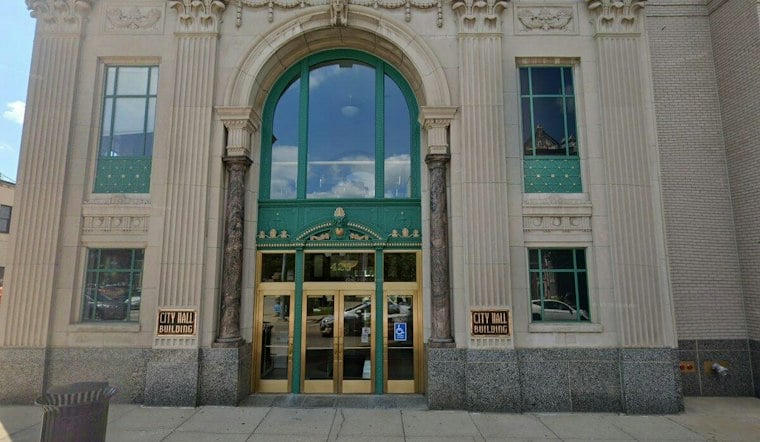
Rockford city staff have finished drafting a set of regulations aimed squarely at future data center developments, covering everything from water use and noise to who foots the bill for new power lines and roads. The proposal heads to the City Council's Codes and Regulations Committee on Monday, marking the first formal step in a public-review process that could reshape how the city treats a kind of project its zoning code was never built to handle.
According to mystateline.com, Rockford city staff have completed a first draft of proposed regulations, and the package is scheduled to go before the committee on Monday, October 19. But as Rock River Current reporter Kevin Haas laid out, the committee vote and a subsequent City Council vote would not themselves approve or reject the new rules — they would only decide whether the proposal advances to the Zoning Board of Appeals for a public hearing. From there, the matter would return to the Codes and Regulations Committee before heading back to the full council for a final decision.
City staff member Todd Cagnoni wrote in a memo that Rockford's existing zoning ordinance predates the rapid expansion of hyperscale, artificial-intelligence, cloud-computing and other large-scale data centers, according to the same mystateline.com report. Under current rules, data centers are simply classified as high-technology centers, a catch-all category that staff now say fails to address the scale and impact of modern facilities. Staff have recommended that data centers instead be regulated as their own distinct land-use category in the zoning code.
What the Draft Rules Would Require
The proposed regulations would require developers to use closed-loop cooling or another water-conserving technology designed to achieve near-zero wastewater discharge, per the mystateline.com report. On the air-quality side, the draft calls for applicable permits for backup generators along with compliance with specified emissions standards, while noise would be addressed through independent studies evaluating normal operations, peak cooling periods and generator testing — all measured against standards set by the Illinois Pollution Control Board.
Setbacks, landscaping and screening requirements would also apply to facilities built near residential areas, schools and parks. Developers would have to demonstrate that adequate electric service can be provided, with confirmation from ComEd, another utility provider or an independent third party, the same report notes. They would be responsible for any necessary utility infrastructure and its associated costs.
Who Pays, and What Happens When a Facility Closes
Beyond utilities, the draft rules would make developers responsible for funding public infrastructure improvements tied to their projects, including water, sewer and road work. They would also need to provide financial security — a letter of credit or equivalent — covering 110% of those costs, according to mystateline.com's reporting. Developers would additionally have to submit decommissioning plans spelling out how servers, batteries, cooling systems and other equipment would be removed or disposed of if a facility eventually shuts down.
The documentation requirements go further still, with developers expected to disclose energy availability, water consumption, environmental impacts, security practices and regulatory compliance, and to provide independent third-party verification when necessary. No formal data center application has been submitted for approval in Rockford as of the mystateline.com report, meaning these would-be rules are being written ahead of any specific project landing on a planner's desk.
The Moratorium, Monarch Energy and an Exempt Parcel
The regulatory push traces back to Aug. 3, when the Rockford City Council voted to impose a six-month moratorium on data center development so the city could study best practices, as reported by Rock River Current. That moratorium does not cover land tied to existing development or annexation agreements, which is why Monarch Energy's proposed site near Edson and Friday roads remains outside its reach under a preexisting annexation agreement.
Monarch Energy's plans have hit their own turbulence. In late July, ComEd filed a cancellation notice with FERC for its transmission security agreement (TSA) with Monarch Rock Air, according to Rock River Current's reporting. Monarch Energy said the cancellation would delay but not stop its plans for the site, telling the outlet it doesn't change its intentions for Rockford, though the company has not provided a new project timeline. Residents had already rallied outside Rockford City Hall against data center developments in July, reflecting the local unease that has shadowed the project even as it remains in limbo.
A Statewide Debate Over Water and Power
Rockford's effort to write its own rules comes as Illinois lawmakers have struggled to do the same at the state level. Illinois is home to 115 operating data centers, with at least 67 new campuses planned, and the sector is projected to account for at least 37% of the state's total energy needs by 2040, according to Circle of Blue. A proposed state measure known as the POWER Act never reached a vote before the legislative session ended on May 31, the outlet reported.
Other Illinois communities have taken varying approaches to the same tradeoffs Rockford is now wrestling with. Yorkville is imposing penalties on its Project Cardinal development if water use exceeds 71,400 gallons in a single day or averages more than 42,000 gallons daily over a billing cycle, while DeKalb caps a 500-acre Meta site at 200,000 gallons per day, according to Shaw Local. Closed-loop systems, the type Rockford's draft would require, can cut water consumption by 70% compared with older open-loop evaporative cooling, the report notes — though not every project has taken that route. A 560-acre Edged data center approved in DeKalb last December reportedly won't use water at all to cool its servers, while Lockport suspended its own data center discussions in May, citing unclear state and federal rules and residents' mistrust of the industry.
For now, no dates have been set for a Zoning Board of Appeals hearing or any further council votes, since both depend on what happens at Monday's committee meeting. Whatever direction Rockford's elected officials choose, the city finds itself in the middle of a fight playing out across Illinois over how much scrutiny — and how much cost — new data centers should have to shoulder before breaking ground.




