

























































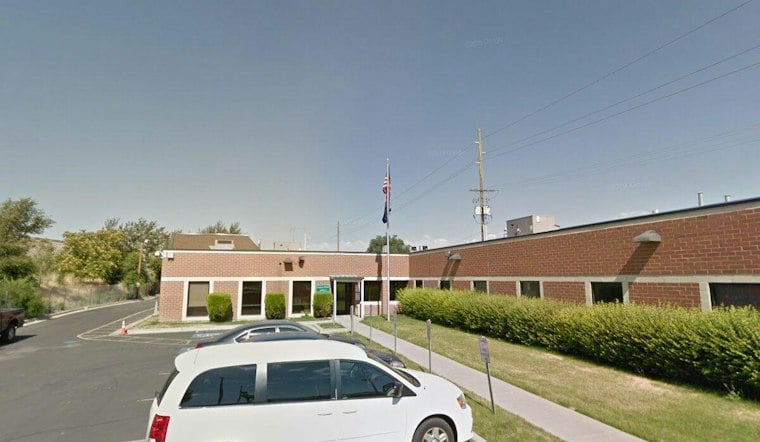
A newly renovated correctional building in Salt Lake City opened its doors this week to a very different kind of population: people with repeated low-level convictions who are experiencing homelessness, now being offered housing and treatment instead of another trip through the jail system. The Orange Street Community Correctional Center held its ribbon-cutting ceremony on Wednesday, marking the start of Utah's ARCH Project, a Department of Corrections program built specifically for people who cycle through jails, hospitals, shelters and emergency rooms without ever finding stable footing.
The program can house up to 180 people at a time across three buildings, according to The Salt Lake Tribune, and offers treatment and housing for roughly six to eight months, with case management and personalized attention extending for up to three years for some participants. State officials say about 1,300 Utahns are likely eligible for the program, which they describe as the first corrections-agency effort of its kind in the country. As of Wednesday, four people had entered the program, the Tribune reported — though KJZZ separately reported that three people were enrolled and expected to transfer to the Orange Street center.
ARCH serves people convicted of low-level crimes such as trespassing or shoplifting, generally those with five or more such convictions, and aims to give them an alternative path out of the jails, rehabilitation facilities, emergency rooms and shelters they otherwise keep cycling through. Utah judges can assign eligible people to the program as court-ordered probation, and the project is meant to help participants obtain vital documents and connect with employment opportunities along the way.
How Lawmakers Funded the Program
The ARCH Project exists because the Utah Legislature passed HB110 during the 2026 session, enabling the Department of Corrections to build it. Lawmakers allocated $2.6 million in one-time funding for facility renovations and $6 million in ongoing annual funding for staffing and operations, and the department hired about 50 new staff members to run it, per the Tribune's reporting.
The Orange Street building itself tells part of the story. It previously housed female inmates being reintroduced into the community from prison, and has since been completely remodeled, according to Fox 13. The station reports the facility is designed to be a one-stop shop where people can live, get treatment and access support services without bouncing between separate agencies and locations. Officials describe the target population bluntly: people who cycle in and out of jails, hospitals and shelters for years.
A Personal Account of the Cycle
Amy Daeschel, now director of clinical intake and business development at Odyssey House, lived that cycle herself. In 2017 she experienced two years of homelessness and two overdoses, and was arrested seven times before she accepted a place at House of Hope through Operation Rio Grande, according to the Tribune's reporting. Daeschel spoke at the Wednesday launch.
Other officials quoted by the Tribune framed the program in similar terms. Tyler Clancy said the ARCH Project adds specialized support capacity for people whose challenges require it, while Nick Bricker said the program provides case management from beginning to end rather than leaving participants to navigate services piecemeal.
The Scale of Utah's Recidivism Problem
The push behind ARCH is rooted in a dataset that an assistant director had spent the past few weeks compiling. Between April 2024 and April 2025, 77% of the 1,021 people arrested four or more times by the Salt Lake City Police Department were homeless, according to Deseret News. Among 255 people the state labeled “super high utilizers,” nearly 10,000 criminal charges were logged, with 30% for criminal trespass and 33% for drug possession — only 2% involved violent crime. Deseret News also reported that about 84% of people with the highest recidivism rates were homeless, yet just 13% of their arrests actually led to jail time, and that this top tier of most-arrested individuals costs the state roughly $51 million a year in shelter, police, court and medical expenses combined.
Fox 13 separately reported the target population at an estimated 1,021 people arrested four or more times in a year, with approximately 783 of them unsheltered. ARCH differs from Salt Lake City's existing Project CONNECT, which is voluntary; as States Newsroom has reported, Project ARCH is court ordered when a judge chooses to use that option instead.
Within the renovated Orange Street center specifically, 60 beds are available for those who qualify, with additional capacity spread across the Fortitude Treatment Center and Bonneville Community Correctional Center to reach the program's full 180-person footprint, according to KSL.



