

























































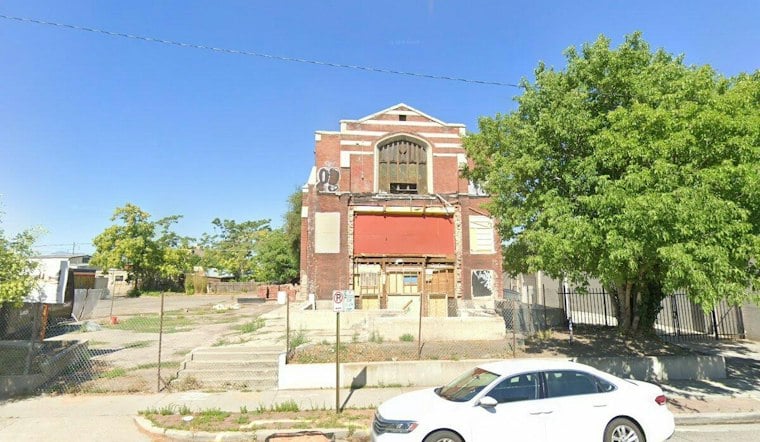
A 116-year-old Salt Lake City chapel whose 1930s addition was lost in an unauthorized demolition on Easter weekend in 2024 is now being rebuilt into housing for people recovering from drug addiction. Developer Skyler Baird is turning the Fifth Ward Meetinghouse at 740 S. 300 West into a mixed-use property that will include 18 units of recovery housing on the lower portion of the building, with the chapel space above given over to his for-profit business.
According to KSL News, Baird said financing obstacles forced some modifications to the project, but that it remains on track toward its original goal. His nonprofit, Salt of the Earth, will operate the recovery housing, while his company BoostedSafe will take over the top half of the building, including the chapel itself, to help subsidize the nonprofit's work.
A Church Turned Music Venue Turned Near-Demolition Site
The meetinghouse was originally constructed in 1910, designed by the prominent Salt Lake City firm Cannon & Fetzer in a Gothic Revival and Tudor Revival style, according to Building Salt Lake. The structure was added to the National Register of Historic Places and designated a Salt Lake City Landmark Site in 1978, protections meant to require city permits and historic landmark commission review before any structural alterations, per Preservation Utah.
After the Church of Jesus Christ of Latter-day Saints sold the building in the 1970s, it took on a string of unlikely second lives. It later operated as a music venue that hosted bands including Nirvana, Pearl Jam and the Smashing Pumpkins, and it also housed a Tibetan Buddhist temple, Preservation Utah notes.
The Easter Weekend Demolition
That long run of adaptive reuse nearly ended on Easter Sunday, March 31, 2024, when a construction crew began tearing down the building's facade without permits. The report notes that Salt Lake City planning staff spotted the unauthorized work and issued an emergency stop-work order, with workers on site fleeing and leaving equipment behind when confronted.
Then-developer Jordan Atkin of TAG SLC publicly described the demolition as a misunderstanding, but public records and the contracted demolition operator confirmed Atkin had directly commissioned and paid for the teardown of the protected landmark, per the same account. 300 W Holdings owned the parcel during the demolition. Salt Lake City went on to levy $40,200 in civil enforcement fines against the site by August 2024.
The Salt Lake City Council said it would discuss a proposal to strengthen enforcement and establish additional remedies for unpermitted work on historic landmarks, according to Salt Lake City Corporation.
Turning Destruction Into a More Authentic Rebuild
Baird took over the property later in 2024 and has been renovating the meetinghouse since, per KSL News. Rather than replacing the 1937 front addition that was destroyed in the botched demolition, Baird partnered with Knighton Architecture to reconstruct the chapel's original front stair and entry design, drawing on historical study and using salvaged historic bricks, according to Knighton Architecture.
Preservation Utah had listed the chapel on its 2024 Most Endangered historic places list before issuing a low-interest loan through its Revolving Loan Fund to help finance rebuilding the front entryway steps. KSL News reports the restoration also includes new steps on the east side of the church, where a foundation was already taking shape. Baird told the outlet he expects to complete the project within a year.
Housing People in Recovery
Baird said he has already helped close to a dozen people get off the streets and into homes of their own, and hopes to help more through his nonprofit. He told KSL News he wants to support people who have chosen to overcome addiction. After taking over the Fifth Ward project later in 2024, Baird filed plans in May 2025 for a separate parking-free, 35-unit micro-studio residential project along the city's North Temple transit corridor, according to Building Salt Lake, underscoring his broader footprint in local housing development that spans both for-profit ventures and community-focused nonprofits.



