

























































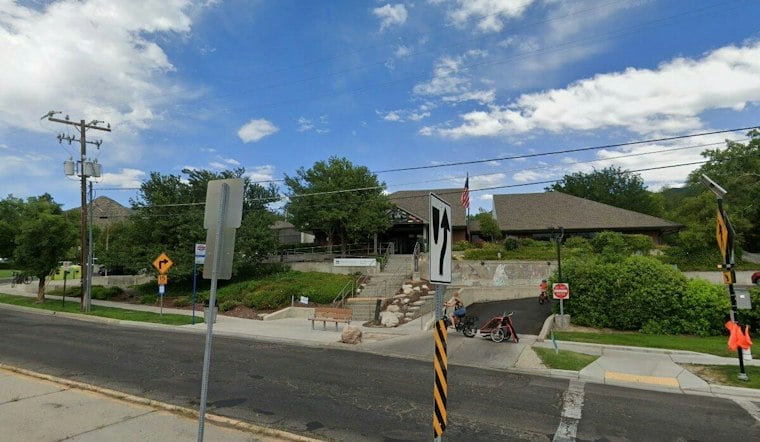
Salt Lake City is considering an $85 million bond for major work at three library facilities: an expanded Day-Riverside branch, a rebuilt Anderson-Foothill branch and renovations to the downtown main library. The City Council has not approved the bond, and at least one council member has questioned whether residents can afford the added cost.
The proposal, reported by The Salt Lake Tribune, includes $32 million for Day-Riverside in Rose Park. The branch serves students from Escalante and Rose Park elementary schools and supports literacy programs, internet access, job applications and after-school use, according to the Tribune. Plans would nearly double its floor space and add outdoor programming near the Jordan River.
The largest listed share, an estimated $49 million, would replace Anderson-Foothill, near 2100 East and Emigration Creek. The Tribune reported that the 40-year-old building is on unstable soils and is structurally unsound. The proposed replacement is a two-story library with expanded children's areas, quiet reading and study space, co-working and community meeting rooms, and 32 underground parking stalls.
A Downtown Icon Also Due for a Refresh
The bond plan also includes renovations to the five floors of the 24-year-old downtown main library, designed by Moshe Safdie. The Tribune reported that proposed changes would add meeting rooms, digital access, quiet areas, work and creative spaces, and room for social services. Salt Lake City's population has roughly doubled since the library opened, according to the same report. Library officials expect to use philanthropy and the system's current fund balance for this work, including a $5 million fundraising campaign.
Library CEO Noah Baskett, hired in 2024, has argued that libraries are essential civic infrastructure. As reported by the Tribune, he emphasized their role in supporting learning, access to technology and community life, as well as contributing to neighborhood vitality.
The Price Tag Nobody Has Agreed On Yet
The $85 million figure in the Tribune's reporting sits alongside a separate account of the library's finances. According to citizenportal.ai, library leadership presented a proposed FY27 operating budget of $53,193,189 — a 23% increase — and outlined a separate $40 million bond package specifically to rebuild Anderson-Foothill and expand Day-Riverside, with no immediate property-tax increase attached to that FY27 budget proposal. It is not clear from available reporting whether the $85 million bond and the $40 million package describe the same financing at different stages or distinct proposals; this article presents both figures as reported rather than reconciling them.
What is established is the timeline: the city council and library board have already approved nearly $6 million for preparations in the latest city budget, and the city plans to send a request for proposals to potential developers sometime in 2027, with bond issuance targeted for 2028 or 2029. The council has not yet approved the $85 million bond itself.
One Council Member's Affordability Warning
Under the citizenportal.ai account, a FY28 tax increase of about $6 million would be needed under the bond scenario it described, while the Tribune's reporting pegs the proposed bond's hit to a typical homeowner at about $4.76 per month in added debt service. Those estimates come from different reports and should not be read as describing the identical tax mechanism.
West-side District 1 council member Victoria Petro has been blunt about the pressure that puts on residents already facing an affordability crunch alongside property-tax and utility-rate hikes, according to the Tribune. She said that if economic conditions do not change, she cannot ask her neighbors to pay more for nice-to-have projects.
That caution comes against a backdrop of other recent tax pressure. Salt Lake City Mayor Erin Mendenhall earlier proposed a 12.5% increase in the city's share of property taxes, estimated to raise nearly $13.5 million and cost a typical homeowner about $9.87 more per month, according to sltrib.com. That proposal was not automatically effective; it remained subject to City Council review and public hearings, and the council ultimately finalized the FY27 budget and property-tax rate after a Truth in Taxation hearing, per the Salt Lake City Council. The city attorney's office also published a required public notice of the proposed property-tax increase.
How It Stacks Up to County and Past City Efforts
Salt Lake City's library finance questions echo a similar push underway at the county level. The Salt Lake County Municipal Building Authority has planned to issue $65 million in bonds for improvements to four county library buildings, including the West Valley City branch, the library system's operations center, and branches in Kearns and Sandy, per sltrib.com's county coverage. The West Valley City renovation alone is estimated at about $40 million, funded through $30 million in bond revenue and a $10 million contribution from Ballet West, and is expected to nearly double the branch's library space to between 22,000 and 25,000 square feet.
Salt Lake City's library system has been here before. In 2017, library administrators proposed a property-tax increase for the 2018 budget — the system's first in 13 years, according to KUER — which would have cost an additional $20 annually on a home worth roughly $250,000 and set aside $1.5 million for long-term repairs at existing branches. Elsewhere in the field, libraries have also explored funding beyond tax revenue, including capital campaigns, public-private partnerships, new market tax credits and mixed-use agreements, according to American Libraries Magazine, which cited one panel's suggestion that combining a library with housing and amenities like a coffee shop or child care could generate revenue and improve safety around an adjacent trail.
What the City and Library Records Show
The citywide budget is a broader point of comparison, not a direct measure of the library bond: the Salt Lake City Council says it adopted a $2.1 billion FY27 budget on June 16, 2026. The figures available here do not provide a like-for-like comparison with the city's capital-improvement program or document repair needs across other public facilities. Salt Lake City Public Library records describe Anderson-Foothill as a 14,900-square-foot branch built in 1985 and expanded in 1992 and 2002; those records do not establish the site's ground conditions or provide a citywide facilities comparison.
For now, Salt Lake City's $85 million question remains open. The city council has not approved the bond, the request for proposals to developers is not expected until 2027, and the eventual bond issuance would not come until 2028 or 2029 at the earliest — leaving residents and council members like Petro to weigh the cost of rebuilding beloved branches against an already stretched household budget.




