

























































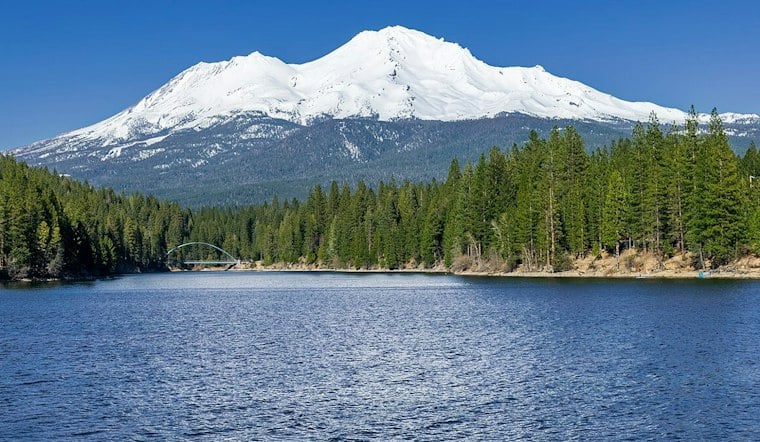
Two hikers from Salt Lake City are safe after spending roughly 36 hours lost on Mount Shasta, surviving freezing overnight temperatures and a wrong turn that sent them tumbling off-route into Cascade Gulch. The 19-year-old man and 20-year-old woman began their day hike at 4 a.m. Monday in the mountain's Avalanche Gulch area, but got lost and ended up calling for help just before 10:30 p.m. that night, cold and unable to finish their descent.
According to KUTV, the temperature had fallen to about 15 degrees Fahrenheit when the pair reached the Siskiyou County Sheriff's Office, and they lacked enough clothing or food to safely wait out the night, per the sheriff's office. Dispatchers told the hikers to keep moving downhill to maintain body heat, and the station's report notes they reached Helen Lake by 2 a.m. Tuesday — only for both of their phones to die shortly after, cutting off contact and triggering a full search-and-rescue response.
That response pulled together Siskiyou County Sheriff's Office volunteers, a U.S. Forest Service climbing ranger, and California Highway Patrol Air Operations, according to the U.S. Forest Service. Crews searched through Tuesday afternoon before locating the hikers around 4 p.m. at the bottom of Cascade Gulch, about 1,000 feet from the McBride Springs trail, the same account states. Search and rescue teams determined the pair had reached Horse Camp but veered into the gulch after losing sight of the trail.
Found Safe After a Day and a Half on the Mountain
The hikers were found uninjured, per the Siskiyou County Sheriff's Office, and climbed out of the gulch with assistance from rescuers. By the time they were reached, they had been walking for about 36 hours. Their ordeal closely echoes a near-identical scenario from September, when a San Jose climber summited around 7:30 p.m., tried to glissade down Avalanche Gulch in the dark, slid 500 feet, and crawled without boots overnight to Horse Camp Cabin before being rescued.
Officials say this marks the third rescue on the Avalanche Gulch route within the prior month, and they are again warning that the route is not recommended this time of year. Authorities cited deteriorating conditions, rockfall, and possible winter weather as the hazards driving the string of incidents, and urged hikers to prepare for unexpected overnight stays, bad weather, or injuries before attempting the climb.
Why Autumn Turns the Mountain Dangerous
The Mount Shasta Avalanche Center says the best time for Avalanche Gulch is April through June, sometimes July, and rarely August through November.
A noon turnaround time is recommended for summit attempts, as earlier coverage from CBS News noted. Mount Shasta itself is a 14,179-foot stratovolcano with seven year-round glaciers, and the standard route requires more than 7,000 vertical feet of elevation gain from the Bunny Flat trailhead with no maintained trail to the summit, according to the USDA Forest Service.
Mount Shasta rescues have involved climbers entering Cascade Gulch and Mud Creek Canyon, per the Mount Shasta Avalanche Center.
A Pattern of Close Calls on the Mountain
This fall has brought a string of similarly harrowing rescues to Mount Shasta. In August, Siskiyou County search teams and Forest Service climbing rangers rescued three novice hikers from Roseville who became stranded in Mud Creek Canyon after relying on an AI chatbot for route planning, a case Hoodline covered after those hikers summited at 7 p.m. and wandered off route in total darkness. In June, a 31-year-old novice climber survived a 1,500-foot fall down Avalanche Gulch at roughly 13,000 feet before being evacuated by a California Highway Patrol helicopter, as reported by The Guardian.
A 72-year-old Mount Shasta resident, Mary Beth Granbery, was rescued after a 100-foot fall down an embankment along Cabin Creek Trail, according to SFGATE. Together, the incidents underscore the volume of wilderness rescues local authorities have managed through the season's unstable transition period.
In a statement, the Siskiyou County Sheriff's Office said: “With winter conditions returning, it is imperative to research your route ahead of time and only choose objectives that are safe for the season, as a simple mistake can turn deadly in the Siskiyou County high country.”





