

























































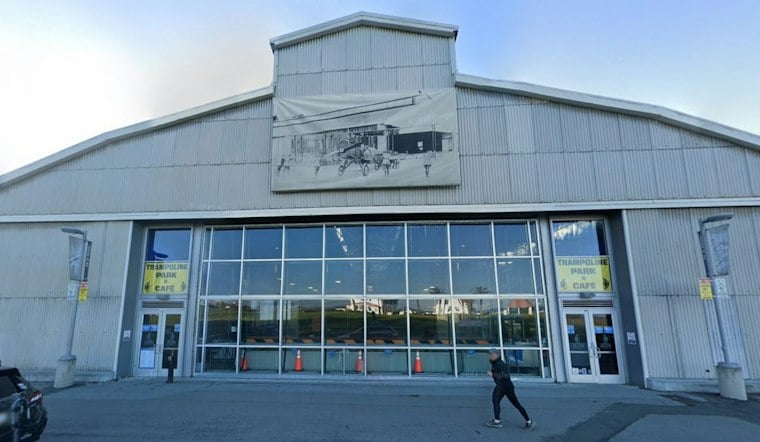
House of Air, the trampoline park that has bounced inside a converted 1921 military hangar at Crissy Field for 16 years, is shutting down for good. The business announced it will not renew its lease, which expires in March 2027, and will close its doors on February 15, 2027, leaving San Francisco without a single indoor trampoline park within city limits.
General manager Daniel Matsumoto said in an email that the cost of a new long-term lease exceeded what the trampoline park could support, according to SFGATE. The Presidio Trust owns the 8,000-square-foot building, known as Building 926, and is required to operate as a financially self-sufficient entity, charging market rates for its real estate. That mandate traces back to the 1996 Presidio Trust Act, under which Congress ordered the Trust to eliminate reliance on annual federal appropriations by 2013 and run its 2.4 million square feet of commercial space like a business, according to a Presidio Trust record of decision.
That financial model has paid off for the Trust, at least on paper. Commercial occupancy across the Presidio hit 96% in late 2024, generating $49 million in leasing revenue that fiscal year to help fund park operations, the Presidio Trust reported in a December 18, 2025 announcement. But that same market-rate pressure is squeezing out a recreational tenant that has drawn more than 1 million visitors over its run, according to KQED.
From Biplane Hangar to Dodgeball Coliseum
Building 926 wasn't built with cartwheels in mind. The 17,000-square-foot structure went up in 1921 as a landplane hangar for the Crissy Field Air Coast Defense Station, the only military airfield built specifically for coast defense on the West Coast, according to the National Park Service. The hangar housed De Havilland aircraft, and the Army's 91st Observation Squadron operated at Crissy Field. After active flight operations at Crissy Field ended, the building served the Army as a motor vehicle paint shop, administrative offices and storage space, the park's own history shows.
House of Air traces its origins to a car ride home from a snowboarding trip in Lake Tahoe, where founders Dave Schaeffer and Paul McGeehan first conceptualized the park, according to the seed facts behind SFGATE's reporting. Converting the derelict hangar into a functioning trampoline park starting in 2010 required serious engineering work: half the renovation budget went toward seismic upgrades for the building's lightweight steel frame and 6-inch concrete roof, while another quarter covered toxic material and asbestos remediation, per Architect Magazine. Because the hangar is a contributing structure to the Presidio's National Historic Landmark District, the renovation also had to meet the Presidio Trust's LEED certification requirement for new work while limiting exterior alterations.
A Landmark Design, Now Set to Go Quiet
The finished space earned national design recognition for architect Mark Horton's redesign, anchored by a 45-foot-wide bifold glass hangar door and a second-story catwalk overlooking the trampoline fields, according to Wikipedia's entry on the park. Inside, jumpers found the Matrix, a bed of 42 conjoined trampolines, alongside a dodgeball coliseum, an extreme-sports training ground and an AirTrak basketball court, per the seed reporting. The park also built out a skatepark-inspired 2X Bowl obstacle zone, extreme-sports training beds, adult night sessions and fitness classes over the years, according to House of Air's own program listings.
McGeehan said the team worked hard for years to turn the hangar into a trampoline park and was grateful to build there, according to SFGATE's reporting. He added that the team was proud of what it built and grateful for the chance to build it by the Golden Gate Bridge. House of Air said it will honor existing gift cards, rentals and monthly passes through its final day on February 15, 2027, and is planning a farewell event, with details to go out to its email-list subscribers.
No More Trampoline Parks Left in the City
Once House of Air closes, San Francisco will have no indoor trampoline parks left inside city limits, pushing families and action-sports athletes to suburban venues in Dublin, Fremont or Concord, according to 510 Families. SFGATE reported that the Presidio Trust had not responded about the building's future by the time of its publication, leaving open what comes next for the historic hangar. Whether Building 926 stays open to the public in some form, or follows other recent Presidio leases toward high-paying office or technology tenants, remains unresolved.




