

























































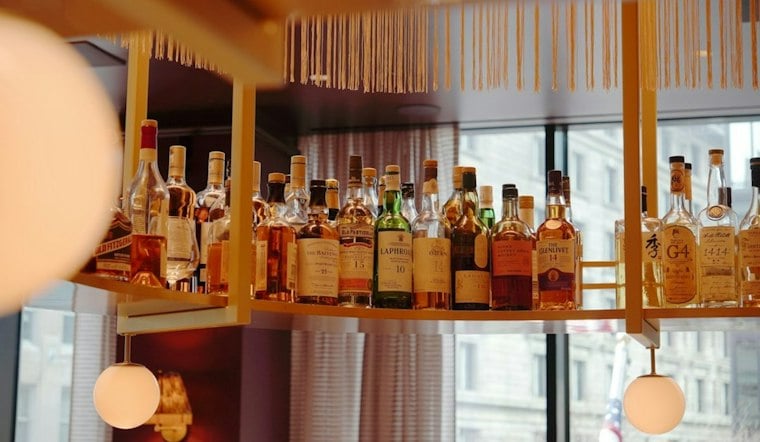
Bloom’s day is divided between hand-whisked matcha and tea-infused cocktails: the 20-seat bar opens in the atrium at 60 Seaport Blvd. in the former Zazibar space, serving matcha before lunch and cocktails into the evening. The spot, which describes itself as a daytime cafe and evening craft cocktail bar, opened in Boston’s Seaport this week.
A District Planned for Mixed Use
A Boston Planning & Development Agency document describing a Seaport Square project amendment lists planned residential, office and research, retail and entertainment, hotel, civic, and cultural and community uses. The document describes proposed uses; it does not establish that all of them were built.
An earlier development marker came with Watermark Seaport: Bisnow reported that Twining Properties CEO Alex Twining described the project as including apartments and retail, surrounded by more than 500,000 square feet of new retail. Together, the records show mixed-use plans and reported residential and retail development, without establishing that every proposed use came to fruition.
Bloom is the first project for which Christian Doan, a data scientist consultant and food influencer known online as Chopstick Murphys, has served as creative lead, Boston.com reported. Doan is also an investor in Mai, where he helped establish the bar program. Ray Lee, who has run tea shops around Boston for 20 years, partnered with Doan after WS Development approached them about the former Zazibar space, according to the report.
A Tea Bar That Thinks It's a Cocktail Bar, or Vice Versa
Doan describes Bloom as either a cocktail bar that specializes in tea or a tea bar that specializes in cocktails, according to Boston.com. Bloom’s own site frames the idea similarly, calling itself a bar and lounge built around Bloom Bar Boston's mix of botanically inclined cocktails, specialty tea beverages, and seasonal matcha lattes.
Bloom’s website says Japanese cocktail bar culture inspired its focus on precise execution of simple drinks made with natural ingredients. Tea is a central ingredient in the bar’s alcoholic craft cocktails.
Matcha Flights by Day, Martinis by Night
Boston.com reported that Bloom sources most of its tea from Cambridge-based MEM Tea. Its menu includes genmaicha, aged teas, and osmanthus laurel teas, as well as hand-whisked matcha flights and a salted maple miso drink. The daytime matcha and hojicha service runs from 11 a.m. to 3:30 p.m.; cocktail service follows from 5 p.m. to 11 p.m.
The cocktail list, as reported by Boston.com, pairs familiar drinks such as margaritas and old fashioneds with more unusual combinations. The Kyoto Martini uses matcha, Jamaican rum, and Brazilian cachaça; the Kombu Shio Highball is made with shochu infused with shiso and kombu; and the Clarified Coconut Milk Punch combines genmaicha tea with jackfruit. The spirits selection includes Japan’s Nikka Coffey Gin and Vietnam’s Sông Cái Gin. Boston.com also reported that the martini service includes a fresh chilled glass swap halfway through the drink.
The Team Behind the Bar
According to Boston.com, Doan’s team includes beverage director Chompon “Boong” Boonnak, a James Beard Award finalist and Michelin-recognized hospitality professional, and Markus Yao, who previously worked at Shojo. Iruma Shibuya, whose past stops include Bar High Five in Tokyo, Drink, and Eastern Standard, is also on the team. Isabelle Lin has joined Bloom as a co-founder.
Boonnak said the goal is to bring broader Asian influences into the cocktail program through unusual ingredients while still keeping the drinks approachable and fun, according to the Boston.com report. Doan, for his part, said Bloom is meant to counter what he sees as the Seaport's corporate atmosphere by emphasizing nature and encouraging people to slow down.
Design Meant to Evoke a Botanical Garden
Boston.com reported that Bangkok-based firm MinickBom designed the space with Japanese botanical gardens as inspiration, a contrast to the glassy corporate style often associated with the surrounding Seaport. The food menu is planned to expand gradually: early offerings include Japanese convenience-store-inspired egg salad and fruit cream sandwiches, plus daytime curry rice bowls. Evening bar bites are planned to include charcuterie with grilled brie and Sichuan chili oil.
Bloom is opening with limited hours and a slimmer menu for its first few weeks and will be closed on Mondays through mid-October before expanding to seven days a week. The opening adds to a broader wave of restaurant activity remaking the Seaport, a stretch of waterfront that has drawn a steady run of new openings in recent months.





