

























































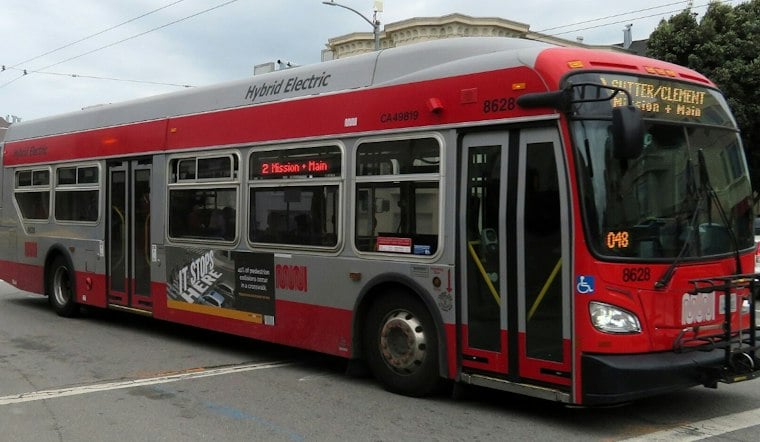
A shirtless, cigarette-smoking man has become an unlikely internet celebrity after footage surfaced of him calmly driving a decommissioned Muni bus through West Oakland, cracked windshield and all. The battered bus, missing its front glass entirely in one spot and marked with a not-in-service sign, somehow looked right at home rumbling down the street under his control.
The video, as reported by the San Francisco Chronicle, shows the driver turning right from the West Grand Avenue overpass onto Wood Street in Oakland. He looked both ways and signaled before the turn, and he flashed a peace sign at whoever was filming him — a small gesture that only added to his folk-hero status online. The bus itself showed its age: cracked glass, a faded advertisement for AI software, and a paper license plate taped to the front bumper, which the Chronicle reported suggested the vehicle had recently changed hands.
Online Sleuths Weigh In On the Bus's Backstory
Commenters on Reddit had theories. One speculated the driver picked up the bus cheaply, while another simply praised him as a better driver than most people on Bay Area roads, despite the missing shirt and lit cigarette. Per the Chronicle's reporting, a Reddit commenter noted that the city had featured obsolete buses in its auction house a couple of months earlier.
What is verifiable is how these old buses typically leave Muni's hands. According to the San Francisco Examiner, the SFMTA sends retired buses to the scrap heap, donates them, or sells them at auction depending on condition. Vehicles that are no longer fit for transit service still attract buyers — transportation museums, transit enthusiasts, and even Burning Man participants have snapped up old Muni coaches in the past, the outlet reported.
A Rare Bus Nearly Lost to Auction
The parallel isn't hypothetical. The Examiner's report detailed how transit enthusiasts recently rallied to try to save a 1994 New Flyer electric, double-length Muni bus from auction, where opening bids had been set at just $500. SFMTA spokesperson Paul Rose told the outlet the agency asked the auctioneer to pause that sale while it worked out next steps with interested stakeholders, after the SFMTA confirmed that the three articulated buses put up for auction were the last of their types.
When buses do go to auction, officials strip their logos and vehicle numbers and disconnect the flashing head signs from Muni's network, per the Examiner's reporting. Repainting the vehicles is often too costly, though, so auctioned buses can retain their distinctive red striping — a detail that may explain why the Oakland bus in the viral video still looked unmistakably like a former Muni vehicle despite its rough condition.
Where Do Old Muni Buses Go Next?
End-of-life Muni buses can be rehabilitated in surprising ways beyond private resale. The SFMTA has highlighted how the San Francisco Fire Department converted two former Muni training buses into mobile hospitals called AmbuBuses, each capable of holding six emergency medical crew members. The agency and fire department completed that conversion in six weeks for $70,000 — about one-tenth the cost of buying two similarly configured new vehicles, according to the SFMTA. The 40-foot AmbuBuses debuted during Fleet Week ceremonies in early October and were later called in to evacuate a convalescent home in Burlingame after a building fire. Other retired Muni buses have found second lives as bookmobiles and mobile shower stations, the agency said.
More of these old coaches may be hitting the secondhand market as San Francisco pushes toward an all-electric fleet. The SFMTA launched an electric bus pilot program in 2019, and its Board of Directors adopted a Zero Emission Bus Rollout Plan in March 2021, with electric bus deliveries beginning that May. The agency's stated goal is a 100 percent battery-electric fleet by 2035, backed in part by a $33 million federal Low- or No-Emission Grant awarded in June 2023. Based on current facilities planning, the agency's next bus procurement in 2027 could be entirely electric.



