

























































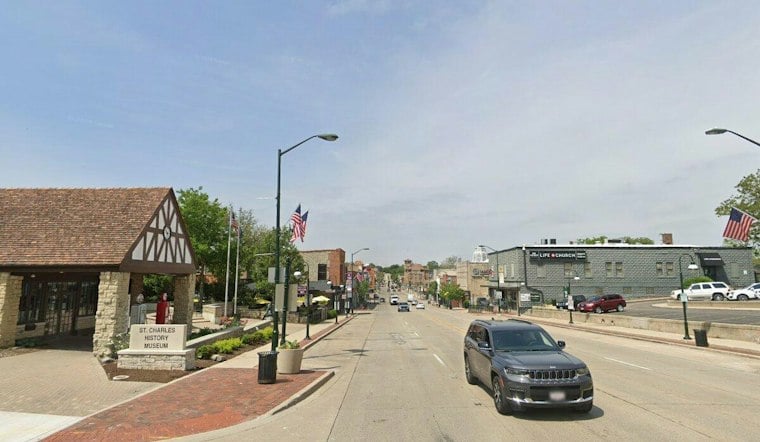
St. Charles is spending $237,036 to carve out new angled parking spaces on Third Avenue, the next concrete step in a long-running deal designed to save the 1844 Barry House from the wrecking ball. The City Council's committee of the whole approved the proposed contract with Bensenville-based paving firm Acura Inc. during an Oct. 5 meeting, with construction expected to begin later in October and wrap up by Nov. 20.
A Parking Fix Tied to a Preservation Deal
The new spaces will run along the east side of Third Avenue between East Main Street and Cedar Avenue, part of a broader plan that set aside $250,000 for the diagonal parking project, funded through the city's Central Downtown TIF district. The project will add public parking, while the agreement enabled Baker Memorial United Methodist Church to sell its northern parking lot as part of the Barry House deal, according to Shaw Local. The city council still must take a final vote on the contract.
The arrangement traces back to February 2026, when St. Charles approved a tax increment financing redevelopment agreement after a Geneva developer stepped in to purchase and refurbish the Barry House with financial help from the city. Under that deal, Geneva Heights LLC agreed to buy the Barry House and the adjacent property at 211-215 Cedar Ave. from the church for $525,000, according to a report from the Kane County Chronicle covered by Shaw Local. The agreement also enabled the church to sell its northern parking lot while keeping its southern lot for congregants.
Why the City Stepped In With TIF Money
The redevelopment agreement included up to $425,000 in city tax increment financing assistance, according to Partners for Preservation Fox Valley. That assistance breaks down into a $125,000 grant to help the developers purchase the property, another $50,000 earmarked to restore the Barry House's facade to its original stone condition, and the $250,000 now funding the Third Avenue parking work. The new spaces will allow public parking except during Sunday church service hours, the Kane County Chronicle's report notes.
St. Charles Economic Development Director Derek Conley has estimated that each rehabilitated property in the arrangement could generate $7,000 to $8,000 in annual property tax revenue for the city once the work is finished, per the same Partners for Preservation Fox Valley account. Geneva Heights LLC is expected to restore the Barry House property to local historic preservation standards by May 1, 2027, according to city documents cited by Shaw Local.
A House That Almost Didn't Survive
The Barry House, built around 1844 out of limestone in the Greek Revival style, once belonged to Judge William D. Barry, who served as a Kane County judge around the time of the Civil War and became the first president of the Kane County Bar Association, according to the Chicago Tribune. Baker Memorial United Methodist Church, which built its current sanctuary in 1952, has owned the Barry House since 1993 and had previously sought to demolish the then-182-year-old home for additional parking, citing it as a liability and financial burden.
The historic preservation commission and city council blocked earlier demolition attempts in 2017 and 2024, and the landmark status fight culminated in an Aug. 4, 2025 council vote that rejected the church's demolition request 7-3, according to the Tribune's earlier coverage. Preservation advocates Jayme Muenz and Vicki Spellman had warned that approving demolition could set a precedent endangering other buildings within St. Charles' historic districts. The house's vulnerability had already drawn statewide attention: Landmarks Illinois placed the Barry House on its 2025 list of Most Endangered Historic Places in Illinois, noting it had sat vacant since at least 2017.
With the parking funding now moving forward and a proposed paving contract still awaiting a final City Council vote, the project represents the most tangible progress yet toward the May 2027 restoration deadline that will determine whether the city's investment pays off.




