

























































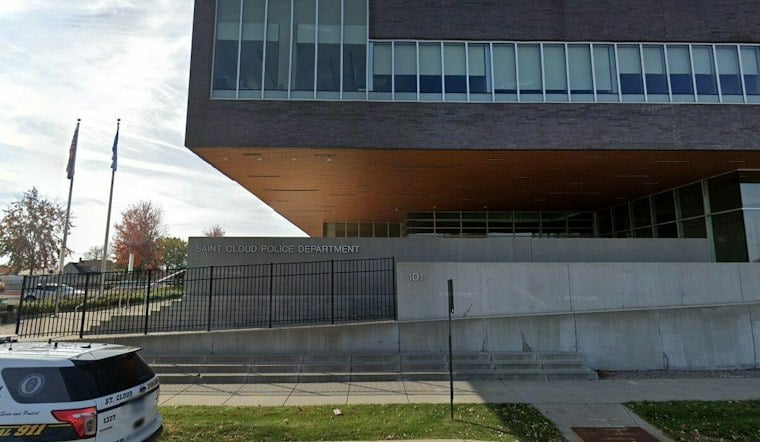
Faisal Mohamed says he was standing in his own driveway, installing a child safety seat in his vehicle, when St. Cloud police officers surrounded him with guns drawn and ordered his hands up. The 21-year-old says the officers had the wrong man entirely, and he wants the city to explain how it happened.
Mohamed told CBS News Minnesota that body camera footage shows officers directing him to walk backward toward them with his hands visible before they realized they had stopped the wrong person. He said the encounter left him terrified and that it has been difficult to move past. “It broke me,” Mohamed said, describing the toll the stop has taken on him.
According to St. Cloud Police Chief Jeff Oxton, officers were responding to what they believed was a suspect connected to an aggravated robbery case involving a handgun, per an email cited in the CBS News Minnesota report. Police were searching for a 22-year-old Somali man, per Oxton, and Mohamed's license plate matched the first three letters and the last digit of the suspect vehicle's plate. Oxton said the actual suspect was believed to live several houses away on the same street.
Mohamed said police told him they were looking for a Chevy Impala, while he drives a Chevy Malibu — a mismatch that has fueled his questions about how the stop escalated to gunpoint in the first place. He said he believes race played a role, telling the station he felt racially profiled because he looks Somali. A St. Cloud police officer apologized to Mohamed for the stop, according to the same report.
What the Cameras Are Supposed to Catch
St. Cloud uses Flock cameras and automatic license plate readers mounted in squad cars, tools the department has recently defended as essential to public safety. Just over a week before the CBS News Minnesota report, Police Chief Jeff Oxton presented to the St. Cloud City Council, calling ALPR technology an “incredibly valuable tool” and disclosing that the department runs five stationary Flock cameras, five stationary Axon cameras, and mobile readers in 37 to 39 marked squad cars, according to KNSI.
A St. Cloud audit conducted by Rampart Audit, LLC, on April 29, 2026, confirmed that the city's Axon system uses artificial intelligence for Vehicle Attribute Recognition, software designed to identify a vehicle's make, model, body style, color, and issuing state — raising questions about how the system, or the officers relying on it, mistook a Malibu for an Impala. Blaine Police Department guidance issued in January 2026 says officers who receive an automated license plate reader alert should independently verify the hit's details before taking enforcement action.
A City Already Rethinking Its Cameras
KNSI reported costs of $15,000 for St. Cloud's five Flock cameras and $12,500 for its five Axon bridge cameras. The department voluntarily purges Flock data after seven days under vendor guidelines, tighter than the 60-day limit state law sets for non-investigative data, KNSI reported.
The stop lands amid a broader statewide retreat from the technology. On September 22, the Plymouth City Council voted to remove all 16 of its Flock cameras. Other Minnesota jurisdictions, including Duluth, have also paused or ended ALPR programs. Just weeks earlier, on August 13, neighboring Sherburne County ended its own Flock contract and dismantled nine cameras, including two in south St. Cloud, citing eroding public trust — a move Hoodline detailed at the time. That same month, an 18-year-old Sauk Rapids man was charged with felony criminal damage to property after using a saw to cut down a pole holding a St. Cloud Flock camera, according to a report from Bring Me The News.
Demographic Backdrop and a Push for Accountability
St. Cloud's Black population grew from about 1,700 in 2000 to nearly 15,000 by 2020, according to MPR News. Mohamed has raised concerns about racial profiling in a city with a Somali American community.
Mohamed says he wants answers from city leaders and law enforcement, and Chief Oxton is scheduled to meet with him to review what led up to the stop. St. Cloud Mayor Jake Anderson has reached out to Mohamed and offered to sit in on that meeting, and city officials are working to confirm the sit-down, per an email described in the CBS News Minnesota report. The case has also drawn attention to St. Cloud policing.





