

























































Terre Haute Mayor Brandon Sakbun has joined a bipartisan group of Indiana mayors demanding that Congress force action on railroad crossings that can block city streets for minutes, hours, or in some cases weeks at a stretch. The city is backing the “Move the Train” campaign, which calls on federal lawmakers to pass a surface transportation bill that would fund grade-separation projects and study the chronic blocked-crossing problem nationwide.
The push, reported by WTHI-TV, is led by New Haven Mayor Steve McMichael, who has made the case that blocked crossings plague not just Terre Haute and New Haven but, in his words, “dozens of Indiana communities and thousands of communities across America.” Terre Haute itself has rail lines running straight through downtown, and Sakbun says the cost of fixing the problem with overpasses or underpasses falls on federal, state, and local taxpayers, not on the railroads themselves, per the same report.
A Street Blocked for Nearly 27 Days This Year
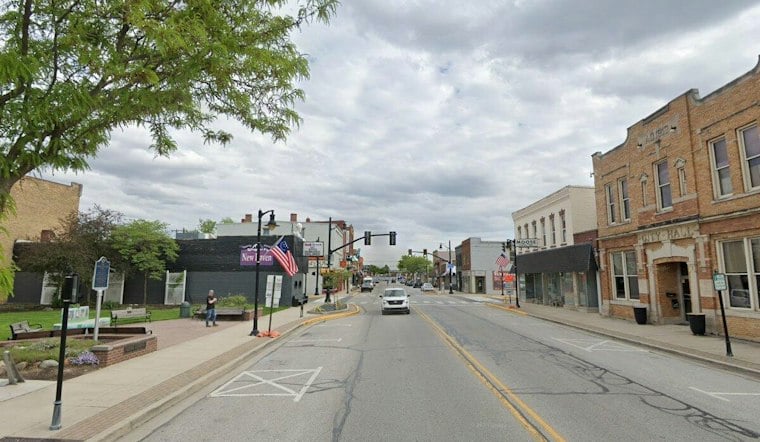
McMichael's hometown offers a stark illustration of the problem. New Haven, home to a Norfolk Southern rail yard, has seen its main commercial corridor blocked for weeks at a time, according to WTHI-TV's report. The mayor says Broadway Street in New Haven was blocked for a combined 38,481.8 minutes so far this year through October 13 — the equivalent of 26 days, 17 hours, 21 minutes and 48 seconds.
McMichael also cited year-over-year data showing blockages in New Haven rose 25 percent while total blocked time jumped 38.9 percent, the station reported. He has warned that the delays carry real safety risks, saying blocked crossings have led to children crawling through stopped trains and have left first responders unable to reach emergencies in time.
Why Cities Have No Power to Fine Railroads
McMichael pointed to a string of court decisions, including the Indiana Supreme Court ruling in State of Indiana v. Norfolk Southern Railway Co. and the Supreme Court of Ohio's 2022 ruling in Ohio v. CSX, that he says leave enforcement authority entirely with the federal government, per WTHI-TV. That legal reality traces back further: in September 2018, the Indiana Supreme Court unanimously ruled in a case against Norfolk Southern that the 1995 Interstate Commerce Commission Termination Act preempts Indiana's 1865 Blocked Crossing Statute, according to Justia Law. That ruling struck down a state law that had allowed $200 fines for crossings blocked more than 10 minutes, after Norfolk Southern successfully challenged 23 citations issued in Allen County.
Ohio courts reached a similar conclusion in August 2022, when the Supreme Court of Ohio struck down the state's five-minute blocked-crossing law on the same federal preemption grounds, as detailed by Court News Ohio. Those rulings reinforced that state and local governments cannot regulate how long a train sits across a crossing, no matter how disruptive it is to a town's traffic. McMichael has also noted that current Federal Railroad Administration reporting rules only count a blockage once it stretches past 30 minutes, meaning shorter but still frequent disruptions often go uncounted, while New Haven itself has little formal enforcement power of its own.
Terre Haute's Own $30 Million Fix, Years in the Making
Terre Haute is not waiting on Congress alone. The city is advancing a nearly $30 million overpass project at 13th Street and 8th Avenue that is expected to go out to bid later this year, with major construction likely beginning in 2027, according to WTHI-TV's reporting. State procurement records from the Indiana Department of Transportation list the project, Contract B-41843, as ready for contract with an official bid letting date set for December 9, confirming the timeline the station described.
The project is backed by $13.52 million from INDOT's Local TRAX program, which covers all design and inspection costs, according to the City of Terre Haute; local matching funds make up roughly $4.5 million of the total estimated cost. The design calls for a single-span bridge with two 116-foot diameter roundabouts to carry vehicle traffic over CSX tracks, per Indiana Department of Transportation procurement schedules. Even with funding largely secured, Sakbun has said the overall process favors rail traffic under existing case law and that building an overpass can sometimes take 15 years from start to finish, WTHI-TV reported.
Terre Haute's crossing troubles stem partly from its role as a central Midwest rail hub, where CSX Transportation's main lines intersect with regional freight carriers including the Decatur & Eastern Illinois Railroad and The Indiana Railroad, according to Watco. Switching and interchange operations near CSX's downtown Duane Yard frequently stall traffic at key grade crossings across the city.
The Federal Bill Mayors Are Counting On
The centerpiece of the Move the Train campaign is the BUILD America 250 Act, a renewal of the federal surface transportation bill that the group wants Congress to pass. The House Committee on Transportation and Infrastructure has already approved the roughly $580 billion package by a 61-2 vote with the Railway Safety Act language fully intact, according to the National Association of Counties. McMichael has said the bill would require the FRA to study blocked crossings and propose solutions, while also funding overpasses, grade separation projects and new technology.
The Railway Safety Act itself was originally written by then-Senators J.D. Vance and Sherrod Brown after the toxic Norfolk Southern train derailment in East Palestine, Ohio, WTHI-TV noted. That 2023 disaster, which involved 11 derailed hazardous material cars and forced the evacuation of roughly 2,000 residents, prompted the senators to introduce the legislation, according to the U.S. Senate Committee on Commerce, Science, and Transportation. Separately, federal lawmakers reintroduced the Don't Block Our Communities Act in December 2025, which would set a 10-minute federal limit on blocked crossings and let the FRA fine noncompliant carriers, according to a statement from Rep. Sylvia Garcia's office.
Not everyone supports adding new federal mandates. The Association of American Railroads has publicly opposed attaching the Railway Safety Act to the BUILD America 250 Act, arguing that static federal rules would raise supply chain costs without proven safety benefits. The industry group has pointed to 2025 as the safest year in freight rail history for derailments and equipment-caused accidents to argue that technology and private investment, not new mandates, are the better path forward.
'A David and Goliath Issue'
McMichael has framed the fight in blunt terms, describing it as a David and Goliath issue, while insisting he is not anti-rail or anti-commerce and that he supports Main Street as much as Wall Street, according to WTHI-TV. The Move the Train petition has drawn more than 1,000 signatures, and McMichael has urged supporters to contact their members of Congress directly.
If the BUILD America 250 Act becomes law, it could eventually open funding for a broader 2028-2030 discussion about a downtown Terre Haute overpass or underpass, according to the station's report. For now, Sakbun's administration is moving forward on the 13th Street and 8th Avenue project largely on its own timeline, a reminder that even well-funded local fixes can take years to clear state and federal hurdles before a single beam goes up.





