

























































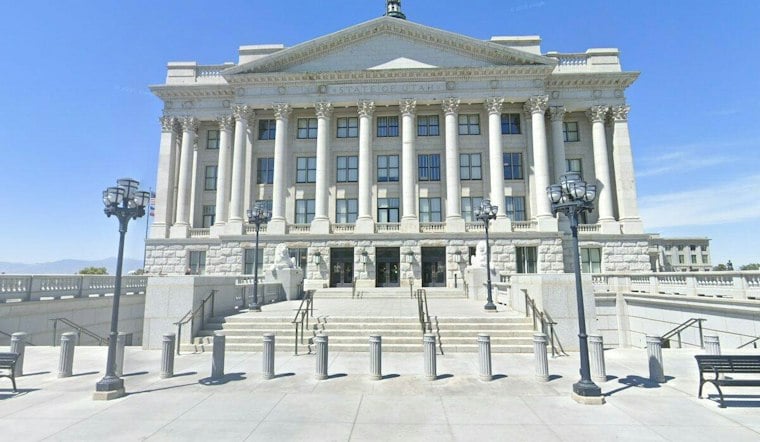
Thousands of Utah voters are finding ballots in their mailboxes this month that only let them weigh in on congressional races, after the state's new citizenship verification law flagged their registration records as incomplete. Election officials say roughly 3,700 voters remain in that limbo category statewide, and the clock is ticking toward an October 23 deadline to fix it.
As KSL News reports, roughly 4,300 Utah voters were awaiting citizenship verification before election officials expected that number to drop by about 600 in a single day, according to Ryan Cowley, Utah's director of elections. That would leave around 3,700 voters still carrying the limited ballot status heading into the final stretch before Election Day. The law behind the hold-up, House Bill 209, requires documentary proof of U.S. citizenship for anyone to participate in state and local races, while a federal-only ballot still allows those voters to weigh in on congressional contests.
Importantly, landing on that list doesn't mean the state has flagged someone as a noncitizen. KSL notes the gap is almost always administrative: longtime Utah voters whose older registration records never collected a driver's license or Social Security number, the data points now used to confirm citizenship electronically. Cowley's office is working with county clerks to track down those voters through letters, emails, and cross-checks against government databases, and has partnered with the Utah Office of Vital Records to verify roughly 500 additional Utah-born voters by birth record alone, per the same KSL report.
How HB 209 Created a Two-Tier Ballot
Governor Spencer Cox signed HB 209 into law on March 25, after it moved through the Legislature under chief sponsor Representative A. Cory Maloy and Senate sponsor Ronald M. Winterton, according to FastDemocracy. Supporters framed the measure as an election-security safeguard; opponents called it an unnecessary hurdle for eligible voters. The bifurcated ballot structure it created isn't unique to Utah — it mirrors the dual-roll framework that emerged after the U.S. Supreme Court's 2013 ruling in Arizona v. Inter Tribal Council of Arizona, which found that the National Voter Registration Act bars states from tacking extra citizenship-proof requirements onto the federal voter registration form without federal sign-off, as explained by the Texas Public Policy Foundation. That precedent is why a Utahn with an unverified record can still legally vote for Congress this fall even while being withheld from the governor's race or city council contests.
Utah isn't alone in chasing this policy. The state is one of four — alongside Ohio, South Dakota and Wyoming — that enacted documentary proof-of-citizenship rules aimed at the 2026 midterm cycle, Hoodline previously reported on Ohio's injunction fight. The SAVE America Act cleared the U.S. House on April 10, 2025.
Salt Lake County's Share of the Backlog
Salt Lake County, which accounts for roughly a third of Utah's registered voters, had fewer than 1,000 residents receiving federal-only ballots, according to Salt Lake County Clerk Lannie Chapman. The county clerk's office sent notices to residents whose files were missing the identifying numbers now needed for verification — often people, Chapman noted, who registered before Utah forms required a Social Security or state ID number at all.
Voters who still have their federal-only ballot in hand can contact their county clerk, provide the required documentation, and request a replacement full ballot before mailing the original one back. A clerk can also spoil an unreturned federal-only ballot and swap in a complete one once citizenship is confirmed. But the window closes once a ballot has already been returned — KSL's report notes that voters who've already sent back a federal-only ballot may not be able to get a replacement that adds the state and local races back in.
The State's Own Audit Found Little Noncitizen Voting
The scale of the fix stands in contrast to how rare the underlying problem actually is. A comprehensive audit by Lieutenant Governor Deidre Henderson's office, running from April 2025 through May 2026, cross-referenced Utah's voter rolls against driver's license and federal SAVE databases and found that 99.72% of the state's roughly 2 million registered voters were verifiably U.S. citizens — identifying just 27 confirmed noncitizens, according to the Utah Lieutenant Governor's Office.
More recent tracking tells a similar story about how the verification push has played out so far. Out of 6,191 Utah voters notified to prove their citizenship ahead of this general election, 1,827 confirmed their status and 57 asked to be removed from the rolls entirely, Utah News Dispatch reported in October. Those who haven't responded were issued federal-only ballots under HB 209's procedures.
The ACLU of Utah raised objections to HB 209 before it became law, petitioning Governor Cox in March to veto the bill. The organization warned that documentary proof rules create disproportionate burdens for voters who've changed their legal names, including married women who would need to produce marriage certificates on top of other paperwork. Advocates argued the law added friction without evidence of widespread noncitizen voting, a position the group laid out in detail on its website.
Deadlines Voters Need to Know
The regular voter registration deadline falls at 5 p.m. on October 23, and that's also the date by which voters needing citizenship verification should try to complete the process. In-person early voting opens October 20, giving unverified voters who miss the standard deadline a chance to bring documentation — a qualifying Utah driver's license or state ID number, a U.S. passport, a birth certificate, or naturalization papers — and cast a provisional ballot at a polling place instead. Those provisional voters can still submit the required paperwork before the applicable post-election deadline for their state and local votes to count.
Utah also tightened its mail ballot rules this cycle: ballots postmarked by Election Day used to count, but now every returned mail ballot must physically reach county clerks by 8 p.m. on November 3, the Daily Utah Chronicle reported. Salt Lake County will run 41 voting centers and eight early-voting locations on Election Day for residents who'd rather vote in person. Officials are urging anyone relying on the Postal Service to mail ballots several days early given the stricter receipt deadline.
Election officials are asking all Utah voters to double-check their ballots before returning them. Anyone whose ballot contains only federal races should contact their county clerk to find out what documentation is needed to get a full ballot, and anyone who hasn't received an expected ballot at all should also call their clerk to confirm their registration status. Salt Lake County residents can find local election information at slco.vote, while all Utah voters can check statewide resources at vote.utah.gov.




