

























































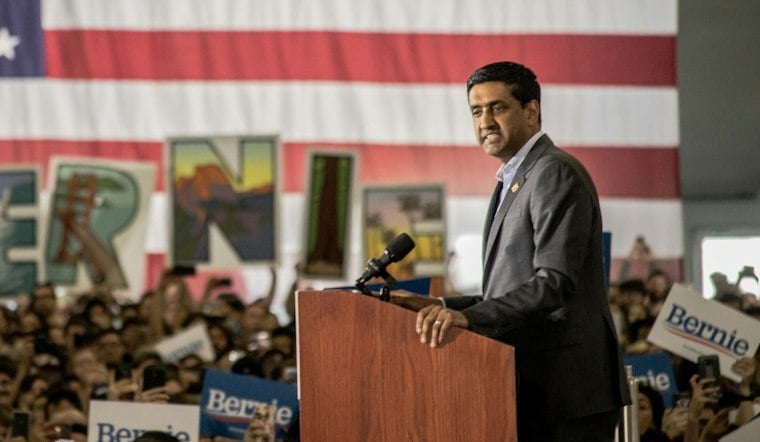
Students at UC Berkeley gathered for a rally this week backing Proposition 40, the statewide measure known as the Billionaire's Tax, as opposition spending against it climbs into the tens of millions of dollars. The one-time proposal would impose a 5% tax on more than 200 California billionaires, with supporters arguing the money is urgently needed to shore up health care programs facing federal cuts.
The rally, covered by NBC Bay Area, drew attention to a ballot fight that has become one of the most expensive in recent California history. Proponents say revenue from the tax would go primarily toward healthcare, with money also reserved for food assistance and education, according to the station's reporting. Representative Ro Khanna, described by the outlet as a vocal supporter of the measure, told the crowd the stakes were existential for the state's safety net. “It works because it raises the billions of dollars that will be needed so 3.5 million Californians don't lose health care,” Khanna said, per NBC Bay Area's coverage.
That framing connects directly to federal policy: the Trump administration has cut tens of billions from Medi-Cal, the program that provides health insurance to low-income Californians, and those cuts threaten hospitals and clinics, the station reported. Backers of Prop 40 argue the billionaire tax would help fill that gap.
What the Tax Would Actually Do
Under the measure, the one-time 5% levy would apply to billionaires who were California residents as of January 1, 2026, with payment due in 2027, according to LAist. The nonpartisan California Legislative Analyst's Office, per the same outlet, estimates the measure would generate “tens of billions of dollars spread over several years.” That figure conflicts with proponents' own projection of roughly $100 billion over five years, a gap Mercury News has flagged as a central point of dispute in the campaign.
The California Legislative Analyst's Office also notes that taxpayers would have the option to spread their payments over five years, though doing so would require paying interest. As for where the money would go, KQED reports that 90% of revenue would flow to healthcare, with the remaining 10% split among programs including food assistance and schools.
Newsom's Opposition and a Pointed Rebuttal
Gov. Gavin Newsom opposes the proposed tax and instead backs Proposition 42, NBC Bay Area reported, one of two competing measures designed to counter Prop 40. Saikat Chakrabarti argued, according to the station's reporting, that Newsom's opposition stems from his need for billionaire donors ahead of a potential presidential campaign. NBC Bay Area said it contacted the governor's office late that night but did not receive a response.
Dave Johnson, chairman of the Silicon Valley GOP, offered a different critique, warning that California could lose tax revenue it would otherwise collect from billionaires if the measure passes. Johnson said billionaire entrepreneurs could relocate to another state along with their employees rather than pay the tax, and he characterized the Medi-Cal cuts driving the urgency behind Prop 40 as simply “returning things to how they were,” per the NBC Bay Area report.
Competing Measures Could Decide the Outcome
Prop 40 doesn't stand alone on the ballot. Propositions 41 and 42 are countermeasures, with Prop 42 moving to ban new taxes on financial assets, private businesses and most other forms of wealth outright, an explicit reversal of Prop 40, according to CalMatters. If both the wealth tax and either countermeasure pass, the one with the higher vote tally becomes law, CalMatters reports — meaning Prop 40 could win a majority of yes votes and still be blocked from taking effect, according to the California Legislative Analyst's Office's analysis of Proposition 42.
Reporter Guy Marzorati has noted that advertising in the race opposes Prop 40 while promoting Props 41 and 42, which would nullify it, and he has raised the question of how the scale of opposition spending will shape Prop 40's place in California ballot history. Opposition groups have spent a combined $88.7 million on ads through the election, according to the ad-tracking firm AdImpact, as cited by NBC Bay Area.
Big Money Behind the Opposition
That spending is concentrated in one group. Building a Better California, the main opposition campaign, had spent $88.5 million fighting the measure as of October 11, according to the same Mercury News reporting, which also found the group had raised $296.6 million and spent $276.6 million overall, per state campaign finance reports. By contrast, the Yes on 40 campaign had raised just under $33 million, largely from the healthcare union sponsoring the measure, according to The Guardian.
The Guardian's reporting identifies Sergey Brin as the largest donor opposing Prop 40, having contributed at least $102 million. Eric Schmidt had given $35 million to Building a Better California. During just the first 19 days of September, the opposition campaign spent at least $21.2 million, the outlet found. Separately, CNN has reported that Brin alone is spending roughly $100 million to defeat the wealth tax.
Where Voters Stand
Polling on the measure has shown a tightening race. A recent PPIC poll found 52% of likely voters supported Prop 40, a narrow majority, according to CalMatters. A UC Berkeley IGS poll found 48% in favor and 41% opposed, while a late-September University of California poll found support had narrowed to 45% yes and 42% no, per The Guardian's analysis.
The broader debate also touches on how other countries have handled wealth taxes. CalMatters, citing the Organisation for Economic Co-operation and Development, reported that of the 12 countries that had wealth taxes in 1990, only four still do today — a data point opponents have pointed to in arguing that such taxes often drive away the wealthy they target.



