

























































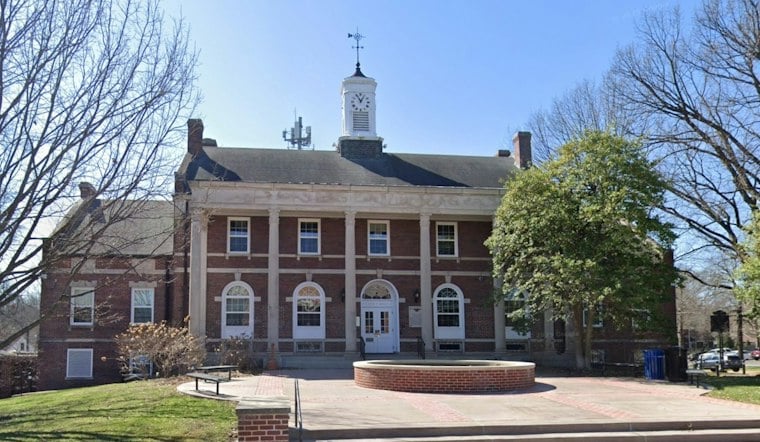
At Tuesday’s Webster Groves council meeting, the central question was how far local safeguards can reach once automated license plate reader data is shared beyond the city. Police Chief Vincent Acevez defended the Flock network as a tool for solving crimes, while acknowledging that the city is legally required to provide data to federal agencies that request it.
A Tense Council Session Over Surveillance Scope
The discussion came as Webster Groves police seek to add Flock cameras, including in high-traffic areas prone to crime, according to the St. Louis Post-Dispatch. Acevez told council members that recent high-profile crimes have led police departments across the St. Louis area to rely increasingly on the technology. He characterized the cameras as an investigative tool, not a surveillance dragnet. The region has at least 1,000 AI-powered license plate readers in operation, the report said.
Council member Leanne Waugh questioned the implications of sharing data with many agencies, noting that Webster Groves does not know the policing policies and procedures of all of them. She said the city’s internal audits cannot detect misuse by another department after data is shared. Council member Emily Hixson Shepherd focused on the scale of the technology, rather than on the local department alone.
How the Data Is Handled, According to Police
Acevez said Flock does not attach personal information such as names or birth dates to captured images, and that footage gathered in Webster Groves is deleted within 30 days unless saved for an active investigation. He said the department audits officers’ camera use and database searches at least monthly, including by flagging suspicious searches, checking images pulled from the database, and monitoring use of the technology. Acevez described misuse as anomalous.
Those local safeguards operate alongside state standards. Governor Mike Kehoe signed Executive Order 26-18 on September 16, 2026. The order directs state agencies and local law-enforcement entities that receive state funding and use ALPR technology to implement its minimum standards, according to Executive Order 26-18. The standards require most license plate and vehicle data to be permanently deleted within 30 days, prohibit integrating AI facial recognition with license plate readers, ban data monetization, and limit camera use to legitimate criminal justice and lifesaving purposes, according to the Office of Governor Mike Kehoe. The Missouri Department of Public Safety followed with a 10-page guidance document requiring monthly audits and independent verification of camera alerts before enforcement action.
Fears About Federal Access Take Center Stage
The debate over local control was sharpest when council members considered what happens after data leaves Webster Groves. They worry other jurisdictions could use the city’s Flock data to track residents; the city shares data with other departments across the country. Acevez told the council the city is required under state law to provide Flock data to a federal agency that requests it, while saying Webster Groves police do not help U.S. Immigration and Customs Enforcement enforce immigration laws.
Council member Jamie Hasemeier warned that Flock data could still be used for immigration enforcement despite the department's own practices, and fellow member Emily Hixson Shepherd said the easiest way to avoid sharing Flock data with other agencies is simply not to collect it in the first place. Those worries aren't limited to Webster Groves. As of August, Missouri ranked fourth nationally in local law enforcement participation in ICE's 287(g) program, with more than 60 police departments and sheriff's offices maintaining formal federal immigration enforcement agreements, Hoodline previously reported.
Part of a Wider Regional Reckoning
Webster Groves' debate is unfolding alongside a string of other municipal reckonings with Flock Safety across the St. Louis region. St. Louis County Executive Sam Page issued an executive order directing an audit of license plate readers on county roads and property, along with a review of agreements that the county police department, municipalities, and other political subdivisions have with technology companies, according to KSDK. Neighboring Maplewood saw its own council members publicly challenge police leadership over similar fears in September.
The scrutiny follows a series of misuse scandals that have shaken public trust statewide. St. Charles County canceled its Flock Safety contract and removed all 28 of its cameras in August after an internal audit found a civilian police employee had used the database more than 200 times over three years for personal tracking, leading to misdemeanor charges. A former Joplin police officer was separately charged in September with four counts of misuse of official information after a Highway Patrol investigation found he conducted 22 unauthorized database checks involving personal contacts. And in Brentwood, an internal investigation confirmed an officer improperly accessed the Flock system during a personal divorce to track his former wife, though prosecutors concluded the conduct didn't violate criminal law.
What the record shows about data access
Flock says customers control their data-sharing relationships and that the company does not share customer data without authorization except when required by law, legal process, or permitted emergency circumstances, according to Flock Safety. That company statement does not establish Webster Groves’ specific sharing settings or show whether federal immigration agencies have accessed the city’s data. The broader use of interagency sharing is documented in other jurisdictions, but that does not establish access to Webster Groves records. In a 2019 review, the California State Auditor reported that 73 percent, or 168 agencies using ALPR systems, said they shared images with other law-enforcement agencies.
Nationwide, Flock Safety's network now captures and processes an estimated 20 billion license plate scans per month across more than 4,000 participating communities, a scale Hoodline has reported fuels privacy advocates' warnings about warrantless location tracking across jurisdictions. At Tuesday's meeting, Webster Groves' council and its police chief debated how to balance that national network against local control.



