

























































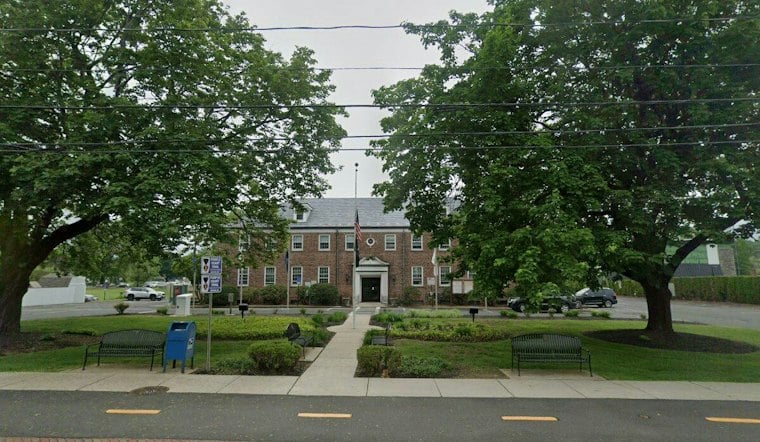
Five open apartments. Tens of thousands of names on the waiting list. And some units sitting empty for as long as a year and a half. Agawam city councilors say that math does not add up, and they are now asking state lawmakers to rethink the system that produced it.
The Agawam City Council has petitioned Governor, state Legislature officials and housing authority directors across Massachusetts to support changes to the state's Common Housing Application for Massachusetts Public Housing, known as CHAMP, according to MassLive. The council adopted a resolution asking lawmakers to give local housing authorities more input and control, though the resolution itself does not spell out specific changes to state law, the outlet reports.
Councilor George Bitzas, who sponsored the resolution, said the current process leaves apartments sitting empty for months at a time while the Housing Authority works through its waitlist. When an applicant turns down an offer, the agency has to pick a new name, run background and financial checks on that person, and then reach out to gauge whether they would actually move to Agawam. Bitzas said that cycle can leave a unit vacant for about a month each time it repeats — and in some cases, successive rejections have kept apartments empty for as long as a year and a half.
A Waitlist in the Tens of Thousands
The scale of the applicant pool is central to the councilors' complaint. Agawam Housing Authority Director Maureen Cayer told MassLive that as of September there were 24,800 names on waiting lists for just five units she had open, and that most of those prospective tenants were not from Agawam. The Reminder, however, reported a slightly different figure from the same period, putting the waitlist at 24,554 people for five available units, according to The Reminder. Either way, the gap between applicants and openings is stark.
Cayer said some applicants assume the Housing Authority simply is not responding to them, when in reality their names may be so far down the list that their applications never reach her desk. Councilor Peter T. McNair said the delays between housing offers and final decisions have become excessive, per the same MassLive account.
The Agawam Housing Authority manages 242 units spread across six properties: Brady Village, Colonial Haven, Danahy Schoolhouse and Meadowbrook Manor in Agawam, plus Country View Estates and Wade Village in Feeding Hills. Of those units, 191 are one-bedroom apartments reserved for elderly or disabled residents, with the rest set aside as two- or three-bedroom units for low-income families, Cayer told the outlet.
How the Common Application Changed the Rules
Before 2014, Cayer explained, anyone applying for public housing in more than one town had to fill out separate forms and mail or deliver them individually to each housing agency. Local directors also had more latitude at the time to prioritize applicants with ties to their own community. The common application changed that by requiring local agencies to treat applicants from across the state equally, letting prospective tenants submit a single form and check boxes for waitlists at more than 200 local housing authorities statewide.
Cayer said that shift was meant to close loopholes — some housing directors, she noted, had engaged in not-so-above-board practices under the old system. But she argued that returning more control to local directors is now the only way to fix the application backlog that has resulted. Bitzas framed the stakes in personal terms, saying elderly residents who have spent their lives in Agawam should have a fair shot at staying in town when they need affordable housing, and that residents with deep local ties are generally best served by housing close to home. Agawam councilors have also argued that prioritizing local applicants could cut down on people applying to towns they later turn down because the location is too far from work, school, family or friends.
A Statewide Pattern of Empty Units
Agawam's experience echoes findings from a broader investigation. A 2023 analysis by WBUR and ProPublica found that nearly 2,300 state-funded apartments sat vacant statewide even as roughly 184,000 people waited for state-subsidized housing. That report traced the issue back to the same system change Cayer described: Massachusetts replaced town-by-town waitlists with a single statewide pool that 230 local housing agencies now draw from, after decades in which each agency managed its own smaller list.
The same WBUR investigation documented the problem locally, too. At Brady Village in Agawam, 10 of the complex's 44 units were empty in July 2023, including seven that had sat unoccupied for more than a year. Under Massachusetts General Laws Chapter 121B, Section 40(f), the state is required to set uniform tenant-selection standards, including order of priority, that all housing authorities must follow when choosing tenants — the very framework Agawam's councilors are now asking lawmakers to revisit.





