

























































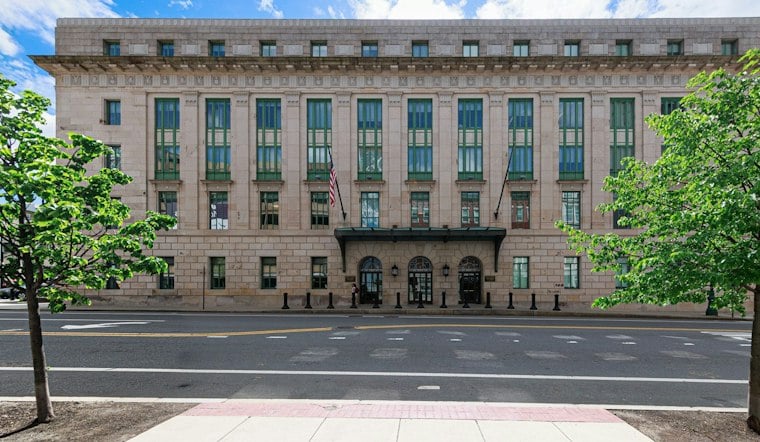
One of Massachusetts’ most politically active unions is taking the state to federal court over who gets to ask whom for campaign cash. The Massachusetts Teachers Association has filed a lawsuit challenging state rules on political fundraising, arguing the restriction unfairly silences its members even when they’re off the clock and off school property.
According to The Boston Globe, the MTA wants its members to be able to help raise money for its super PAC by soliciting donations from fellow union members. The union was joined in the suit by a local affiliate and two teachers. As eagletribune.com reports, the case concerns rules on political fundraising for union-affiliated PACs.
The MTA’s core argument is narrow but pointed: it says the restrictions on public employees’ political fundraising are too broad. It contends the statute should not apply to off-duty, off-site conversations between members about PAC donations, and that enforcing it in those settings infringes on members’ constitutional rights, per the Globe’s reporting.
A Teacher’s Shelved City Council Bid
MTA President Matt Bach has framed the restriction as a direct hit on members’ political futures, saying it limits their electoral impact and their ability to run for office themselves. One of the named plaintiffs, Kirsten Frazier, is a Worcester Public Schools teacher who had considered a bid for Worcester City Council. Per Bach, her city council plans were constrained by the law — a detail the union is using to illustrate how the statute reaches beyond fundraising into whether members feel free to seek office at all.
Bach has also said the law limits members’ broader participation in public and civic processes, not just their ability to raise money. The MTA is specifically seeking permission for members to solicit PAC donations from fellow union members while off-duty and away from the worksite — a carve-out the union says would resolve the conflict without touching restrictions that apply during work hours.
The MTA’s Political Activity
The lawsuit lands against the backdrop of the MTA’s political activity in Massachusetts. The union has a record of political spending in the state.
The union was among the biggest funders of the 2022 ballot campaign that created the state’s millionaires tax, contributing more than $17 million to that effort, according to the Globe. Two years later, the MTA financed more than $15.7 million of the $16.5 million campaign to eliminate the MCAS graduation requirement, a detail reported by bostonglobe.com. That same campaign later drew scrutiny when the Office of Campaign and Political Finance fined the MTA $4,000 for late reporting of roughly $2.37 million in contributions that went undisclosed until Election Day, the outlet noted.
This Year’s Ballot Fights And Legislative Races
The union’s 2026 spending has followed a similar pattern. The MTA contributed nearly $100,000 to the successful campaign opposing Question 3, a measure that would have replaced the state’s partisan primary system with a top-two system, the Globe reported. It also put $500,000 behind the campaign supporting Question 9, which voters approved to keep a sweeping gun control law in place, and the union was counted among the top donors to the committee that defeated Question 3.
Beyond ballot questions, the MTA participated in more than a dozen legislative races this cycle and contributed about $175,000 to a super PAC backing U.S. Senator Ed Markey in his primary against Representative Seth Moulton. The union also aided Democrats in competitive primary contests, including state senator-elect Erika Uyterhoeven.
What Comes Next For The Union’s Agenda
Bach described the union’s overarching goal as fully funding public education.
Taken together, the lawsuit and the union’s spending record paint a picture of an organization with an ambitious agenda for Beacon Hill, one now asking a federal court to loosen the rules governing how its members can personally raise money for that agenda.





