

























































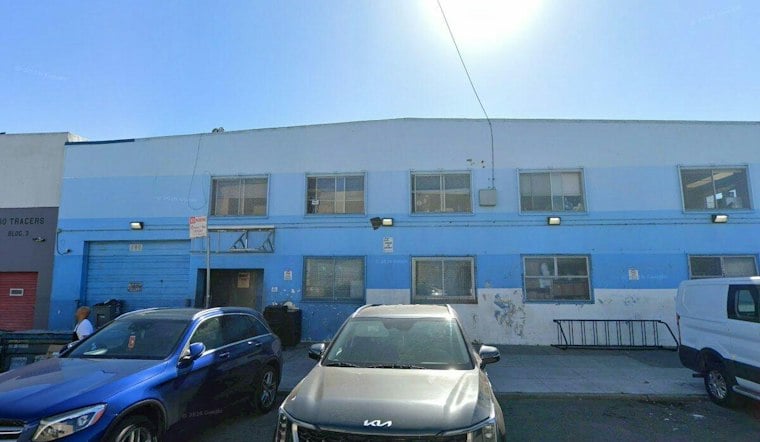
A Bayview-Hunters Point advocacy group has sued Evergood Sausage Co., accusing the longtime meat producer of operating its smokehouses without a required permit and releasing smoke that has drifted into homes, yards and a nearby drop-in center for years. The Marie Harrison Community Foundation filed the suit against the company, which has run a sausage-cooking and smoking facility in the neighborhood since the 1950s, alleging it has operated without necessary Bay Area Air District permits while releasing smoke into the surrounding community.
The lawsuit, first reported by the San Francisco Public Press, lands against a backdrop of mounting resident complaints and unresolved regulatory violations. Evergood's facility includes three smokers and seven ovens, and the company burns wood chips to smoke its sausages, which are sold at major grocery stores and at Giants, Warriors and Valkyries games, producing about 7,000 tons of product annually. A reporter observed opaque smoke billowing from the Evergood chimney on a Monday afternoon in late October, with the plume lasting about an hour, according to the outlet's reporting.
Years of Complaints, Few Consequences
Residents have filed at least 16 air-quality complaints with the Air District since 2018 over particulates, odors and illegal fires, per the Public Press account. In two complaints filed in 2023 and 2024, residents reported smoke so thick they could not use their yards, and one resident reported that Evergood smoke entered through a second-story window opened less than half an inch and triggered a kitchen fire alarm in 2025. The San Francisco Fire Department has responded to five calls at the facility since 2016, two of which were fires, while additional fires were reported through the air-quality complaint system without a fire department response.
Bay Area Air District inspectors have at times dismissed smoke and odor complaints, deeming chimney emissions to be water vapor resembling smoke, and the facility has not undergone a formal permitting process, meaning Evergood's emissions have not been tested for a conclusive determination of their nature. Bradley Angel, executive director of Greenaction for Health and Environmental Justice, said intermittent smoke and odors have hindered effective enforcement for decades, since the smoke and odors are often intermittent and can subside before inspectors arrive.
Two Violations, No Fine
The Air District issued Evergood a notice of violation in July 2024 for lacking necessary permits, and filed two notices of violation against the company that year. The July 2024 violation remains pending with no penalty amount posted, and the agency has not issued a fine for the cited violations. Bay Area Air District spokesperson Ralph Borrmann acknowledged in an email to the Public Press that Evergood was not in compliance with Air District regulations, and said the agency is working to bring the company back into compliance and determine an appropriate remedy. Borrmann also said the district has faced challenges conducting source testing, computing emissions and completing health-risk assessments for the facility, and that it investigated each complaint and is taking steps to resolve the resulting violations.
Angel said the Air District's failure to follow up on the two Evergood violations reflects lax regulation. That critique echoes a 2017 report by Golden Gate University Environmental Law and Justice Clinic investigators, which found the Air District too lenient with Bayview-Hunters Point concrete manufacturers and concluded that regulators responded to unpermitted operations and record-keeping violations with fix-it tickets despite warranted penalties. Advocates describe this pattern of regulatory leniency toward industrial polluters in the neighborhood as harmful to residents' health.
A Health Burden Felt Up Close
The stakes are personal for people who live and work nearby. Ricky Curry, a peer advisor at the Bayview Drop-In Center, said smoke remains a regular occurrence and can hurt people's eyes, and people visiting the center are exposed to smoke while waiting outside during breakfast and dinner service. Arieann Harrison, founder and executive director of the Marie Harrison Community Foundation, worked at the drop-in center from 2000 to 2024, a period during which the Evergood facility regularly released smoke into the surrounding community.
Citywide data underscores the disproportionate burden on the neighborhood. The Bayview zip code had San Francisco's highest average annual asthma-related emergency-room visits from 2013 to 2023, averaging 308 visits per year, according to the Public Press report. Separately, Breathe California reports that Bayview-Hunters Point had the highest age-adjusted asthma emergency-room visit rate in San Francisco, at 93.0 visits per 10,000 people, compared with a countywide rate of 44.0 per 10,000. Particulate matter can exacerbate asthma symptoms and trigger asthma attacks, while fine particles more broadly can trigger heart attacks, strokes, heart failure, burning eyes, runny nose, airway inflammation, coughing and difficulty breathing.
Permitting Rules and Evergood's Response
Under Bay Area Air District rules, a permit application is required once production exceeds 1,000 tons, a threshold Evergood's roughly 7,000 tons of annual sausage output far surpasses. California's air districts, not state regulators, hold the authority to grant permits to stationary sources like factories, according to the California Air Resources Board, which reviews and helps coordinate programs for those local agencies. The Air District's own permitting process would determine whether Evergood's emissions-control system is adequate for the volume of smoke produced, though that question remains unresolved between the company and the agency.
Evergood spokesperson Sam Singer said the company takes its responsibilities to neighbors seriously and maintains that the facility primarily releases steam rather than smoke from cooking. Singer also said there have been no illegal fires and that air-quality complaints are unverified. The company has said its facility includes air scrubbers to clean emissions from smokehouses before they exit the chimney, and that it began the permit application process for its smokehouses and scrubbers in 2024 at the Air District's request, with that application still under district review.
What the Lawsuit Could Mean
The Marie Harrison Community Foundation is named after Arieann Harrison's mother, Marie Harrison. Harrison said she hopes the lawsuit will show pollution-burdened communities how to hold industry accountable when regulators do not act, and has asked why successful legal action should not be duplicated elsewhere in California. She said she hopes the case will encourage other communities facing industrial air pollution to pursue legal action of their own.
For now, the underlying dispute between Evergood and the Bay Area Air District over whether its emissions-control system is adequate for the volume of smoke the facility produces has not been resolved, and the agency has not brought the company into compliance. The two pending 2024 violations remain listed as open in Air District records, leaving residents near the Bayview plant watching the chimney — and waiting to see whether the courts move faster than the regulators have.



