

























































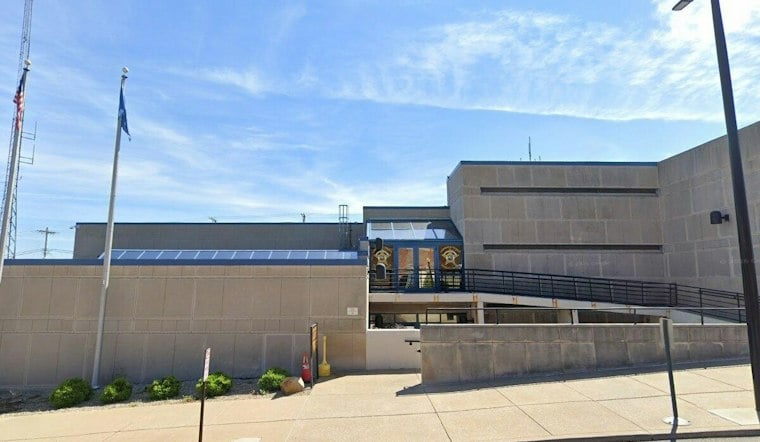
A preliminary breath test reportedly registered 0.180% after a predawn Bedford disturbance, but the result is not a confirmed blood-alcohol measurement—and the account does not say Morgan Williams was driving. The reported reading therefore should not be treated as a driving-offense finding or, by itself, as proof of public intoxication.
According to WBIW’s account, a homeowner told police that a woman had struck his front door with a wooden birdhouse, damaging it; he said he wanted to pursue criminal mischief charges. Police later found Williams on a property on Edgewood Drive. The report says she told hospital staff and officers she was 19, had been drinking with friends and was looking for a nearby friend’s house. After medical clearance, she was taken to the Lawrence County Jail, where the preliminary breath test was administered.
The test result and the public-intoxication charge are separate questions
WBIW reports preliminary charges of public intoxication, criminal mischief, illegal consumption and disorderly conduct. Indiana’s public-intoxication law requires more than intoxication: the state must also prove that a person was in a public place or place of public resort and that an additional statutory condition applied. In a March 29, 2021 decision involving a different person walking on a public road at 2:00 a.m., the Court of Appeals of Indiana discussed that requirement. In that case, a vehicle in the distance swerved across the center line, and Deputy Rusher also had to swerve to avoid Estes. Those circumstances are not evidence about what happened in Bedford; the ruling provides legal context, not a determination in Williams’s case.
The reported charges in Bedford are preliminary. A preliminary breath-test result is not a confirmed blood-alcohol level or, by itself, proof that Williams was driving. In general, people are presumed innocent unless proven guilty.



