

























































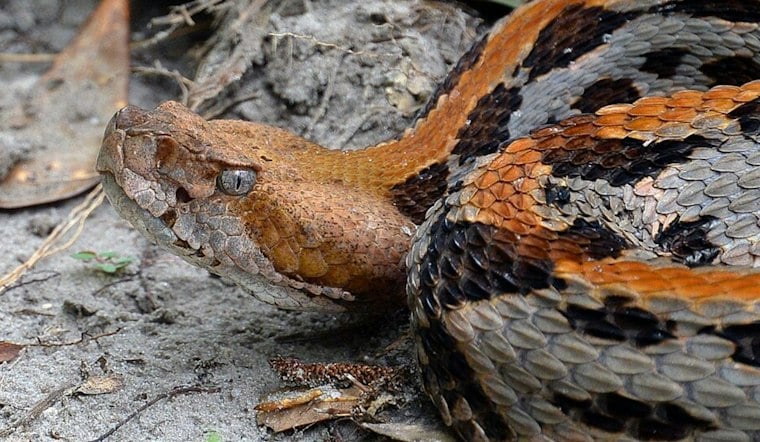
A canebrake rattlesnake was photographed gliding through the water at Bayou Sauvage Urban National Wildlife Refuge in New Orleans East, a striking image that highlights just how adaptable the region's most notorious venomous snake can be. The photo, credited to Tim Borgardt, shows the rattlesnake swimming rather than coiled on dry land, where the species is typically found.
According to NOLA.com, Borgardt said Bayou Sauvage is the only place he knows of where canebrakes hunt in the water. That observation stands out because canebrakes, a regional name for the timber rattlesnake, are generally considered a terrestrial species rather than swimmers that actively hunt from the water.
Timber rattlesnakes go by several names depending on where they're found, and canebrake is the term used for populations in lower-elevation terrain. The Smithsonian's National Zoo notes that snakes found in areas like the Piedmont and the Atlantic Coastal Plain carry the canebrake name, distinguishing them from timber rattlers found at higher elevations.
Where Canebrakes Typically Live
The Smithsonian describes canebrake habitat as swamps, the higher ground of river floodplains, and farmlands — a mix of wet and dry terrain that fits the marshy landscape of Bayou Sauvage. Despite being largely ground-dwelling snakes, timber rattlesnakes are surprisingly capable climbers; the National Zoo notes they've been found in trees more than 80 feet off the ground, underscoring that the species is more versatile than its reputation for staying coiled in one spot might suggest.
The Louisiana Department of Wildlife and Fisheries describes typical timber rattlesnake behavior as largely sedentary, with the animals tending to lie motionless in a resting coil near logs, tree bases, or thickets while hunting rodents such as wood rats and squirrels, according to the state wildlife agency's field guide. A snake actively swimming and hunting in open water, as Borgardt described, diverges from that more passive, land-based pattern.
A Refuge Built for Wildlife Encounters
Bayou Sauvage is no stranger to wildlife sightings. The U.S. Fish and Wildlife Service notes the refuge is a popular destination for fishing, crabbing, hiking, paddling, bird watching, and nature photography, according to the federal agency's refuge page — the kind of outdoor activity that puts visitors in close proximity to the marsh's resident reptiles.
Canebrake sightings aren't confined to the refuge itself. WDSU previously reported that a canebrake rattlesnake was found in a New Orleans East neighborhood near Michoud Boulevard and Chef Menteur Highway after residents reported spotting it. Ryan Cook of Gulf Coast Wildlife Removal told WDSU that the snake measured 68 inches long and had about 13 rattles.
Cook said his team euthanized that snake because of the danger it posed to the community, and he noted that other snake sightings had been reported around the former Six Flags area, a sprawling abandoned property not far from the neighborhood where the canebrake turned up. Those reports, paired with the newly surfaced photo from Bayou Sauvage, point to a species that residents and visitors in New Orleans East may continue to encounter in both wild marshland and residential pockets of the area.





