

























































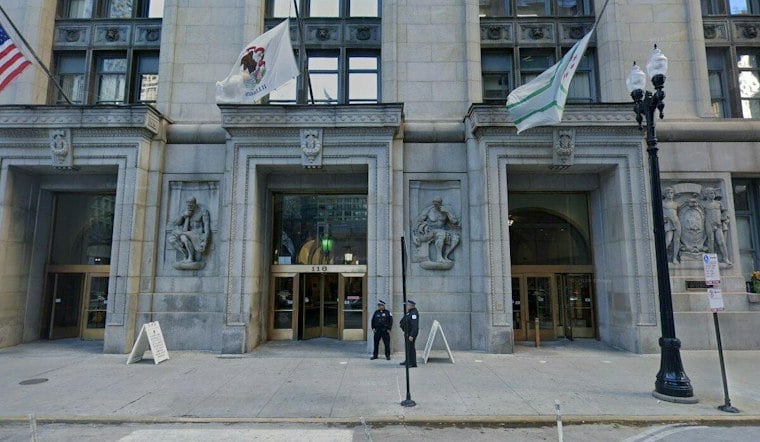
Chicago's City Council voted 50-0 to urge Illinois lawmakers to pursue a statewide tax on people earning more than $1 million a year, a symbolic move that arrives weeks after city voters overwhelmingly signaled support for the same idea at the ballot box. The resolution carries no legal force of its own and will not trigger any state tax action, but it puts every sitting alderperson on record backing the push as Springfield's veto session continues.
The council's unanimous vote, reported by FOX 32 Chicago, calls on the Illinois General Assembly to advance a constitutional amendment that would let the state impose a surtax on income above $1 million. Any such change would require lawmakers to propose the amendment and then win voter approval statewide, a process the council vote itself cannot start or finish. As Block Club Chicago reported, the Illinois General Assembly's current veto session runs until early December, and legislative leaders have not signaled plans to debate the millionaires tax during that stretch.
Voters Already Weighed In — With Some Disagreement on the Numbers
The council resolution follows a round of non-binding ballot questions decided earlier this month, when Chicago voters were asked whether Illinois should adopt a 3% surcharge on income over $1 million and split the resulting revenue between property-tax relief and public education funding, according to Illinois Policy. A Chicago school board-backed referendum asked a similar question about taxing millionaires more.
Exactly how lopsided that support was depends on which outlet is reporting it. NBC Chicago reported that 78% of Chicago voters cast ballots in favor of the referendum, while WTTW reported nearly 80% support among Chicago voters, citing unofficial results. In suburban Cook County, NBC Chicago reported nearly 69% support when roughly a quarter of precincts had reported, while WTTW put suburban support at more than 71% based on unofficial results. The city has not released a final certified tally reconciling those figures.
Not Everyone on Council Is Convinced It Matters
Not every alderperson who voted yes was enthusiastic about what the resolution actually accomplishes. Ald. Rossana Rodríguez-Sánchez supported the measure but said it amounted to an opportunistic attempt to appear progressive without actually taxing the rich, per the Block Club Chicago report. Ald. Raymond Lopez took a more practical view, saying the non-binding vote still conveys a message to state lawmakers about the city's priorities.
Mayor Brandon Johnson has backed enacting a millionaire surcharge as part of his broader tax-the-rich agenda, which he laid out during his 2027 budget address at City Hall on Oct. 21. He has argued the council could raise revenue from wealthy residents and companies right away by instead backing his proposed corporate head tax — a $25 monthly fee per employee on companies operating in Chicago with at least 125 workers. A majority of the council has said it will not support a spending plan that includes a head tax, according to the same report.
Opponents Warn of Business Flight, Backers Point to Past Wins
Detractors have argued a millionaires tax could hurt business owners and push taxpayers out of Illinois, a concern NBC Chicago reported is shared by opponents who say the tax could also hit individual taxpayers who are not millionaires. Supporters counter that similar advisory referenda passed with more than 60% support in both 2014 and 2024, according to an Illinois Economic Policy Institute study, and that four other states plus the District of Columbia have already adopted surtaxes on million-dollar incomes without their economies growing any slower than states that skipped the policy.
That same April study estimated a 3% surtax on income over $1 million would affect about 41,000 people statewide and could generate more than $4 billion in new annual revenue through 2035 for property-tax relief, school funding, or both. In a scenario funneling money toward homeowners, researchers projected annual property-tax rebates starting at $1,200 in 2027 and climbing to $1,800 by 2034, averaging a 20% tax cut for 3 million homeowners. The institute's economic modeling also projected the tax could create between 7,000 and 25,000 jobs and boost Illinois GDP by $1 billion to $4 billion — figures that remain projections, not realized outcomes.
History suggests passage is far from guaranteed. A proposed graduated income tax failed at the Illinois polls in 2020, falling short of the voter support needed to become law, and an earlier 2026 push for a millionaires tax did not advance in Springfield. Illinois lawmakers also declined in June to let voters decide the millionaire-surtax question statewide this past Election Day, according to WTTW.
City Hall framed the ballot results differently. The City of Chicago described the November questions as advisory, and the mayor's office has not characterized them as enacting any tax. Alongside the millionaires tax resolution, alderpeople were expected to vote Wednesday on restarting use of gunshot detection technology and on legislation authorizing an outside audit of the city's financial statements, with the city's public safety administration potentially required to audit vendors operating automatic license plate readers for compliance with state privacy rules.





