

























































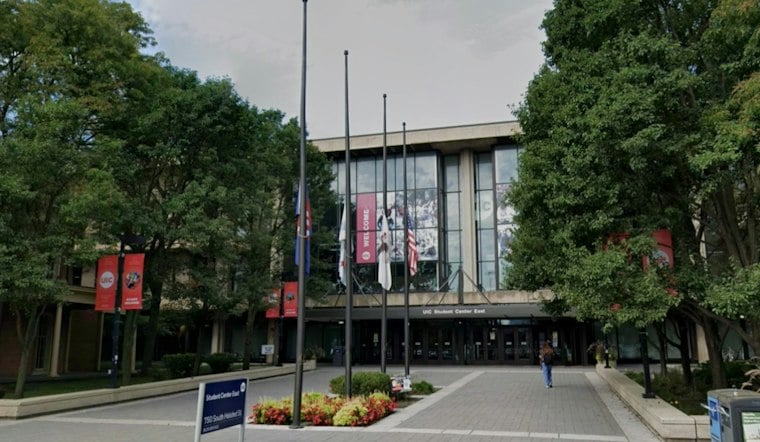
Dozens of doctors closed an annual conference at the University of Illinois Chicago on Sunday with a renewed call to remake how Americans pay for care. The gathering put Medicare for All back in front of a city audience just as newly elected Democrats head toward the next Congress.
Health care professionals used the campus send-off to argue that insurance on paper is not the same thing as care a patient can actually use, NBC Chicago reported. Internist Dr. Monica Maalouf, who led the charge at the gathering, and family physician Dr. Sydney Doe framed the proposal through exam-room conversations, not slogans.
What Patients Told the Doctors
Maalouf said patients tell her, in one form or another, "I can't afford this, I can't afford to see that specialist, I can't afford to get my meds." That is the case the doctors carried out of the conference: cost is already rationing care, specialist by specialist and prescription by prescription.
Doe described a version of the same problem that does not stop at the uninsured. Even patients who have coverage cannot afford their medications, she said, and some are scared to go to the emergency room when she recommends it. An insurance card, in that telling, is not a guarantee that the next bill is survivable.
Maalouf also said Americans sent a message in the midterms in favor of change. Doctors at Sunday's rally said this is the moment to push the proposal, and NBC Chicago noted that many newly elected Democrats in Congress support Medicare for All. The physicians were explicit about timing. They were not asking colleagues to wait for a quieter news cycle.
One Name, More Than One Plan
Doe's description of the idea was blunt. "Medicare for all would mean everyone would have the same insurance plan. All would accept it." Telemundo Chicago described the proposal demonstrators were urging as a national health insurance program run by the U.S. Department of Health and Human Services, covering U.S. residents and including hospital care, prescription drugs and medical treatments.
The case made around the UIC gathering also holds that the shift would put more money and resources into health care and less into corporate profits and denying care. NBC Chicago listed the familiar counters in the same breath: higher federal spending, higher taxes and longer wait times. Those are possible drawbacks, not a scorecard of a bill that has become law.
Outside the campus, doctors, patients and activists demonstrated Sunday and urged Congress to approve Medicare for All, Telemundo Chicago reported. U.S. Rep. Delia Ramírez joined them. She said she would work to bring the proposal to a vote and called it one of three priorities for Democrats in Congress.
The conference that preceded the send-off was not an impromptu rally. Physicians for a National Health Program had scheduled its 2026 annual meeting and the SNaHP Summit for Nov. 12–15 at UIC's Student Center East. NBC Chicago reported that dozens of doctors wrapped up that annual campus conference with a message to transform the country's health care system. The Sunday gathering was the public edge of a meeting already on the calendar.
Support That Moves When the Tradeoffs Arrive
The political opening the doctors are pointing to sits next to polling that is both broad and brittle. In a KFF survey conducted Sept. 16–21, 66% of U.S. adults favored a national health plan sometimes called Medicare-for-all, and 34% opposed it.
The split by party is not a simple left-right wall. KFF found support at 84% among Democrats, 72% among independents and 34% among Republicans. Compared with an Oct. 7–12, 2020 survey, independent support rose from 57% to 72%, Republican support from 21% to 34%, and Democratic support from 78% to 84%. The gain among independents is the number that makes a campus rally look less like a niche physician cause.
Ask about the bill, and the majority thins. KFF found favorability could fall to as low as one in four after people heard Medicare-for-all could delay medical tests or treatment, and to about one-third after they heard it could raise taxes. In the same September poll, 61% of adults expected the taxes they pay to be worse under the proposal, while 35% expected their ability to afford needed care to improve. The doctors' emergency-room stories and the tax worry are answering different questions. Both are already in the public argument.
Narrower Ideas, and a Shrug From Insurers
Medicare for All is not the only phrase Democrats are trying on. STAT reported Nov. 13 that a so-called Medicare for More approach — offering Medicare to more Americans, not necessarily everyone — is emerging as a possible bridge between the party's moderate and liberal wings. A separate Medikids proposal, free health insurance from birth through age 26, is also gaining traction among Democrats. Those are different plans from the single plan Doe described, and from the HHS-run program Telemundo Chicago outlined. Treating the names as interchangeable would flatten a fight that is partly about how far the expansion goes.
POLITICO reported the same day that progressive Democrats intend to push an aggressive Medicare for All agenda in the next Congress. The newsletter noted that such a plan could pose an existential threat to insurers' businesses, and that the health plans did not seem especially worried yet. A threat that the threatened industry is not treating as imminent is its own piece of political information.
Congress.gov identifies two Medicare for All Act bills in the 119th Congress, which runs 2025–2026: H.R. 3069 and S. 1506. The available record identifies the bills. It does not, by itself, establish where either stands or what every provision would do.
A White House Answer, and a Split Among Doctors
NBC Chicago requested comment from the White House. The response said President Trump "will continue delivering real results that lower costs and put Americans first, while Democrats push ideas that have devastated economies and ruined healthcare quality anywhere they have been implemented." That is a general indictment of Democratic health proposals, not a line-by-line reply to Medikids, Medicare for More, or the UIC speakers.
Physicians are not a bloc either. North Carolina Health News reported in October that the American College of Physicians, the nation's second-largest physician group, supports Medicare for All, while the American Medical Association opposes it. The same article said a survey found more than half of physicians preferred some form of single-payer system, and that Yale researchers estimated a conversion to Medicare for All could save $450 billion a year. Those are reported estimates and preferences, not a settled ledger.
What Sunday left in Chicago is more concrete than the savings figure. Doctors finished a four-day meeting at Student Center East, patients and activists stood outside the campus with Ramírez, and the next Congress is the venue they named. Whether that venue takes up H.R. 3069, S. 1506, a narrower expansion, or none of them is the vote Ramírez said she would work to force — and the test the White House has already framed as a choice between lower costs and ideas it says have failed elsewhere.





