

























































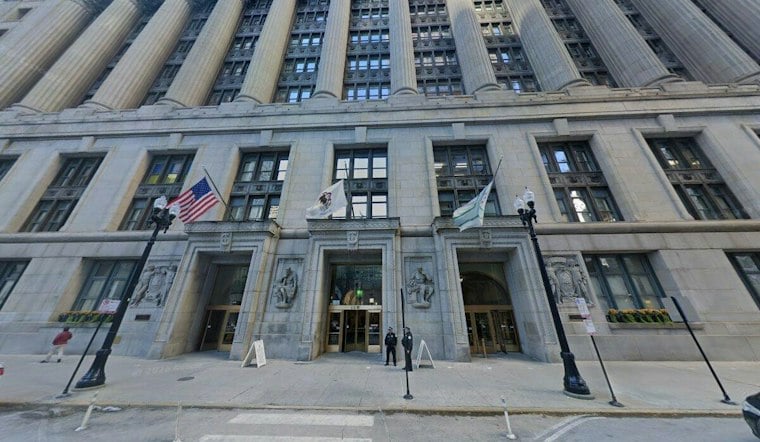
Chicago’s advisory vote on gunshot detection does not require City Hall to act, but it adds a clear measure of voter support to a debate that will turn on the city’s pilot and its assessment of the evidence. More than 72% of voters who cast ballots on the question supported restarting the technology, according to results reported as of 11 p.m. on Election Day. The question did not name ShotSpotter, the system Mayor Brandon Johnson’s administration discontinued.
The referendum simply asked whether Chicago should resume using gunshot-detection technology that alerts first responders when shots are fired, as reported by Audacy. Johnson terminated the city's contract with ShotSpotter parent company SoundThinking in September 2024, and the vote's outcome doesn't trigger any automatic change in city law or policy, according to Block Club Chicago.
A Pilot With Few Public Details
Johnson's administration has announced a six-month pilot of public-safety technologies, including gunshot detection, across six South and West Side police districts. The superintendent chose the 2nd, 5th, 7th, 9th, 10th and 11th police districts, according to the Greater Southwest News-Herald, which also reported that the pilot is separate from the city's active request-for-proposal process and will be entered at no cost to the city, with no guarantee that pilot vendors land a future contract.
Chicago had received nine bids after issuing its RFP for gunshot-detection technology, but no contract has moved forward, Block Club Chicago's reporting notes. As of an ABC7 Chicago report, it remained unclear whether any of the companies that submitted proposals had actually been selected for the pilot. Police officials told aldermen that CPD's role was limited to helping identify the six districts, not running the program itself.
Johnson Says He Wants Proof It Works
Johnson has framed the pilot as due diligence rather than delay, saying the city needs to understand what works before making long-term commitments on technology taxpayers are footing the bill for. The city has said the final evaluation report, along with data gathered during the pilot, will be reviewed holistically with relevant departments before any decision on next steps, per the same Block Club Chicago account.
The city’s approach has drawn criticism from aldermen quoted in the Chicago Sun-Times. Ald. Brendan Reilly urged Johnson to move ahead with restoring the technology, citing the referendum’s result as evidence of public support.
A Pilot Under Political Scrutiny
Ald. Marty Quinn characterized the pilot as a delay tactic, according to the Sun-Times account. The dispute over the pilot’s purpose comes as the city has not yet moved forward with a contract.
Ald. Matt O’Shea said the city had access to the technology for two years and that the pilot was expected to start within two weeks, per the same Sun-Times reporting.
Competing Evidence on Effectiveness
The debate isn't just political — it's also a dispute over what the data actually shows. The Chicago Office of Inspector General found that CPD responses to ShotSpotter alerts rarely produced documented evidence of a gun-related crime, an investigatory stop, or a firearm recovery, according to the Chicago Office of Inspector General. The OIG also found that the system's presence changed how some CPD members perceived and interacted with people in neighborhoods where alerts were frequent.
A University of Chicago analysis cited by WTTW found police responded four minutes faster to the highest-priority 911 calls across 12 South and West Side neighborhoods in the six months after ShotSpotter was shut off in September 2024. In those same neighborhoods, homicides fell more than 32% and violent crime fell more than 11% in the nine months after decommissioning compared with the nine months before, the analysis found. Dowell separately cited wide gaps in median emergency response times — ranging from 7.8 minutes in some districts to 18.8 minutes in others — as part of the case for faster action, according to the Greater Southwest News-Herald.
What the Response-Time Records Show
Chicago’s official response-time figures come with an important limitation: the Chicago Office of Inspector General found CPD’s collection of 911 response-time data to be incomplete. A study cited in an OIG follow-up found a median response time of 11 minutes for the highest-priority 1A calls, with medians ranging from 7.8 minutes in District 007 (Englewood) to 18.8 minutes in District 004 (South Chicago), according to the OIG follow-up. Those figures describe recorded response times; the data-collection finding limits what the records can show about performance overall.
For now, the referendum result sits alongside those competing studies without forcing a resolution. Chicago's advisory questions don't trigger automatic policy changes, and Johnson's administration has signaled it intends to let its own pilot run its course before deciding whether gunshot-detection technology returns to the city's streets in any form.





