

























































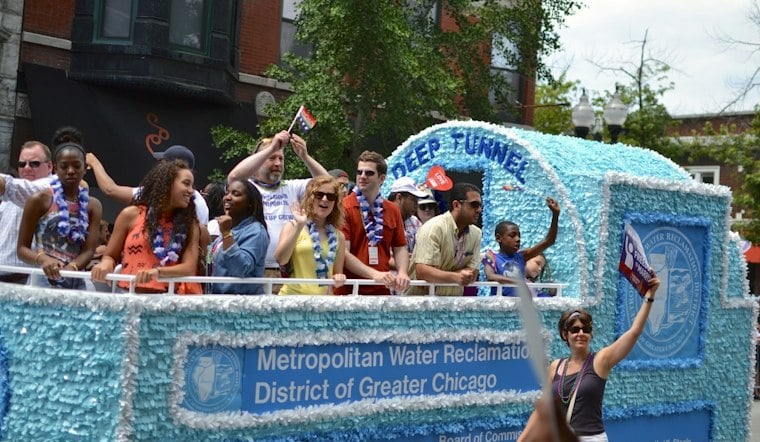
Six candidates are competing for three seats on the Metropolitan Water Reclamation District of Greater Chicago board, with Democratic incumbents Eira Corral Sepúlveda, Precious Brady-Davis and Beth McElroy Kirkwood facing Republican challengers Michelle Pennington, Timothy E. Rueckert and Jill B. Shestokas. The race lands at a moment when the district's flood-control systems have been stretched by intense rainfall, leaving some residents newly worried about water in their basements.
According to WTTW News, the three Republican challengers are seeking to break the Democrats' hold on every commissioner seat on the nine-member board. The same report notes that the MWRD commissioner post has become increasingly high-profile as stormwater management and wastewater treatment issues have gone mainstream, with candidates pointing to recent storms that have taxed the district's deep tunnel system to its current limit and left residents vulnerable to flooding.
A separate incumbent, Cameron “Cam” Davis, is running unopposed to complete the remaining two years of a separate term, according to WBEZ. For the three contested six-year seats, voters may select up to three candidates, and whichever three receive the most votes win, per the same station. MWRD commissioners are elected countywide in Cook County and serve staggered six-year terms.
What the District Actually Does
The MWRD's nine-member Board of Commissioners oversees infrastructure investments including the system of deep tunnels and reservoirs built to catch stormwater before it overwhelms sewers, according to the WTTW News 2026 General Election Voter Guide. The district also treats wastewater from Chicago and 128 surrounding communities at seven water reclamation plants, and it is charged with protecting homes and businesses from flood damage while safeguarding the water quality of Lake Michigan and area rivers and streams, the voter guide states.
The seed campaign has unfolded against a backdrop of mounting strain on that infrastructure. In July, Chicago's Deep Tunnel system was reported almost completely full after a weekend of heavy rain, a condition WBEZ described as the first time it had reached that point. At the time, the Thornton Reservoir sat at 94% capacity while the McCook Reservoir fluctuated between 96% and full, with the two reservoirs together holding roughly 11 billion gallons of water, per the station's report.
Overflows, Pollutants and Long-Term Fixes
Experts cited in that same coverage said the Deep Tunnel alone is not enough to prevent flooding, calling for more greenspace and new types of water storage to be developed. The strain showed up in the numbers: between July 2 and July 5 this year, the district recorded 42 combined sewer overflows throughout Cook County, according to Block Club Chicago. That stretch stands in contrast to all of 2025, when the county saw 24 combined sewer overflow events total, down sharply from 434 in 2019, the outlet reported.
A planned expansion of the McCook Reservoir is expected to add 6.5 billion gallons of capacity, but Block Club Chicago's reporting indicates the project likely will not be finished until 2032. In the meantime, the outlet quoted a Friends of the Chicago River executive director on nearer-term options, noting that wetland restoration and replacing lawns with native flowers and grasses — what the Environmental Protection Agency calls green infrastructure — can help soil capture rainwater where it falls.
Where the Candidates Stand
WTTW News reported that candidates in the race have promoted solutions including expanding green infrastructure projects and prioritizing prescription medication take-back events to keep pharmaceuticals out of wastewater, part of a broader challenge as forever chemicals and other pollutants test treatment plants' capabilities nationwide. Jill Shestokas, one of the three Republican challengers, told the WTTW News voter guide that 2026 marks the first time her own name has appeared on a ballot. She has proposed a single public dashboard to connect residents with flood information, practical resources and ways to report problems, according to her responses in the guide.
Polls closed on Election Day, with the fate of the three contested seats now in the hands of Cook County voters who were able to choose up to three names from the six-candidate field. The outcome will determine whether Corral Sepúlveda, Brady-Davis and McElroy Kirkwood hold onto the Democratic majority that has long controlled the board, or whether Pennington, Rueckert and Shestokas make inroads on a panel increasingly scrutinized for how it manages the region's water during an era of heavier, more frequent storms.




